A monster in the garb of holiday merriment, Billy Chapman (Robert Brian Wilson) slashes his way through 1984’s Silent Night, Deadly Night.
This cult classic among horror fans was as controversial as it was gory and gratuitous. Naturally, this gift seemed destined to be opened when considering a novelization.
And now, your Christmas wishes have come to fruition because the Board gaming experts at Stop the Killer bring the holiday slasher back to life with bloody details from author Armando Muñoz. How much deeper can this holiday horror go? Open the pages to find a new look at the classic film. It’s grisly goodness is the book you didn’t know you needed.
But you do.
Christmas
We begin with Christmas Joy, the Utah town that Billy grows up in. A place brimming with Yuletide wishes year-round. The novel helps to incur discomfort right away, showing the layered web of experiences that caused this madman to be born and shaped and how his *naughty* intentions were nurtured.
While the movie was a sampling of a holiday massacre, this is a full-course meal. It comes with all of the disturbing fixings and plenty of new recipes based on and inspired by the classic film.
Armando Muñoz wields his weapons well, utilizing the violent narrative littered with the evil we know while introducing us to the ones we don’t.
It feels like the film, including the specificity of exact scenes and dialogue. Yet, there’s more violence, more sexual material, and it’s dressed in a decidedly darker shade of red.
source: Tristar Pictures
All of the additions feel at home here. He has done extensive research and taken careful consideration when penning this version of his Santa.
Has arrived
We get further examination of characters, allowing us darker looks that only a novel representation could allow, including Mother Superior. She’s a villain herself, and the book provides ample opportunity for us to learn and be disgusted by the character.
Many plot points are fleshed out, and some of the less coherent script problems are ironed into a much smoother trajectory. And, of course, this includes even more murder!
It’s as if this novelization is the film we wanted but didn’t get. An evenly-paced, aptly salacious story that doesn’t feel rushed. Its depravity is unmatched, and it drives the reader to discover how unhinged Billy and company can become.
Tonally, Armando Muñoz gives a retelling that matches the movie. Through twisted invention, the book succeeds in becoming its own sort of nightmare. One that fans of Silent Night, Deadly Night, will proudly embrace. Those who are unaware of the film but love some deviance with their cheer will also be pleasantly pleased. This is a horror book you can devour regardless of your previous fandom.
Bolder and bloodier: Silent Night, Deadly Night the novel is a Christmas gift you’ll be too afraid to return.
And you wouldn’t want to; it’s a fantastically wicked read.
The eBook will be released on March 1st. For more information on this and the other offerings from Stop the Killer click here.
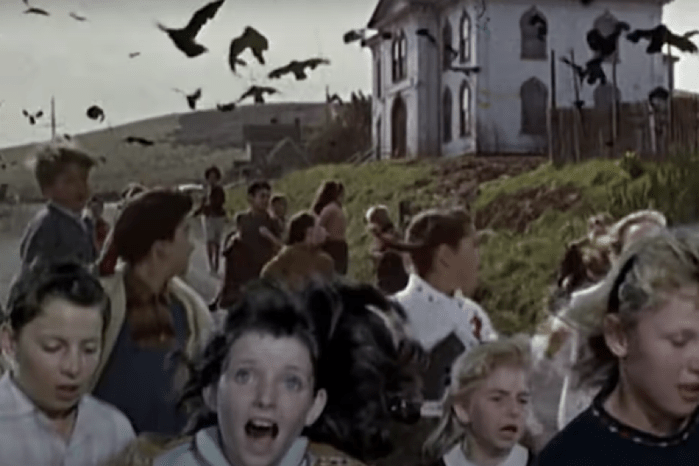
How far would you go for love? For those who currently have someone they’re enamored with, it may be easy for them to say that they’ll go to great lengths. However, how far would you go for someone you know very little about? Love is a complicated emotion and it can make people do crazy things. Alfred Hitchcock’s 1963 horror film, The Birds explores these complexities of love by drawing parallels between the brash behavior of birds and the impulsivity of human relationships. The visual symbolism, carefully crafted dialogue, and natural sound tell a story of the chaos that ensued amidst an avian attack in the 1960s, in a manner that resonates with modern audiences.
The film opens in San Francisco, where gulls are flying around as audiences are introduced to Melanie Daniels, who is scurrying into a bird shop. Her plan is to get a myna bird but things go awry when she meets Mitch Brenner, who recalls her involvement in a court case, and he decides to play a prank on her. Melanie is initially irked by his quick judgment of her, but she is quickly smitten and plans a trip to Bodega Bay to secretly deliver a pair of lovebirds that he wanted for his sister Cathy. The lovebirds become such a pivotal motif throughout the film as they become a symbol of resistance because they stick together amidst all the calamity that unfolds. Melanie is caught in the act of delivering the birds as a gull begins pecking at her when she travels away from Mitch’s home. Interestingly, this isn’t the first time Melanie will be jabbed at, as the town folks are naturally curious about her visit to Mitch and begin to flock over her sudden appearance in their town. Drawing these parallels between the instinctive habits of birds and the curiosity of humans in the affairs of love really sets up the story of what happens when both worlds collide.
source: Universal Pictures
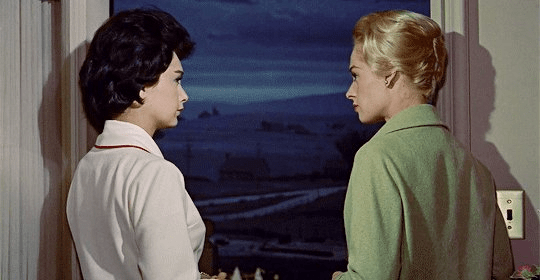
As the story continues, Melanie encounters an array of different characters and the conversions that she has with them gives further insight to their bird-like qualities. For instance, she meets Annie Hayworth, a school teacher who is living a life on her own after a romantic relationship with Mitch ended abruptly because his mother, Lydia Brenner disapproved. Annie tells Melanie that ironically, she and Mitch’s mother became friends now that she “is no longer a threat” to her son. This further explores the bird-like behavior in the affairs of love as the teacher is viewed as a predator, whom Lydia believed would disrupt the stability of her nest. When Melanie finally meets Mitch’s mother, the parallels to avian activity continue as they have a heart to heart. Lydia explains that her family is a “very good reason for getting out of bed”, which emphasizes her devotion to it, much like a mother bird cares for her chicks. The dialogue that the characters exchange with Melanie reinforce the connection between the all consuming nature of human relationships and the predatory and protective habits of birds.
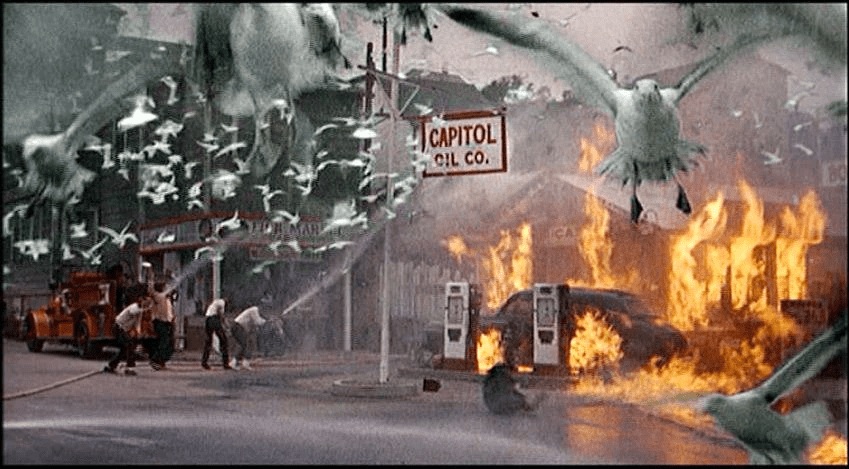
Another intriguing aspect of the film is that it lacks a score and relies on ambient sound to explore the similarities between the aggression of birds and the complexities of humans in the affairs of love. In one key moment, Melanie and Mitch take refuge in a Bodega Bay diner when birds begin to swarm the area. The sounds of the wings flapping and screeching fills the scene and makes those hiding in the diner feel cornered and violated. Interestingly, this is similar to the events that unfold inside the diner where the town’s people verbally target Melanie and blame her for the attack. The bird’s screeches fill the ambience much like the insults envelope Melanie and Mitch. During perhaps the tensest moment of the film, Melanie, Mitch and his family try to escape their home that is surrounded by birds. As the avians’ chirping creates an eerie mood, Cathay’s lovebirds remain silent, drawing perhaps the biggest parallel to human nature. It provides commentary on the fact that much like the birds, humans are invasive in other’s romantic affairs, making them, not the lovers, the loudest disruptors of the peace.
source: Universal Pictures
The Birds is a unique film that succeeds in exploring the horrors of an avian attack and comparing it to people’s intricate behavior when dealing with matters of love. With its strong symbolism, Hitchcock highlights how the various types of birds represent aspects of human nature such as attraction and curiosity. The dialogue also gives insight to the people’s bird-like qualities when it comes to defending loved one’s because it uses the conversations to shed light on the characters’ protective nature over their flock. The film’s lack of a score solidifies the comparison because just as the twittering of the birds casts an unsettling feeling amongst the town, unsolicited opinions of outsiders may taint the tranquility between a couple.
Despite being released over 60 years ago, The Birds remains relevant because humans are still affected by the convoluted affairs of love, and much like nettlesome birds, it is not something that one day will spontaneously fly away.
Are you here because you’ve seen Saw? Or because you’re curious to learn more? Whether you’ve witnessed the interwoven narrative of this 2004 American horror film or merely heard about it, you likely know about Saw and its association with violence, gore, and “torture porn.” This term, “torture porn”, refers to films that prioritize brutal and gratuitous images of people getting tortured or killed on screen. Various critics frequently utilize this term to discredit horror films, labeling them as lacking substance and reducing them to nothing more than sadistic narratives.
In a 2007 New York Times article, Jeannette Catsoulis called the first Saw film an “unexpected success” and described the whole franchise as “distasteful” due to its visceral and intense sequences. While not every film caters to everyone’s taste, particularly when it comes to horror, I believe some individuals dismiss and disregard films like Saw due to intense content. These discourses not only discourage viewers from actually watching the movie but also from critically analyzing and engaging with the film’s content.
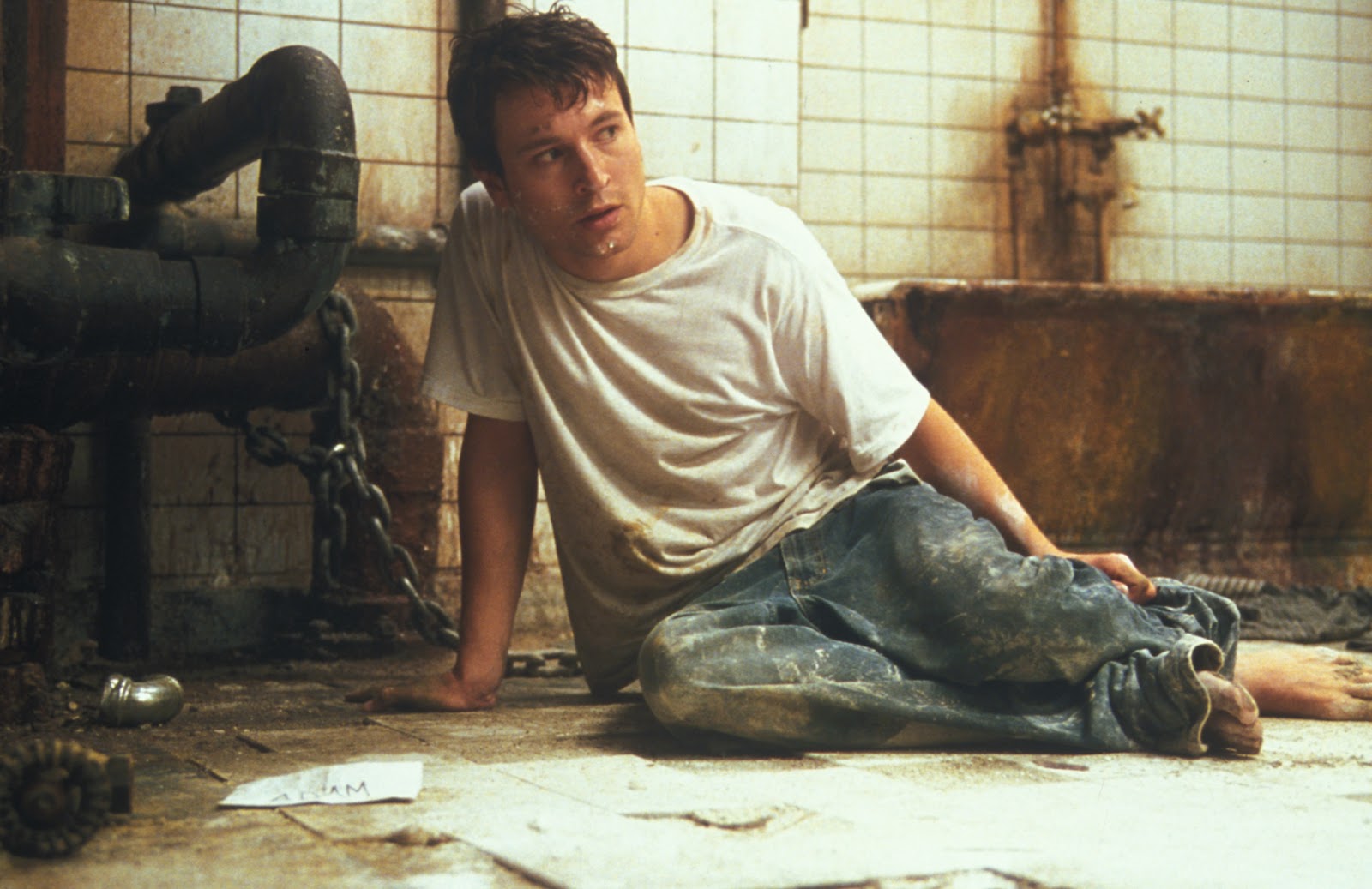
The film, directed by James Wan, begins when two strangers Adam Stanheight (Leigh Whannell) and Lawrence Gordon (Cary Elwes) find themselves chained to the pipes at opposite ends of a dirty and blood-stained bathroom. As the two men attempt to piece together their final moments before being trapped in the bathroom and attempting to seek an escape, the film cleverly weaves in flashbacks delving into the lives of Adam, Lawrence, and past victims. Simultaneously, it intertwines these events with the current investigation into the notorious Jigsaw killer.
source: Lionsgate
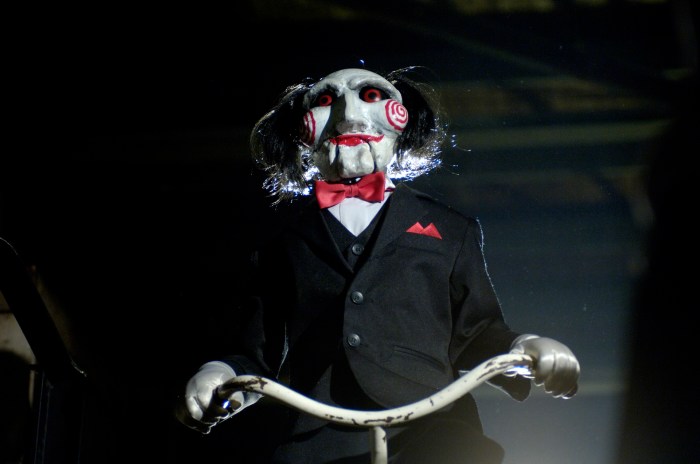
Central to the film’s brilliance is the character of Jigsaw, also known as John Kramer (Tobin Bell). Jigsaw isn’t a conventional villain driven by malice or the desire to kill. He operates on a twisted moral compass to make individuals appreciate life’s value. His traps and games aren’t just sadistic displays of power; they’re an attempt to confront his victims with their flaws and make them rethink the harm they have caused in the past. Although Jigsaw has minimal screen time, his absence only adds to his presence. Viewers, along with investigators, must piece together the clues to discover Jigsaw’s identity and motives.
While the term “torture porn” looms in media discussions, Saw defies this one-dimensional categorization. Although Saw includes scenes of violence and blood and many of the later films within the franchise include more gore with the introduction of intricate Jigsaw traps, the first film is not consumed by graphic images. Instead, it intricately balances tension with its exploration of moral ambiguity and the psychological depth that sets it apart from mere shock value.
source: Lionsgate
Among fans, Saw is also known for its intertwining narratives and surprising plot twists. In the final moments of the film, the seemingly lifeless corpse that has lay in the middle of the bathroom for the entirety of the runtime slowly comes to life. It is revealed that the body is John Kramer, the real Jigsaw Killer, who “likes to book himself front-row seats to his own sick little games.” The impact of this twist extends far beyond the immediate shock and elevates Saw beyond just a violent and torture-filled flick. It makes viewers rethink everything they just watched, wondering what clues they either caught or missed. It is a moment that remains in viewers’ minds long after the credits roll.
The Saw franchise stands as a milestone in the horror genre, as it is one of the highest-grossing horror series of all time. Saw X, the 10th installment in the franchise, was also released in September of 2023. With these accolades, it is safe to say that many people love the first Saw film and the whole series. If there’s hesitation about watching Saw, give it a chance. It might defy your expectations and leave you contemplating its twists, memorable characters, moral situations, and iconic theme song.
The great storytelling advantage of horror as a genre is the inherent feeling of inevitability. Even the most banal scenes are presented in a context of dread. Something horrible must occur to somebody at some point, or else “horror” would not properly describe the events of the story. Most horror films draw attention to this inevitability through cheap tricks, such as not-so-vague foreshadowing dialogue or creepy music laid over useless scenes. Predominately, these tricks are used to tide over the bloodthirsty audience and fill up the first and second acts, eventually arriving at the exciting finale we all showed up to see. Building a story in such a way can feel quite perfunctory.
It was this very critique that led me away from horror in the last few years. The patterns of the genre had become too obvious, and their variations had lost charm. My rather simplistic perspective would be shattered after viewing George Sluizer’s The Vanishing (1988), a film about a young woman named Saskia who goes missing and her husband who would do anything to find her. The film is particularly famous for its ending, but I would like to look at its opening scenes as I feel they present the genre’s necessary sense of inevitability in a new and haunting way.
source: MGS Film
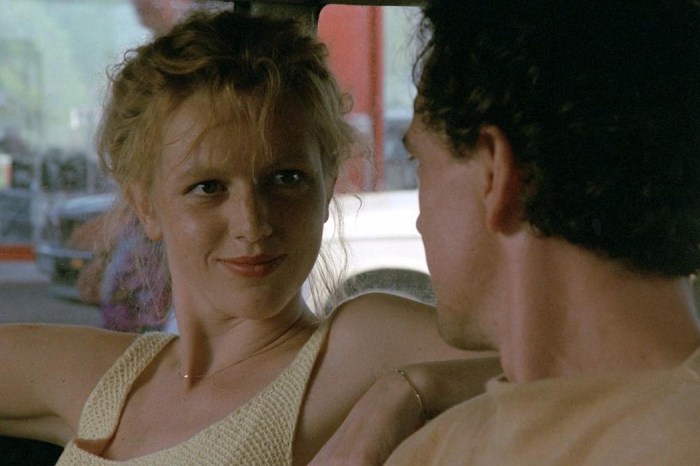
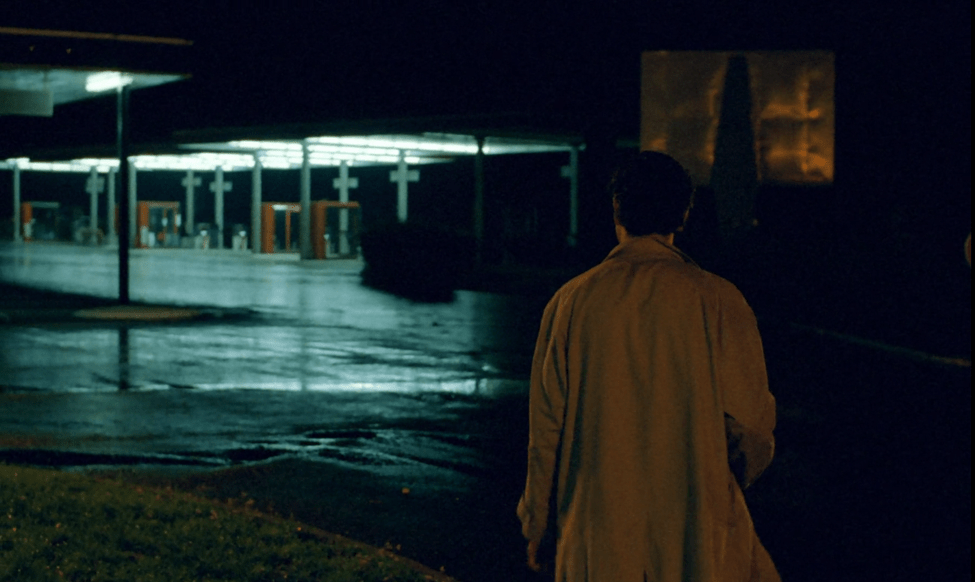
The Vanishing follows a young couple, Rex and Saskia, as they travel cross country on vacation. While passing through a long and dark tunnel, their car runs out of gas. Rex rushes off with a canister to a nearby gas station and leaves Saskia all alone. It seemed obvious that Rex would return to discover his wife had been abducted. Indeed, when he comes back with the gas, Saskia is gone. He fills the car up, drives forward, and… finds her waiting for him outside the tunnel. She is perfectly fine.
source: MGS Film
My intuition had been wrong. I had initially felt relief at seeing her safe, but a moment later, I was terrified. The relief I felt only emphasized the horrific fate that awaited this young, beautiful, and innocent woman. Before, I looked at her disappearance as a function of the plot. Now, every second with Saskia from this point on felt like being with a ghost.
Also, this subversion of expectations prevented me from retreating into the safety of my recognition of storytelling patterns. Sluizer does not subvert expectations with a bold swing, but rather, he does so in an off-the-nose way which causes me to feel a true sense of helplessness. I saw no way to stop Saskia’s abduction because there was no way to know when, why, or even if it took place. It is much harder to identify, and therefore prevent, danger when the situation feels so intangible.
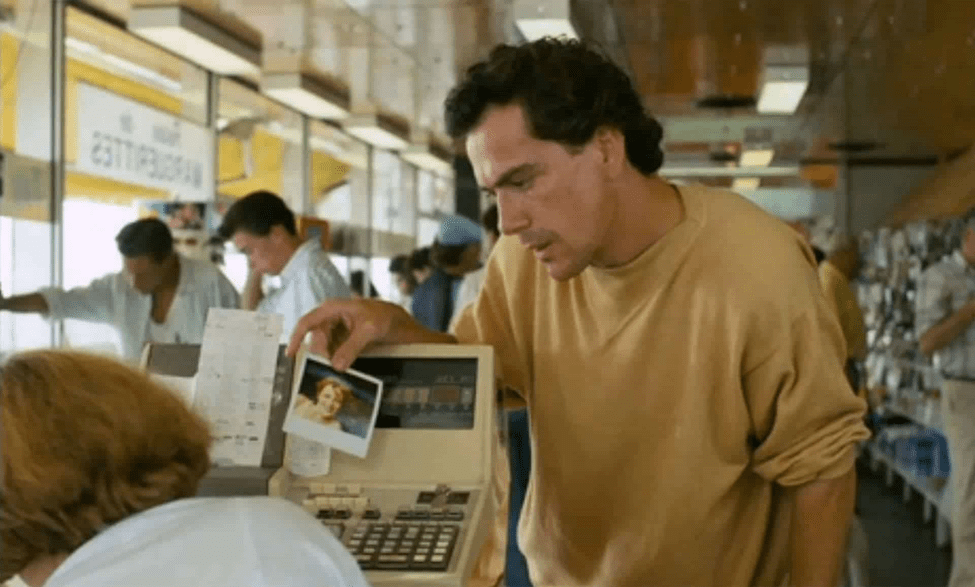
Sluizer does the same trick a second time. After the couple arrives at a rest stop, Saskia goes to use the restroom. A strange-looking man wearing a cast seems to follow her into the building, and we are forced to wait with Rex for his wife’s return. Saskia does return, further teasing her eventual abduction.
As Rex and Saskia prepare to continue their road trip, she goes back into the rest stop one last time. She is never seen again.
source: MGS Film
The structure of this opening made me highly empathetic to Rex. Horror protagonists tend to have a bad reputation for being unintelligent. We all get frustrated when Laurie Strode throws the knife to the side after incapacitating Michael in Halloween. I always shout, “He’s just going to get right back up.” It is a comfortable thing to do. I can escape my fear by believing that I would act more rationally than the characters, and therefore survive a similar event. In The Vanishing, Rex did not take action to stop the abduction because he was unaware of any threat, and I was not able to create a theoretical course of action to stop the abduction because I could not tell when a threat was present or not. He and I may have been on opposite sides of the spectrum, but we were both too distracted to prevent tragedy.
The Vanishing certainly delivers on the essential feeling of inevitability that all great horror films have, but it is its combination with unpredictability that makes me defenseless as a viewer. Inevitability and unpredictability seem contradictory, but it is the careful balancing of both that makes this film one of the most psychologically unnerving ever made.
If a film is ultimately defined by how it makes us feel, then the numb void left in the wake of a Hereditary viewing makes for quite the interesting evaluation. The product of a downright surgical effort to drain, depress, and disturb the audience rather than just simply bringing the scares, Ari Aster’s remarkable but heavy debut feature boasts an especially bleak atmosphere from start to finish. Completely shaken by the time the more traditional jump scares roll around, it’s tough to bear the weight of the horrors Hereditary has to offer, and there are plenty.
When life returns to the body, we can then fully appreciate what we just saw. The film follows the breakdown of a family at the hands of psychological and supernatural forces, touching on weighty subjects such as familial trauma and mental illness in unique ways. Above all else, we get a sophisticated horror – deliberately shot, artfully designed, and superbly acted. It’s a film with such intentional storytelling, so rich in occultist lore, that you could rewatch it several times and still be decoding new symbolism and foreshadowing upon each viewing. Yet we also get a film that, if you did happen to miss all of the heavily shrouded iconography, at the very least elevates a familiar sub-genre of horror that knocks on the door of residential homes and infiltrates the family unit in an all too intimate way. It delivers plenty of viral moments, and was A24s highest grossing film upon release. Serious and meticulous piece of art, or elevated mainstream horror experience that scares the living shit out of you? It’s fair to say that Hereditary somehow does both and does both well – a victory for the wide range of horror fans that the film will appeal to.
source: A24
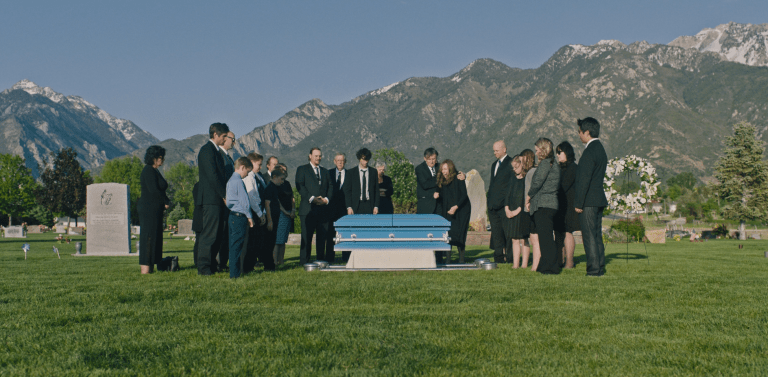
Ellen Taper Leigh is dead at the age of 78. Collecting themselves to attend the funeral of the family matriarch are Ellen’s daughter, Annie (Toni Collette, in a performance worthy of its own review), Annie’s husband, Dr. Steven Graham (Garbriel Byrne), their son, Peter (Alex Wolff), and their daughter, Charlie (Milly Shapiro). The film wastes no time trying to put up a “one big happy family” ruse, as it is clear we’re meeting a family harboring negative sentiments towards themselves, the world, and each other.
Annie shoulders some absolutely wicked trauma and anxieties from her own upbringing, the tragic details overshared to her grief counseling group in an excellently rampant monologue by Collette – as dry and unhinged as ever. Annie is attempting to be a good mother, though will never be able to transcend her own neglect as a child and become one. Past events such as a sleepwalking incident in which she nearly burned her two children alive have prevented her from exactly winning the mother-of-the-year award.
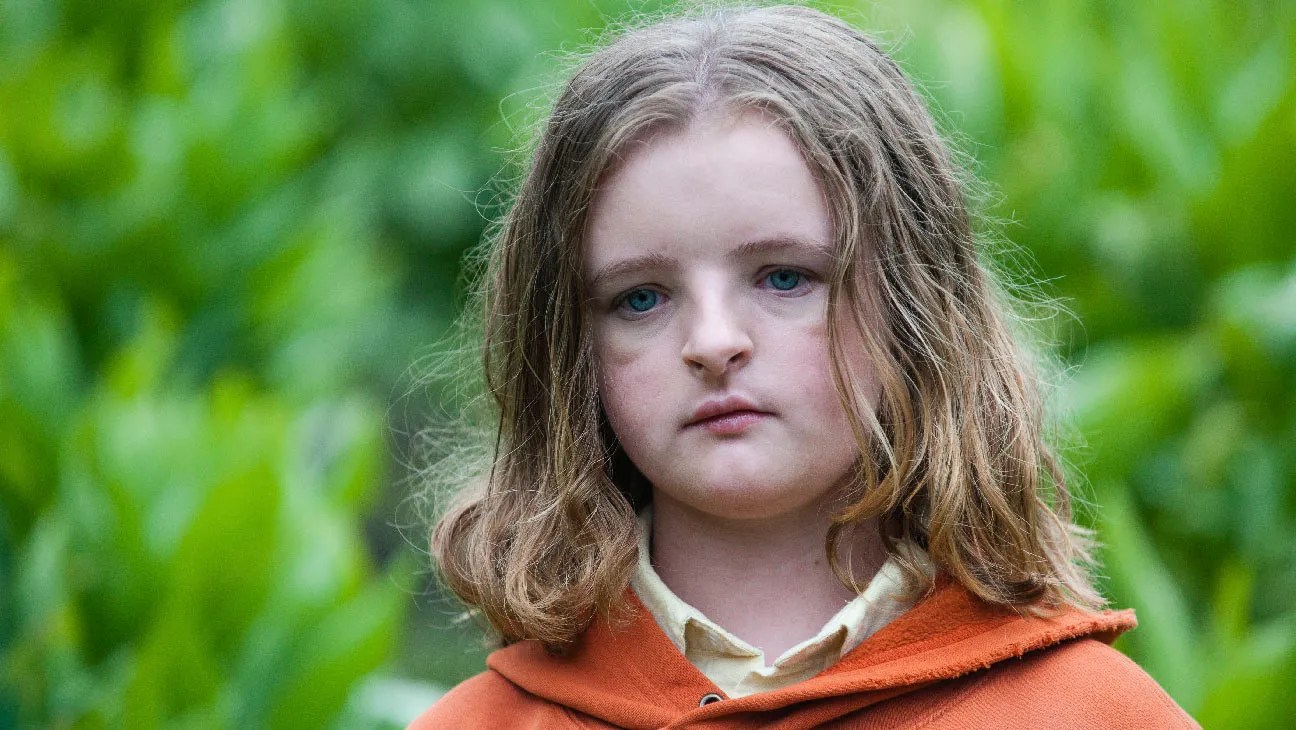
Peter projects as your average teenager, but is severely detached from his family members and dissociates frequently due to some childhood trauma of his own (the sleepwalking incident, perhaps?). Then there’s Charlie, who is, to put it lightly, off. While Peter crushes on the girl sitting in front of him in class and smokes weed behind the bleachers, Charlie spends her free time cutting the heads off of dead birds and staring blankly into the distance making clucking sounds with her tongue (a particular note that will haunt us long after the film is over). Charlie seems to have only had a meaningful relationship with her late grandmother, as she asks her own mother in a very frank and uncomfortable scene, “who is going to take care of me now that she is gone?”.
A foil to his troubled wife and kids, Steve is the cool, calm, and collected type- though the frequency in which he needs to pour himself a glass of whiskey increases as the story unfolds. Despite being a patient and caring psychiatrist, he ironically never seems to understand his loved ones and their more deranged associations towards the world around them.
source: A24
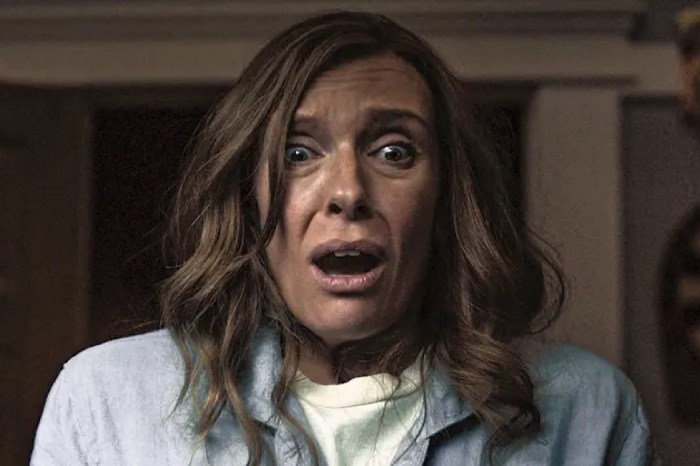
Already facing the death of their mother/grandmother, things begin to really unravel for the Grahams when another incident occurs. In the annals of all of horror there is an abundance of unique, memorable, and iconic death scenes- imagery that sticks with audiences long after the closing credits. Charlie’s death in Hereditary, involving anaphylactic shock and decapitation from a telephone pole, is as harrowing and horrific as they come. It’s probably the first scene that comes to mind in the film’s impressive stable of shockers, and leaves us with our mouths gaping as wide as Toni Collette’s in other iconic moments of the film. Hereditary knows how to leave room for some slow burn character development but also detonate a total jaw-dropper when it needs to. Side note, as someone with a nut allergy, the scene did what Jaws did for swimming in the ocean to the idea of me ever trying a nut…
From this point on its a fever dream. The film’s intense and dissonant score fires loudly, and the camera slowly pans over the terrain. We are drifting scene to scene just like our characters are sleepwalking through life – in a complete daze.
The family begins to break down and turn on each other. History is repeating itself for Annie, and what unfolds from here is an examination of grief, mental illness, and generational family trauma – three hot button themes in contemporary cinema, but themes we see increasingly dealt with using a positive spin, full of heart, hope, and even a bit of humor. Aster allows these aspects to rear their ugly heads, becoming monsters of their own within the film and manifesting themselves in a way that is only negative and all-consuming. The psychological responses need to make their way through the Graham family like a virus. In a weird way, it’s a bit of a refreshing take on the subject.
source: A24
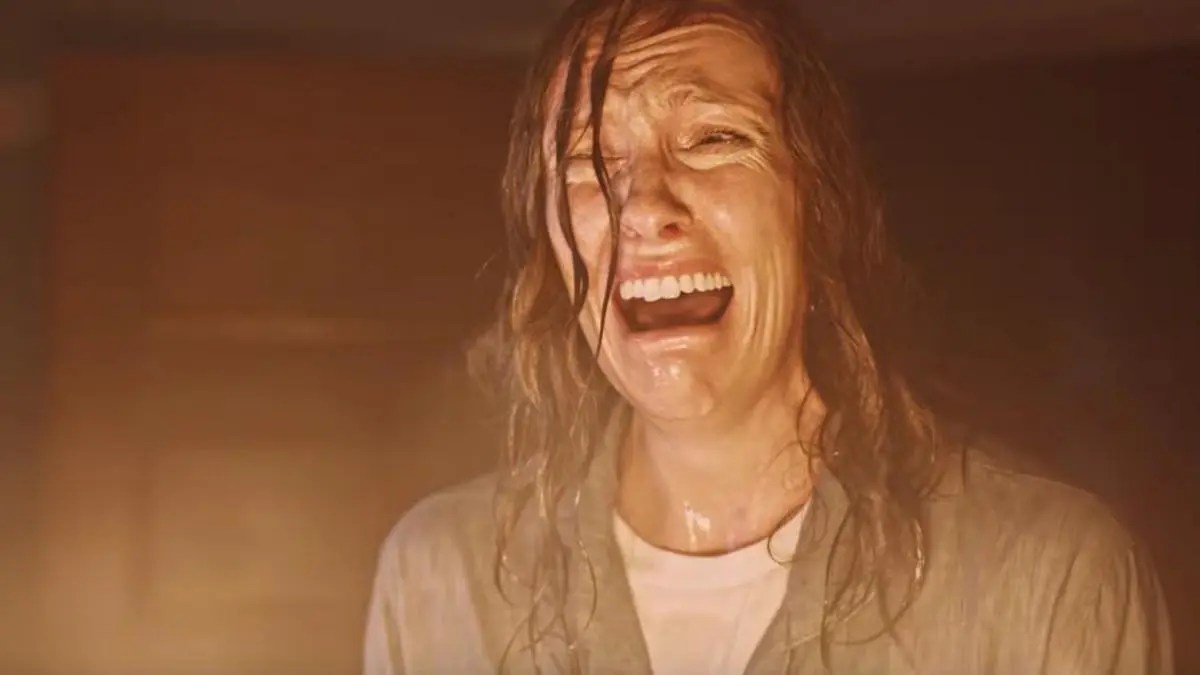
With the psychological horror already firing on all cylinders, the film seamlessly ties in a promised but yet to be realized supernatural element. The family finds themselves entangled in something much larger than they could ever imagine. There’s a heavy emphasis on the human body used as a mere vessel or sacrifice for a demonic being, so vulnerable and out of one’s control. Aster takes plenty of moments to offer his take on what possession can do to the human body, and they make for some incredibly disturbing scenes. We see Peter smash his own head against his desk at school. Annie lets out a blood curdling scream for help. She later will saw at her own neck with wire. Yet, in perhaps the most uncomfortable moment of all, it is Annie, similarly out of control, but not possessed, rather overcome by grief in the wake of her daughter’s death, writhing, screaming, wanting out of her body, that reigns as the film’s most powerful scene. The moment demonstrates the films expertise at blurring the line between the psychological and the supernatural. Hereditary is by no means the first to use the two as subtext for each other, but it’s done as successfully and poignantly as ever. A robust paranormal plotline is used as a powerful look into the human inability to outrun the trauma within our own bloodlines.
The scene also serves as a lock for an appearance on any Toni Collette acting highlights compilation, and perhaps the compilations of greatest performances for years to come. This film would not be the same without Collette’s career best performance, her impact in such a challenging role cannot be overstated.Hereditary is such a force not only because of the fear and anguish generated within us an audience, but because of the believable pain, madness, and desperation that can be felt in the characters – all credit to the cast, namely Collette and Wolff, who put together alarmingly expressive performances. If it was Aster’s job to create this sense of terror within us, it was their job to ensure that the characters matched the energy, creating a believably bleak and harrowing nightmare that we are all trapped in together.
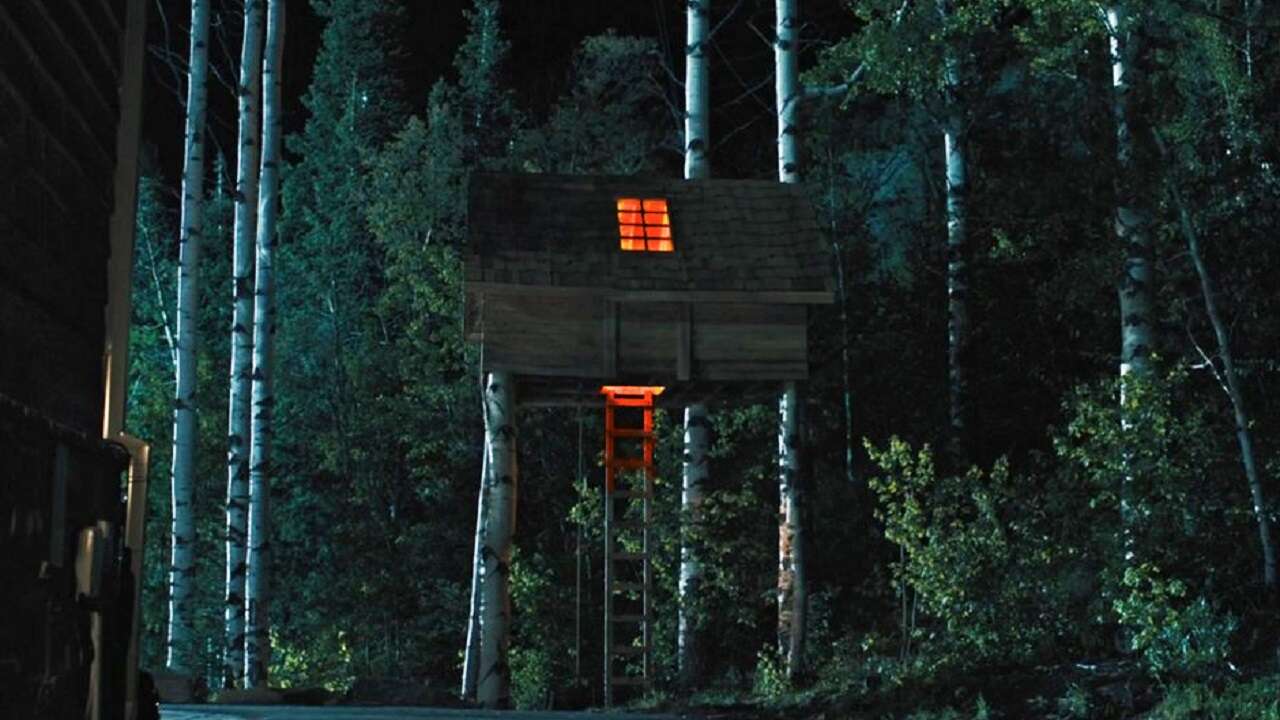
In the third act, the horror lies in the hopelessness. There is no one or nothing left to root for. With our family members either picked off or puppets for a demonic entity, we slowly come to realize we are simply here to watch the inevitable unfold. The Grahams were merely sacrifices for supernatural forces and were always going deteriorate. Sub-textually, generational trauma and anxieties were always going to repeat themselves. It makes the experience feel all the more scary and out of control. The film never relents, and the pacing stays sharp until the bitter end. Everything culminates in a memorable and intensely freaky scene rife with naked cult members, satanic worship, and lots of severed heads. It’s an ending that few will see coming upon first watch, but an ending fit for a king nonetheless. Hail Paimon!





 Wonderfully Weird & Horrifying