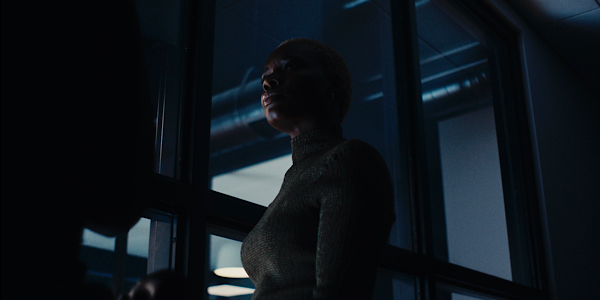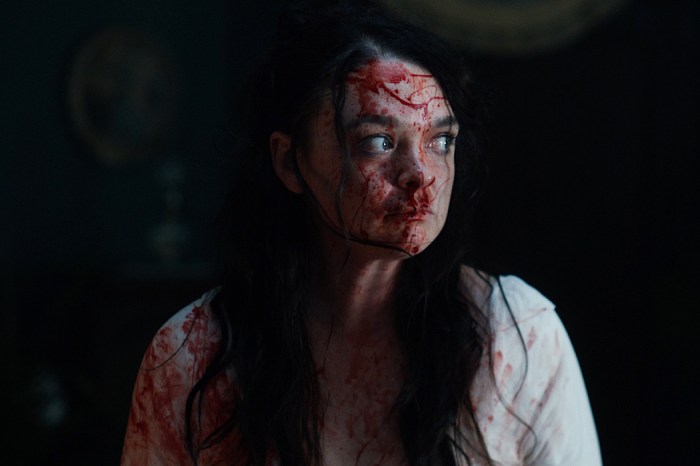
Beneath the corsets, candlelight, and rigid social etiquette of 1880s New York, co-writers and directors Usher Morgan and Katie Vincent uncover a messy, blood-soaked battle for personal autonomy in Plucked.
Rather than treating a woman’s desire to escape a toxic marriage as a quiet, whispered scandal, the filmmakers turn a high-stakes dinner party into a pressure cooker that eventually explodes into dark, unapologetic mayhem. It’s a stylish, ambitious film with a strong vision that never quite lands its ending.
Part drawing-room satire, part visceral thriller, Plucked lives or dies on how well it holds those two tones together. Mostly, it does. Not always.
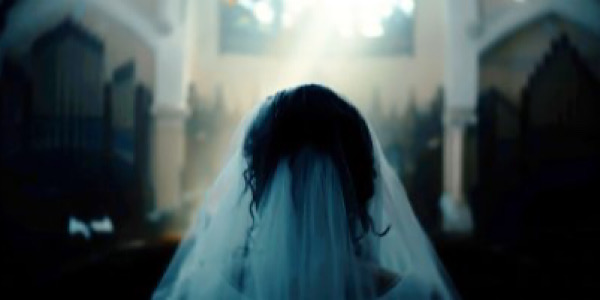
At the center of the storm is Vincent herself as Katherine Greene, who receives her court-approved divorce papers just hours before she is expected to play the dutiful hostess for her husband’s career-defining evening. Vincent plays Katherine with a sharp, defiant glee, savoring every horrified gasp as she systematically dismantles her husband’s carefully curated facade. Opposite her, Jared Canfield brings a fascinating fragility to Dr. Peter Greene. Instead of a one-note Victorian villain, Canfield’s Peter is a man buckling under the weight of his own insecurities and professional pressures, making his eventual unraveling both pathetic and volatile. When Peter’s brother James (J. Anthony Crane) enters the fray, the dynamic shifts into an absurd, almost childish tug-of-war over pride, property, and affection.
The leads are compelling and the supporting cast is convincing, especially J. Anthony Crane. The others: lacking genuine motive and personality. They often feel like placeholders, existing mainly to react in shock to Katherine’s antics.
I love the costumes and period aesthetics, and let’s be clear: this film is gorgeous despite its smaller budget. I loved that element. It makes impressive use of its single location, contrasting lush, period-accurate production design and cinematography with sudden bursts of modern energy. A few anachronistic musical cues and contemporary turns of phrase occasionally pull you out of the 19th-century illusion, but that friction feels deliberate, a reminder that the struggle against controlling, patriarchal expectations is hardly a relic of the past. That, matched with its feminist direction and gender dynamics, nearly sold me.
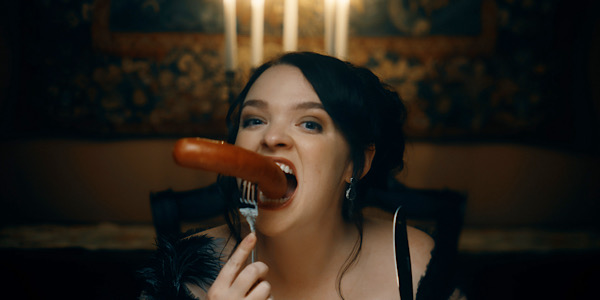
The first act takes its time seating the guests and establishing the domestic friction. Once the mask of civility drops in the second half, Plucked fully commits to its pivot from drawing-room satire to visceral thriller, and its chaotic energy makes this contained story feel like a propulsive explosion waiting to happen. And it does. However, it feels more like a whimper than a bang. I wanted the somewhat simple, seen-it-before premise to lift off in the end. It didn’t quite nail that.
The writing is where the film wobbles. Some of the dialogue was off, and the tonal shifts felt a bit conflicted, as if the script couldn’t decide whether to wink at us or wound us. I believe the writers and directors had a strong vision, and I commend them for so much, but the film still fell flat and rushed at times.
Plucked is a film I wanted to love. The performances, the look, and the fury at its center are all there, and for a smaller-budget production, that’s no small feat. But a great setup isn’t a great payoff, and the ending doesn’t deliver on what the first hour builds. Worth watching for Vincent, Crane, and the craft. Just go in expecting a sharp, beautiful provocation, not a knockout.