NIGHT AFTER NIGHT: This Heart Beats Darkly

There is a subtle strain of violence coursing through Night After Night, one that quietly infects every frame from its opening moments to its final ones. It’s a beating heart in the background, felt more than seen.

There’s no question that this is a film that will test some viewers’ stamina. Its pacing is deliberately patient, often drifting through long stretches of silence and observation. Yet it never feels empty. Visually and narratively, there is always something pulling you forward.

Josh Lobo‘s surreal sci-fi horror film isn’t concerned with delivering easy answers. Instead, it asks viewers to sit with discomfort, uncertainty, and the emotional wreckage left behind by trauma.

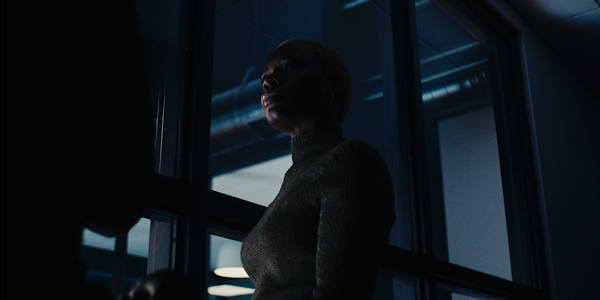
The story begins with Andy (Scott Poythress) and Willis (Johnny Sibilly), two security guards working at a seemingly ordinary university. When Willis grows suspicious of the institution’s founder, Janica Vox (Alexis Louder), and subsequently disappears during a night shift, Andy wants answers.

Daily Dread

That desire for knowing eventually leads into a hidden section of the campus, where an disturbing entity exists. From there, the film transforms into something stranger, darker, and far more intimate.

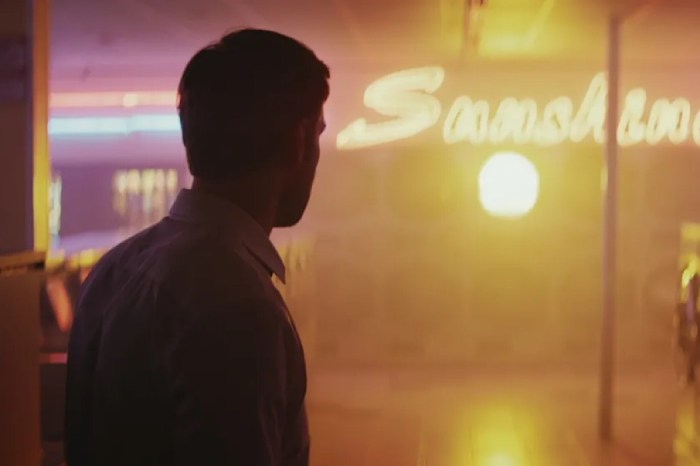
Night After Night is a mystery at its core, but it continually shifts shape through its various conceits. Even when the film resists explanation, curiosity remains its strongest weapon. Through its stylish temperament, it feels like a blend of psychological horror, neo-noir, body horror, and science fiction. Simon Waskow’s experimental score proves equally effective, creating an unnerving atmosphere.

Lobo crafts a dreamlike world that feels detached from reality, embracing surrealism over exposition. The film often feels Lynchian in spirit, not because it mimics David Lynch’s work, but because it prioritizes emotion over logic. Reality bends. Time fractures. Fantasy and memory begin to overlap until the distinction hardly matters.

The film’s fragmented structure and refusal to provide definitive answers will undoubtedly frustrate some viewers. Yet for the most part, Night After Night succeeds precisely because it remains elusive. What is real? Do the characters even know? There is horror embedded in the workplace itself, even without the voiceless oddity that emerges each night. As a society that is increasingly overworked, exhausted, and disconnected, during a period where reality often feels stranger than fiction, Night After Night speaks volumes.

Even if I can’t fully tell you everything it’s saying.

What We Carry

What I took from it was a story about isolation, guilt, and wounds that refuse to heal. It’s about the damage we inflict on ourselves and the people around us. As more of Andy’s past emerges, the film reveals a deeply alienated man carrying the weight of his own violence and regret. That emotional undercurrent becomes the film’s greatest strength.

There’s a profound sadness running through Night After Night. Nearly every character seems desperate for connection while simultaneously pushing it away. Whether intentional or not, that feeling becomes painfully relatable.

Alexis Louder is exceptional as the cryptic, commanding Janica Vox, bringing an unsettling magnetism to the role. Our two leads disorienting state is often terrifying to watch. Bryce Holden‘s cinematography is equally impressive. The university’s sterile corridors and cavernous concrete spaces become prisons of memory and dread, transforming familiar environments into something quietly terrifying.

Those looking for a conventional horror narrative may find themselves lost within its abstractions. But for audiences willing to embrace ambiguity, Night After Night becomes a rewarding emotional experience, one that haunts long after its melancholy puzzles begin to fade.

Josh Lobo‘s film is ultimately less interested in explaining its mysteries than exploring the scars people carry. Its horror stems not from what lurks in the shadows, but from the painful realization that escaping ourselves may be impossible.

Night After Night is twisty, odd, and unexpectedly moving, a film that burrows beneath the skin and settles somewhere deeper. Its answers remain elusive, but its emotions feel unmistakably real. Long after its mysteries begin to fade, what remains is a lingering ache, a reminder that the most frightening things aren’t hidden in the dark, but carried within us.

Or maybe, it’s both.

Haunt-Tober, Day 16,2024: Get Out

Jordan Peele’s Get Out is not just a film. It is a cultural milestone. This horror film transcends genre conventions to deliver a chilling and deeply relevant exploration of race, identity, and systemic oppression. At its core, Get Out is a masterclass blending psychological horror with social commentary, creating an experience that lingers far beyond the credits. It’s an unnerving ride that keeps audiences on edge while offering profound insights into contemporary American society.

The plot is deceptively simple: Chris (Daniel Kaluuya), a young Black man, travels with his white girlfriend Rose (Allison Williams) to visit her parents’ secluded estate for the weekend. What begins as a well-meaning, if awkward, encounter with her family quickly spirals into a terrifying nightmare that forces Chris to confront a nightmare version of white liberalism, privilege, and insidious racism. While Get Out might seem like a traditional “stay-the-night-in-a-creepy-house” story on the surface, Peele’s direction and script delve into far darker territory—presenting a vision of horror that’s both surreal and unsettlingly real.

Peele’s approach to horror is both innovative and meticulously crafted. Every shot, and every moment of tension is deliberately placed to evoke a slow-building sense of dread. But it’s not just the usual jump scares or creepy imagery that makes Get Out effective. Peele’s expertise lies in his ability to make the horror feel both psychological and physical—an invasion of space, body, and mind. The entire concept of Get Out centers around a literal and metaphorical violation, as Chris becomes trapped in a world where his autonomy is no longer his own. This theme of bodily horror—where the body is literally and figuratively taken over—is a potent commentary on exploitation, colonization, and the loss of self.

source: Universal Pictures

What makes Get Out such a unique and powerful horror film is its ability to balance terror with razor-sharp social commentary. Peele brings to light the subtle, insidious racism that often goes unnoticed in everyday life, especially in spaces that are seemingly “progressive.” The film skewers well-meaning white liberals, showing how their passive racism and microaggressions are as harmful as overt hate. The family members in Get Out may not be outright malicious, but their fetishization of Blackness, their patronizing attitudes, and their sense of superiority all build into something much more nefarious. Peele brilliantly unpacks these dynamics, using the genre as a lens to explore the trauma and fear of existing in a society that continually marginalizes people of color.

Kaluuya’s performance as Chris is nothing short remarkable. He brings a vulnerability and emotional depth to his character that makes the horror feel personal rather than abstract. Chris isn’t just a victim of a horrific situation—he’s an embodiment of every Black person who has been forced to navigate a world that sees them as “other.” Kaluuya’s expressions, his quiet moments of terror and confusion, make his journey all the more harrowing, and his understated performance grounds the film in real emotion.

The supporting cast is equally impressive, particularly Catherine Keener as the eerily calm and unsettling Missy Armitage. Her performance as a seemingly well-meaning, yet deeply manipulative figure, highlights the film’s biting critique of the ways white people enact control, even in situations where they claim to be “inclusive.” Similarly, the portrayal of Walter (Marcus Henderson) and Georgina (Betty Gabriel) brings another layer of psychological horror, as both characters’ identities are twisted in horrific ways, underscoring the theme of stolen autonomy.

What sets Get Out apart from so many other horror films is how it approaches its audience. There’s a palpable sense of discomfort throughout the film, amplified by Peele’s sharp dialogue and the unsettling score by Michael Abels. There are moments of humor, but they feel more like a defense mechanism against the overwhelming tension. Peele’s nuanced script allows the film to navigate between suspense, dark humor, and terrifying insight. Every twist of the narrative is a gut punch, leaving you reeling and questioning the very nature of the world we live in.

The film’s final act, in which the layers of deception and horror are fully revealed, is a masterstroke of both horror and political commentary. Peele’s critique of racism, particularly how Black bodies are commodified and objectified, hits home with an intensity that’s impossible to ignore. It’s not just the spectacle of horror that makes Get Out effective. The stand out element is how seamlessly it blends the personal with the political, making the horror feel immediate and relevant to our own lives.

In Get Out, Jordan Peele redefines what horror can be. It’s a film that doesn’t just scare; it makes you think, question, and reflect. It challenges its audience to confront uncomfortable truths about race, identity, and power. As both a genre film and a social commentary, Get Out is a triumph. It’s a thrilling, thought-provoking, and necessary piece of cinema that’s likely to be remembered as a landmark film in both the horror genre and the broader cultural conversation.

What do you think? Let us know!