

There is a subtle strain of violence coursing through Night After Night, one that quietly infects every frame from its opening moments to its final ones. It’s a beating heart in the background, felt more than seen.
There’s no question that this is a film that will test some viewers’ stamina. Its pacing is deliberately patient, often drifting through long stretches of silence and observation. Yet it never feels empty. Visually and narratively, there is always something pulling you forward.
Josh Lobo‘s surreal sci-fi horror film isn’t concerned with delivering easy answers. Instead, it asks viewers to sit with discomfort, uncertainty, and the emotional wreckage left behind by trauma.
The story begins with Andy (Scott Poythress) and Willis (Johnny Sibilly), two security guards working at a seemingly ordinary university. When Willis grows suspicious of the institution’s founder, Janica Vox (Alexis Louder), and subsequently disappears during a night shift, Andy wants answers.
Daily Dread
That desire for knowing eventually leads into a hidden section of the campus, where an disturbing entity exists. From there, the film transforms into something stranger, darker, and far more intimate.
Night After Night is a mystery at its core, but it continually shifts shape through its various conceits. Even when the film resists explanation, curiosity remains its strongest weapon. Through its stylish temperament, it feels like a blend of psychological horror, neo-noir, body horror, and science fiction. Simon Waskow’s experimental score proves equally effective, creating an unnerving atmosphere.

Lobo crafts a dreamlike world that feels detached from reality, embracing surrealism over exposition. The film often feels Lynchian in spirit, not because it mimics David Lynch’s work, but because it prioritizes emotion over logic. Reality bends. Time fractures. Fantasy and memory begin to overlap until the distinction hardly matters.
The film’s fragmented structure and refusal to provide definitive answers will undoubtedly frustrate some viewers. Yet for the most part, Night After Night succeeds precisely because it remains elusive. What is real? Do the characters even know? There is horror embedded in the workplace itself, even without the voiceless oddity that emerges each night. As a society that is increasingly overworked, exhausted, and disconnected, during a period where reality often feels stranger than fiction, Night After Night speaks volumes.
Even if I can’t fully tell you everything it’s saying.
What We Carry
What I took from it was a story about isolation, guilt, and wounds that refuse to heal. It’s about the damage we inflict on ourselves and the people around us. As more of Andy’s past emerges, the film reveals a deeply alienated man carrying the weight of his own violence and regret. That emotional undercurrent becomes the film’s greatest strength.
There’s a profound sadness running through Night After Night. Nearly every character seems desperate for connection while simultaneously pushing it away. Whether intentional or not, that feeling becomes painfully relatable.
Alexis Louder is exceptional as the cryptic, commanding Janica Vox, bringing an unsettling magnetism to the role. Our two leads disorienting state is often terrifying to watch. Bryce Holden‘s cinematography is equally impressive. The university’s sterile corridors and cavernous concrete spaces become prisons of memory and dread, transforming familiar environments into something quietly terrifying.
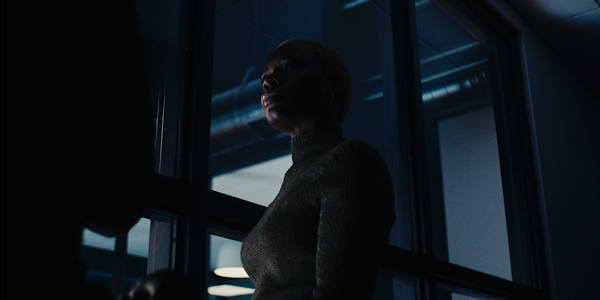
Those looking for a conventional horror narrative may find themselves lost within its abstractions. But for audiences willing to embrace ambiguity, Night After Night becomes a rewarding emotional experience, one that haunts long after its melancholy puzzles begin to fade.
Josh Lobo‘s film is ultimately less interested in explaining its mysteries than exploring the scars people carry. Its horror stems not from what lurks in the shadows, but from the painful realization that escaping ourselves may be impossible.
Night After Night is twisty, odd, and unexpectedly moving, a film that burrows beneath the skin and settles somewhere deeper. Its answers remain elusive, but its emotions feel unmistakably real. Long after its mysteries begin to fade, what remains is a lingering ache, a reminder that the most frightening things aren’t hidden in the dark, but carried within us.
Or maybe, it’s both.
 Wonderfully Weird & Horrifying