THE EXIT STATE: Messy But Compelling

Exit State has me conflicted. On one hand, it’s admirable for its exploration of serious themes while remaining visually stunning, all on a modest budget without ever feeling constrained by it. On the other hand, I wanted more from it, particularly in a third act that had the opportunity to say much more emotionally than it ultimately does.

Gabriela Ledesma‘s Exit State, which recently premiered at Screamfest, is intriguing, unique, and appropriately mysterious. Even its more uplifting moments carry an underlying sense of dread.

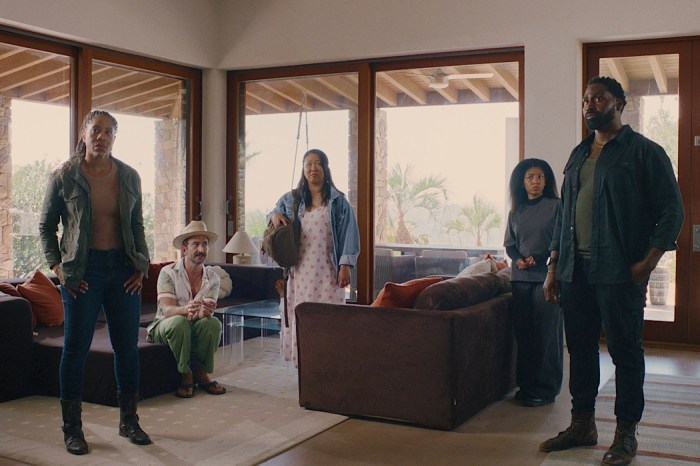
The film follows a group of individuals who arrive at a remote home near the Mexico border, escaping an authoritarian version of the United States. The property is owned by a brother and sister, played by Callie Schuttera and Josh George, who also co-wrote the script with Ledesma. What begins as a step toward freedom and hope soon reveals something much darker beneath the surface.

Safety or Suspicion?

While the political elements loom over the story, Exit State is less concerned with how the world arrived at this point than with the immediate realities facing its characters. Ledesma and her co-writers keep much of the broader context at arm’s length, focusing instead on the tension, uncertainty, and shifting dynamics inside the home. That’s an area where the script could have benefited from deeper exploration, as the emotional core occasionally feels secondary to the mystery surrounding it.

source: Chroma

Cinematographer Samuel Wilkerson does wonders with the material, creating a space that feels endless despite its physical limitations, a visual approach that complements the film’s themes of displacement and escape. The home itself is used effectively, with strong production design helping establish mood and atmosphere, while the editing remains taut throughout.

Some of the dialogue soars, while other exchanges stall. Despite its shortcomings, there’s a great deal to appreciate here. The blending of horror and political thriller elements works to the film’s advantage, while the enclosed setting and varied personalities heighten the paranoia and mystery at its core.

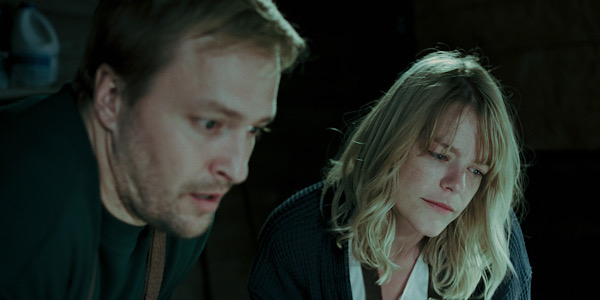
The group rarely feels like a collection of archetypes. Everyone brings their own fears, motivations, and suspicions into the house, making even routine conversations feel capable of altering the dynamic in an instant. The uncertainty surrounding who can be trusted becomes one of the film’s strongest assets.
source: Chroma

The film stumbles somewhat in its closing stretch, particularly in a finale that doesn’t fully capitalize on the weight it’s been building toward, and one of its villains feels frustratingly one-note. Still, the ensemble cast does a tremendous amount to sell the film’s tension, keeping the balance of dark comedy and fear operating at full strength. Several of the film’s strongest moments come from simple interactions between smaller groups of characters, where an eerie unease proves more effective than any overt scare. The characters’ eccentricities clash in entertaining ways, helping make even quieter scenes feel unpredictable. I was especially impressed by Clayton Farris, who was also excellent in last year’s Weapons. Callie Schuttera, his co-star in that film, is equally strong here. Hollywood, give them more roles!

Conclusion:

Ledesma shows a strong command of tone throughout, allowing the tension to build naturally while balancing horror, political commentary, and dark comedy without letting any one element overwhelm the others. Even if the ending isn’t especially surprising, there are plenty of thrills and twists.

The reveal works less because of its shock value and more because of how naturally it fits the film’s atmosphere. What lingers is the dread: tense character dynamics, unsettling interactions, and the constant sense that something isn’t quite right here. While some rough edges remain, Gabriela Ledesma demonstrates a clear visual style and a distinct filmmaking voice that feels worth following. Imperfect yet compelling, Exit State is a promising piece of independent genre filmmaking and one well worth seeking out.
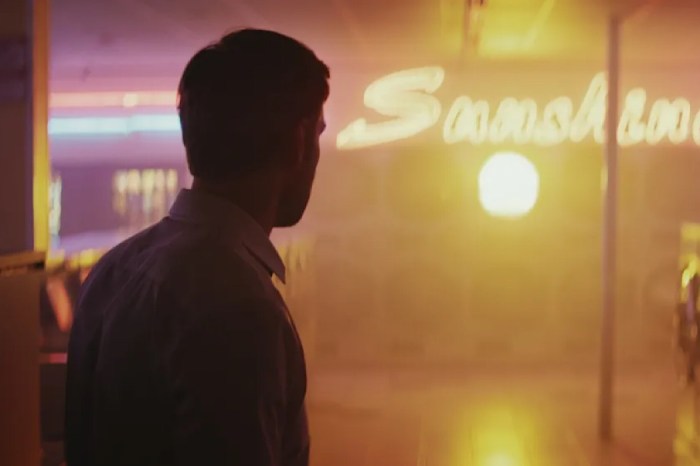
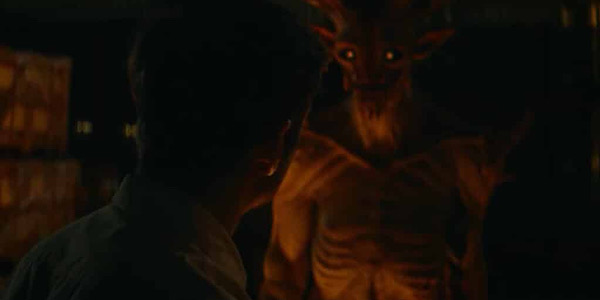
Portal to Hell: My Kind of Strange

Woody Bess‘ Portal to Hell has premise as insane as you’d expect, but it’s presented so naturally that the film’s deadpan approach becomes part of its charm.

Debt collector Dunn (Trey Holland) discovers a portal to Hell inside a washing machine at his local laundromat. When he learns that the demon living inside named Chip (played by the wonderful Richard Kind) has come for his neighbor, Mr. Bobshank (Keith David), he strikes a deal to bring back three sinners in exchange with the help of laundromat worker Ed (Romina D’Ugo). What follows is a quirky, surprisingly thoughtful journey through guilt and redemption with ample absurdity along the way.

The dialogue is sharp and the humor lands. Characters casually discuss demons, damnation, and portals to Hell as though they’re talking about the weather, and I found myself cackling more than once. Keith David delivers some hilarious lines, while Richard Kind steals every scene he’s in with the perfect blend of menace and charm. Romina D’Ugo also makes a strong impression, bringing warmth and wit to the story as Ed.

Deadpan Delight

What makes the comedy so effective is that nobody winks at the audience. Portal to Hell plays its ridiculous premise with complete sincerity, allowing it to speak for itself. The result feels less like a broad horror-comedy and more like a supernatural slice-of-life tale that just happens to involve damnation and a laundromat. That commitment to treating the impossible as mundane makes the humor all the more effective.

As much as I loved the film’s off-kilter humor, Portal to Hell, isn’t content to simply be a goofy demon comedy. The second act digs a little deeper, exploring morality, forgiveness, and the choices that define us. Underneath, the film is surprisingly compassionate, asking whether people deserve to be defined by their worst mistakes. Rather than casting judgment, it approaches its characters with empathy. Dunn‘s dilemma isn’t simply about saving a neighbor from Hell. It’s about understanding the messy choices people make and whether redemption remains possible after those choices define them.

Some of the wonderfully weird momentum that fuels the first half gives way to more contemplative storytelling. While that shift doesn’t derail the film’s enjoyment, it does slow down some of its infernal inertia.

Trey Holland serves as the film’s grounding force amid the chaos. While everyone around him is dealing with demons and sinners, Holland keeps Dunn grounded and relatable. That sincerity helps sell even the film’s wildest moments and makes it easier to invest in the emotional stakes beneath all the supernatural chaos.

There’s also something refreshing about how much the film accomplishes with a relatively small scope. Rather than relying on elaborate effects, Portal to Hell, focuses on character interactions and clever writing, allowing its bizarre setup to do the heavy lifting. The result feels intimate in a way many larger genre productions don’t. The limited setting works in the film’s favor as well. By grounding the film in ordinary locations, the supernatural elements become even more striking when they emerge.

source: Cineverse

Woody Bess understands that he doesn’t need a massive budget to create memorable imagery. After all, a demon emerging from a laundromat washing machine is already memorable enough. As a confident debut, the film trusts its script, performances, and wickedly strange concept to carry the narrative, discovering plenty of laughs lurking alongside the fire and brimstone.

Conclusion

Despite its tonal change and slower-moving final act, Portal to Hell still keeps its legs. Of course, Kind‘s demon would probably prefer to eat them.

It’s inventive, thought-provoking, and packed with the kind of scrappy indie charm that’s easy to root for. Any movie that asks us to accept a washing machine as a gateway to Hell is already operating on my wavelength, but it’s the heart beneath all that weirdness that ultimately makes it memorable.

Delightfully bizarre and unexpectedly heartfelt, it’s the kind of genre gem that reminds us why embracing the strange can be so rewarding. And really, any movie that gives Richard Kind the opportunity to play a demon deserves more than a little appreciation.

Haunt-tober22, Day 18: The Loved Ones

Alright, beasties. It’s that time of year again. For this edition of Haunt-tober, I’m going to do a post a day but, like a great haul after trick or treating, I’m hoping to mix it up and deliver some surprises. There’ll be reviews, new or old, seen/unseen, TV or film. Depending on my wicked mood, there may also be lists, audio, or video. I hope you’ll enjoy it and remember: stay weird.

Sean Byrne‘s 2009 directorial debut The Loved Ones, may just be a low-key stroke of genius in the sense that it is uniquely horrifying, over-the-top, and darkly funny, all while being quite unique. It’s a low-budget, primarily one locale film, which allows its sadistic nature to feel claustrophobic too.

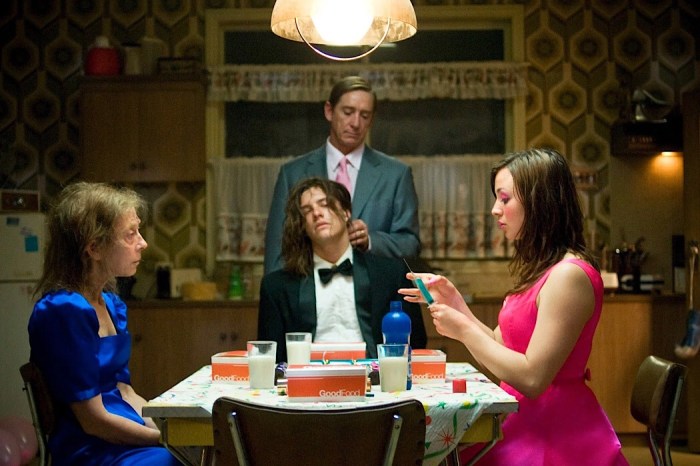
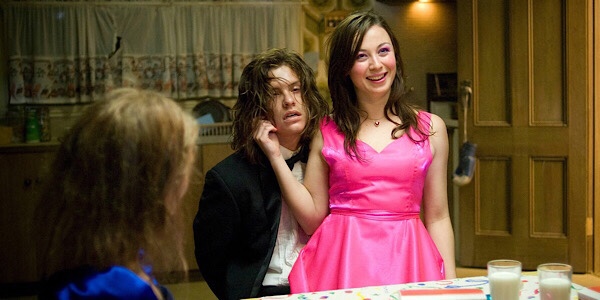
Lola (Robin McLeavy) wants her prom and she wants it her way. With the help of Daddy (John Brumpton), she’ll get it at any cost. However, her dates, including the newest Brent (Xavier Samuel), are in for a terrifying night.

source: Paramount Insurge

When troubled and grieving high schooler Brent is asked by Lola to go to the prom and he declines (to go with girlfriend Holly Victoria Thaine), he’s kidnapped and brought to Lola’s home for their “special” night. This isn’t the first time she’s done this, and what unfolds is darker and sicker than you can imagine. Daddy, along with a lobotomized woman they call Bright Eyes is also there to celebrate the occasion.

What pushes this beyond a usual torture flick is not only the bizarre story, and the totally unhinged Lola, but its witty script. I won’t sugarcoat the fact that this film is utterly disturbing at times, as the acts portrayed are truly deranged. The addition of terrific sound design and a twisted villain in Robin McLeavy makes The Loved Ones nightmare fuel of a different sort.

It’s an impressive debut feature from Sean Byrne that is wildly entertaining even if you’re watching some sequences through splayed hands. The movie also bursts with color and music, showing the contrast between the bloody truth of the circumstances to the sadistic joy Lola gets from it over its brisk but energetic 84-minute runtime.

I like when movies are unexpectedly wicked, but also when they fully commit to their intentions. This was most definitely one of those occasions.

Some of the actions feel a bit repetitive, but through surprising and shocking turns, and dedicated performances The Loved Ones is a darkly comic, twisted horror gem.