Phil Tippett’s Mad God is inspirational, certainly not due to its subject matter, but because of the context surrounding its creation. Tippett, a virtuoso of stop-motion animation and creature design, revisited designs built over three decades to make this uncompromising, macabre meditation. The project feels like an artifact unearthed from a time capsule, dusted off to unveil a wholly unique aesthetic altogether, one that invites us to appreciate the depraved and the bizarre.
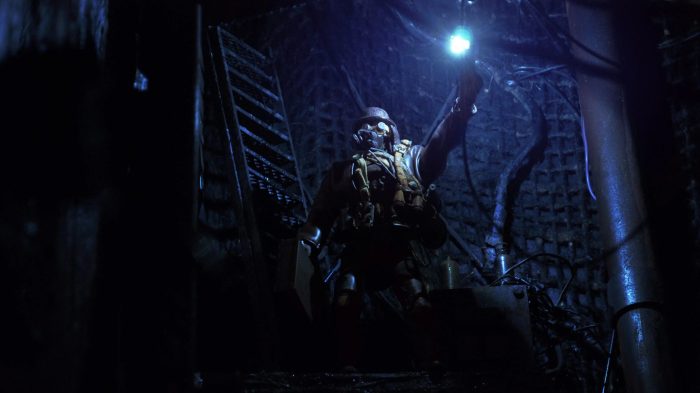
The film follows an anonymous assassin as he descends deeper into a bleak hell-scape, stunningly crafted out of practical sets and ignited into existence using stop-motion techniques. As the protagonist wades through the landscape of blood, pus, grime, and murk, we truly marvel at what practical effects can accomplish in this genre, bringing to life the gory and the grotesque in ways that CGI cannot. Tippet brings the best type of world-building to his project—the kind where there is no map or compass, and worlds seem to exist within worlds, like a living, breathing fractal artwork. Completely devoid of the spatial awareness we naturally crave, it’s up to the dark recesses of our minds to make meaning out of every bump in the night and to try to understand the laws that govern this peculiar land.
source: Shudder
Each frame of Mad God is an entire world in itself—detailed, grueling, and strange. Every moment is so visually captivating that attention shifts quickly, creating a viewing experience that leaves us remarkably arrested in the present moment. Like a twisted haunted house, there’s no time to fully process what you’ve just seen; before you know it, you’re compelled to move to the next room, where another horror awaits. This makes piecing together a linear narrative an impossibility, but that’s okay because there isn’t one to be had anyway. Strange creatures inhabit every scene. Some are slaves to others. Some are eaten by others. Some are killed by others for ritual or sport. We witness life for a moment, then death for a moment, and then ultimately move to the next frame, leaving these monsters in the abyss.
Tippet somehow creates an ecosystem where each object, living or not, is crafted with such care and intention, yet is so utterly disposable at the same time. This dichotomy reflects a point that could be made about our own existence, offering some thought-provoking, existential musings of a nihilistic variety. While Tippet is the mad god of his own weird world, he might argue that our god is just as mad. Even in its abstractness, the film tells a tale of life and death, growth and destruction, depicting the human race negatively—as ill-fated, destined to repeat the same mistakes of war, pollution, and consumerism over and over. Cynical, sure, so how does it manage to be so moving? For the creative in all of us, it stirs something deep within. There is inherent beauty in listening to a singer sing or watching a dancer dance. Whatever your thing is, this artistic achievement inspires you to go do it. Phil Tippet’s thing is bringing creatures to life through stop-motion animation, and Mad God exists as a rare gift—the gift of a person creating exactly what they were meant to in this life.
If a film is ultimately defined by how it makes us feel, then the numb void left in the wake of a Hereditary viewing makes for quite the interesting evaluation. The product of a downright surgical effort to drain, depress, and disturb the audience rather than just simply bringing the scares, Ari Aster’s remarkable but heavy debut feature boasts an especially bleak atmosphere from start to finish. Completely shaken by the time the more traditional jump scares roll around, it’s tough to bear the weight of the horrors Hereditary has to offer, and there are plenty.
When life returns to the body, we can then fully appreciate what we just saw. The film follows the breakdown of a family at the hands of psychological and supernatural forces, touching on weighty subjects such as familial trauma and mental illness in unique ways. Above all else, we get a sophisticated horror – deliberately shot, artfully designed, and superbly acted. It’s a film with such intentional storytelling, so rich in occultist lore, that you could rewatch it several times and still be decoding new symbolism and foreshadowing upon each viewing. Yet we also get a film that, if you did happen to miss all of the heavily shrouded iconography, at the very least elevates a familiar sub-genre of horror that knocks on the door of residential homes and infiltrates the family unit in an all too intimate way. It delivers plenty of viral moments, and was A24s highest grossing film upon release. Serious and meticulous piece of art, or elevated mainstream horror experience that scares the living shit out of you? It’s fair to say that Hereditary somehow does both and does both well – a victory for the wide range of horror fans that the film will appeal to.
source: A24
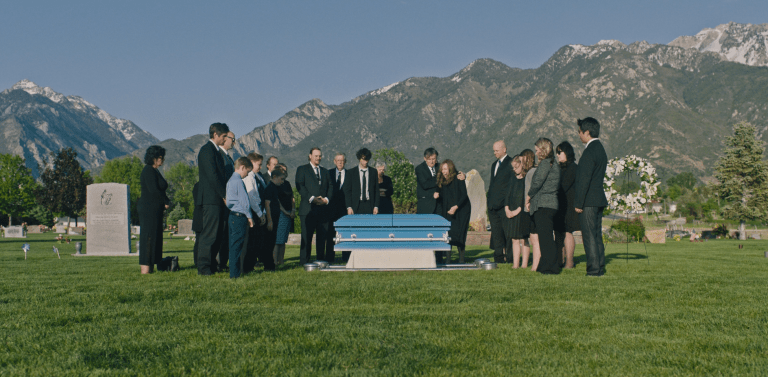
Ellen Taper Leigh is dead at the age of 78. Collecting themselves to attend the funeral of the family matriarch are Ellen’s daughter, Annie (Toni Collette, in a performance worthy of its own review), Annie’s husband, Dr. Steven Graham (Garbriel Byrne), their son, Peter (Alex Wolff), and their daughter, Charlie (Milly Shapiro). The film wastes no time trying to put up a “one big happy family” ruse, as it is clear we’re meeting a family harboring negative sentiments towards themselves, the world, and each other.
Annie shoulders some absolutely wicked trauma and anxieties from her own upbringing, the tragic details overshared to her grief counseling group in an excellently rampant monologue by Collette – as dry and unhinged as ever. Annie is attempting to be a good mother, though will never be able to transcend her own neglect as a child and become one. Past events such as a sleepwalking incident in which she nearly burned her two children alive have prevented her from exactly winning the mother-of-the-year award.
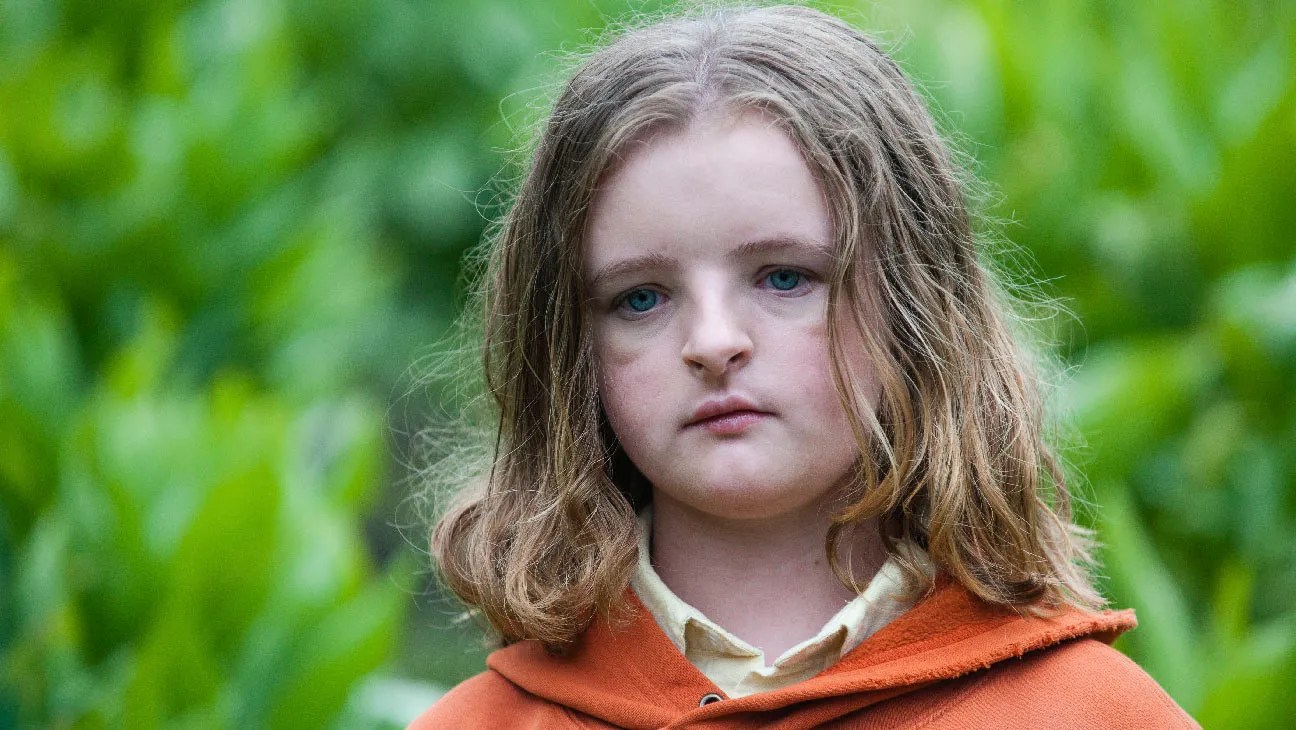
Peter projects as your average teenager, but is severely detached from his family members and dissociates frequently due to some childhood trauma of his own (the sleepwalking incident, perhaps?). Then there’s Charlie, who is, to put it lightly, off. While Peter crushes on the girl sitting in front of him in class and smokes weed behind the bleachers, Charlie spends her free time cutting the heads off of dead birds and staring blankly into the distance making clucking sounds with her tongue (a particular note that will haunt us long after the film is over). Charlie seems to have only had a meaningful relationship with her late grandmother, as she asks her own mother in a very frank and uncomfortable scene, “who is going to take care of me now that she is gone?”.
A foil to his troubled wife and kids, Steve is the cool, calm, and collected type- though the frequency in which he needs to pour himself a glass of whiskey increases as the story unfolds. Despite being a patient and caring psychiatrist, he ironically never seems to understand his loved ones and their more deranged associations towards the world around them.
source: A24
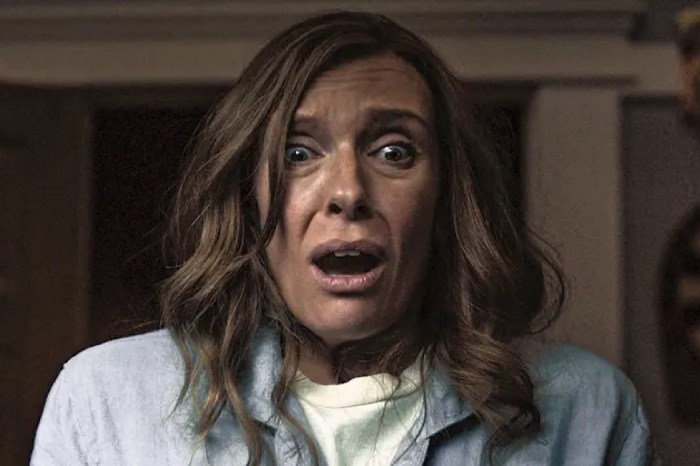
Already facing the death of their mother/grandmother, things begin to really unravel for the Grahams when another incident occurs. In the annals of all of horror there is an abundance of unique, memorable, and iconic death scenes- imagery that sticks with audiences long after the closing credits. Charlie’s death in Hereditary, involving anaphylactic shock and decapitation from a telephone pole, is as harrowing and horrific as they come. It’s probably the first scene that comes to mind in the film’s impressive stable of shockers, and leaves us with our mouths gaping as wide as Toni Collette’s in other iconic moments of the film. Hereditary knows how to leave room for some slow burn character development but also detonate a total jaw-dropper when it needs to. Side note, as someone with a nut allergy, the scene did what Jaws did for swimming in the ocean to the idea of me ever trying a nut…
From this point on its a fever dream. The film’s intense and dissonant score fires loudly, and the camera slowly pans over the terrain. We are drifting scene to scene just like our characters are sleepwalking through life – in a complete daze.
The family begins to break down and turn on each other. History is repeating itself for Annie, and what unfolds from here is an examination of grief, mental illness, and generational family trauma – three hot button themes in contemporary cinema, but themes we see increasingly dealt with using a positive spin, full of heart, hope, and even a bit of humor. Aster allows these aspects to rear their ugly heads, becoming monsters of their own within the film and manifesting themselves in a way that is only negative and all-consuming. The psychological responses need to make their way through the Graham family like a virus. In a weird way, it’s a bit of a refreshing take on the subject.
source: A24
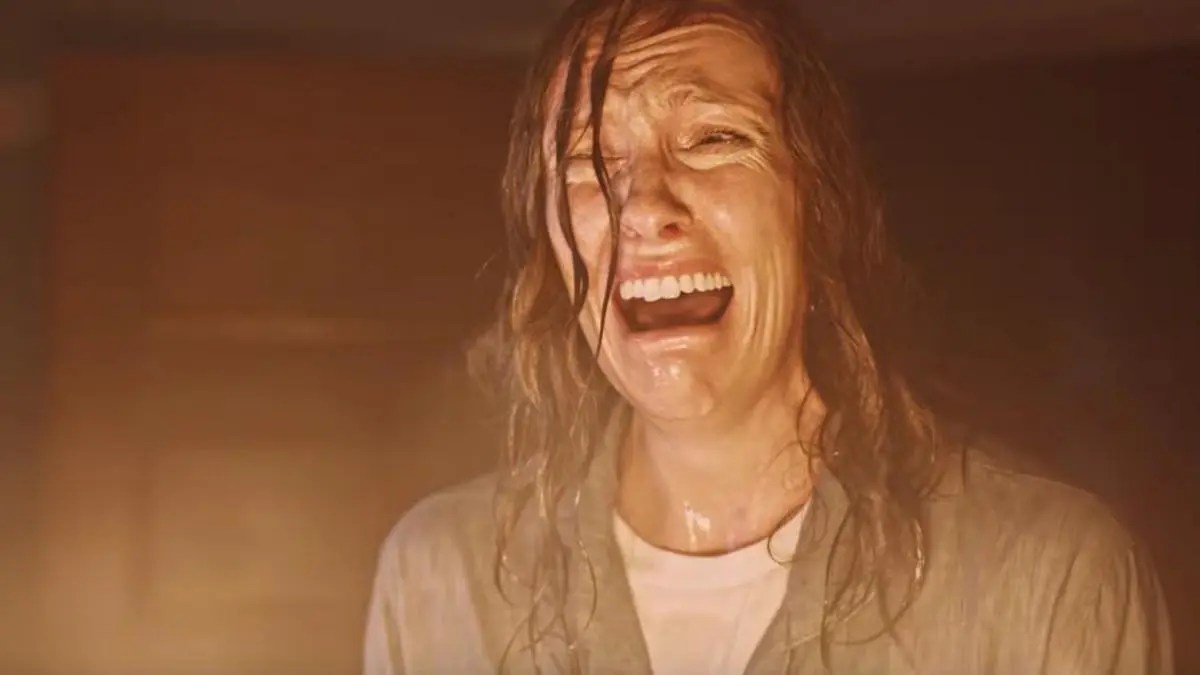
With the psychological horror already firing on all cylinders, the film seamlessly ties in a promised but yet to be realized supernatural element. The family finds themselves entangled in something much larger than they could ever imagine. There’s a heavy emphasis on the human body used as a mere vessel or sacrifice for a demonic being, so vulnerable and out of one’s control. Aster takes plenty of moments to offer his take on what possession can do to the human body, and they make for some incredibly disturbing scenes. We see Peter smash his own head against his desk at school. Annie lets out a blood curdling scream for help. She later will saw at her own neck with wire. Yet, in perhaps the most uncomfortable moment of all, it is Annie, similarly out of control, but not possessed, rather overcome by grief in the wake of her daughter’s death, writhing, screaming, wanting out of her body, that reigns as the film’s most powerful scene. The moment demonstrates the films expertise at blurring the line between the psychological and the supernatural. Hereditary is by no means the first to use the two as subtext for each other, but it’s done as successfully and poignantly as ever. A robust paranormal plotline is used as a powerful look into the human inability to outrun the trauma within our own bloodlines.
The scene also serves as a lock for an appearance on any Toni Collette acting highlights compilation, and perhaps the compilations of greatest performances for years to come. This film would not be the same without Collette’s career best performance, her impact in such a challenging role cannot be overstated.Hereditary is such a force not only because of the fear and anguish generated within us an audience, but because of the believable pain, madness, and desperation that can be felt in the characters – all credit to the cast, namely Collette and Wolff, who put together alarmingly expressive performances. If it was Aster’s job to create this sense of terror within us, it was their job to ensure that the characters matched the energy, creating a believably bleak and harrowing nightmare that we are all trapped in together.
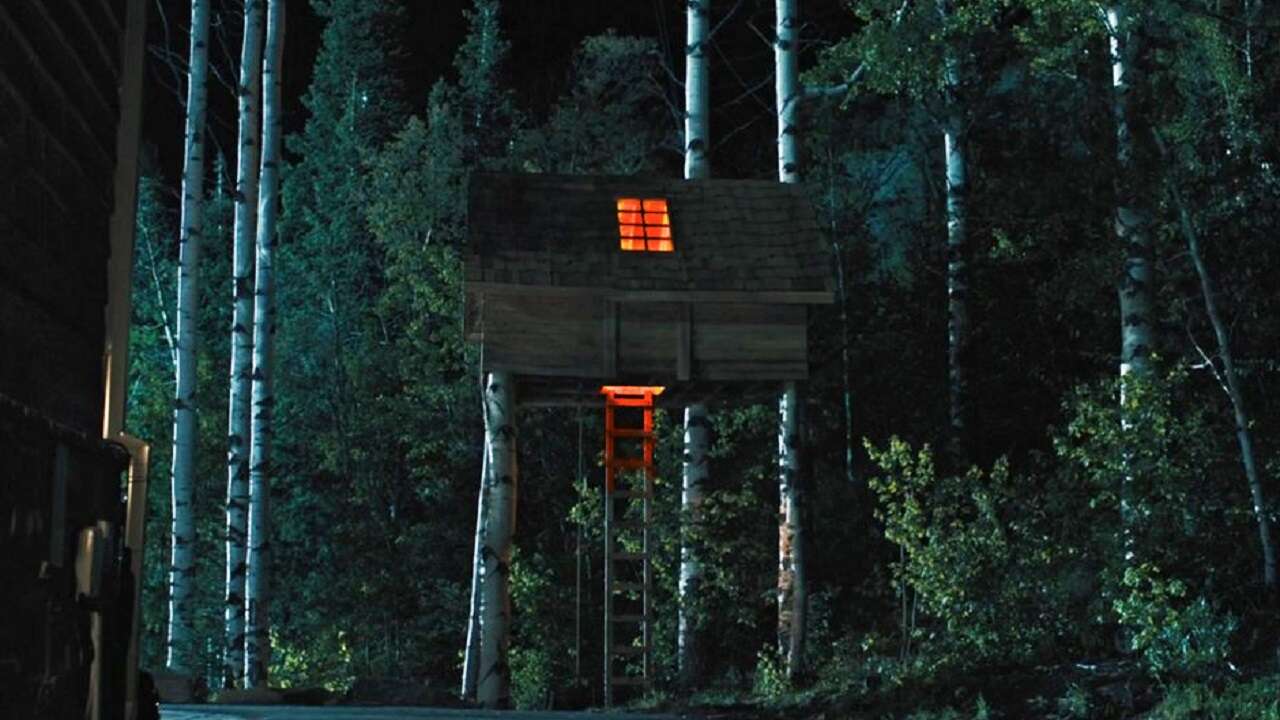
In the third act, the horror lies in the hopelessness. There is no one or nothing left to root for. With our family members either picked off or puppets for a demonic entity, we slowly come to realize we are simply here to watch the inevitable unfold. The Grahams were merely sacrifices for supernatural forces and were always going deteriorate. Sub-textually, generational trauma and anxieties were always going to repeat themselves. It makes the experience feel all the more scary and out of control. The film never relents, and the pacing stays sharp until the bitter end. Everything culminates in a memorable and intensely freaky scene rife with naked cult members, satanic worship, and lots of severed heads. It’s an ending that few will see coming upon first watch, but an ending fit for a king nonetheless. Hail Paimon!



 Wonderfully Weird & Horrifying