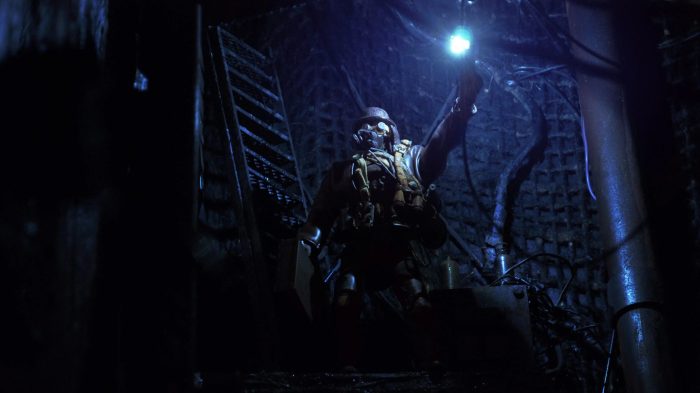
Phil Tippett’s Mad God is inspirational, certainly not due to its subject matter, but because of the context surrounding its creation. Tippett, a virtuoso of stop-motion animation and creature design, revisited designs built over three decades to make this uncompromising, macabre meditation. The project feels like an artifact unearthed from a time capsule, dusted off to unveil a wholly unique aesthetic altogether, one that invites us to appreciate the depraved and the bizarre.
The film follows an anonymous assassin as he descends deeper into a bleak hell-scape, stunningly crafted out of practical sets and ignited into existence using stop-motion techniques. As the protagonist wades through the landscape of blood, pus, grime, and murk, we truly marvel at what practical effects can accomplish in this genre, bringing to life the gory and the grotesque in ways that CGI cannot. Tippet brings the best type of world-building to his project—the kind where there is no map or compass, and worlds seem to exist within worlds, like a living, breathing fractal artwork. Completely devoid of the spatial awareness we naturally crave, it’s up to the dark recesses of our minds to make meaning out of every bump in the night and to try to understand the laws that govern this peculiar land.
source: Shudder
Each frame of Mad God is an entire world in itself—detailed, grueling, and strange. Every moment is so visually captivating that attention shifts quickly, creating a viewing experience that leaves us remarkably arrested in the present moment. Like a twisted haunted house, there’s no time to fully process what you’ve just seen; before you know it, you’re compelled to move to the next room, where another horror awaits. This makes piecing together a linear narrative an impossibility, but that’s okay because there isn’t one to be had anyway. Strange creatures inhabit every scene. Some are slaves to others. Some are eaten by others. Some are killed by others for ritual or sport. We witness life for a moment, then death for a moment, and then ultimately move to the next frame, leaving these monsters in the abyss.
Tippet somehow creates an ecosystem where each object, living or not, is crafted with such care and intention, yet is so utterly disposable at the same time. This dichotomy reflects a point that could be made about our own existence, offering some thought-provoking, existential musings of a nihilistic variety. While Tippet is the mad god of his own weird world, he might argue that our god is just as mad. Even in its abstractness, the film tells a tale of life and death, growth and destruction, depicting the human race negatively—as ill-fated, destined to repeat the same mistakes of war, pollution, and consumerism over and over. Cynical, sure, so how does it manage to be so moving? For the creative in all of us, it stirs something deep within. There is inherent beauty in listening to a singer sing or watching a dancer dance. Whatever your thing is, this artistic achievement inspires you to go do it. Phil Tippet’s thing is bringing creatures to life through stop-motion animation, and Mad God exists as a rare gift—the gift of a person creating exactly what they were meant to in this life.
From Rosemary’s Baby to The Exorcist to Children of the Corn, the archetype of the evil or possessed child has been an evident part of the horror genre. Richard Donner’s 1976 horror classic, The Omen, is also famous for its evil child, the Son of Satan. However, the character of Damien Thorn in The Omen, stands apart from these other popular demonic children.
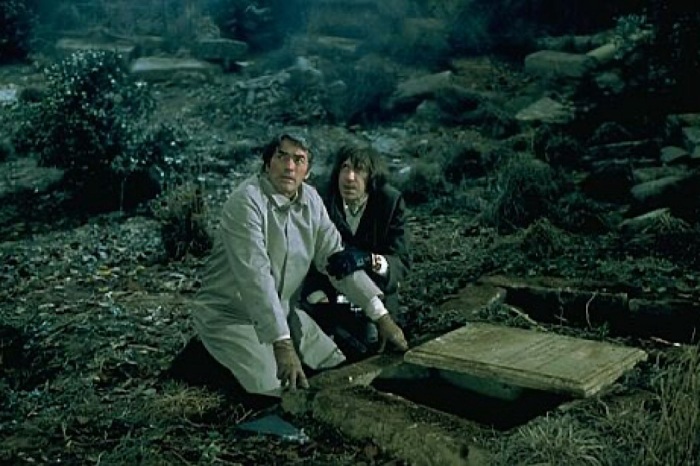
In the film, after Katherine Thorn (Lee Remick) delivers a stillborn baby at the hospital, her husband Robert (Gregory Peck) adopts a young baby boy unbeknownst to his wife. As their son Damien begins to grow older, a series of mysterious deaths and events begin to follow the Thorn family. A priest, Father Brennan, reveals to Robert that Damien is the son of Satan, the Antichrist. He also reveals that Katherine is pregnant and Damien will kill her new child, along with both Katherine and Robert. As more people around the family begin to die, Robert investigates the true background of Damien while coming face to face with evil.
Source: Turner Classic Movies
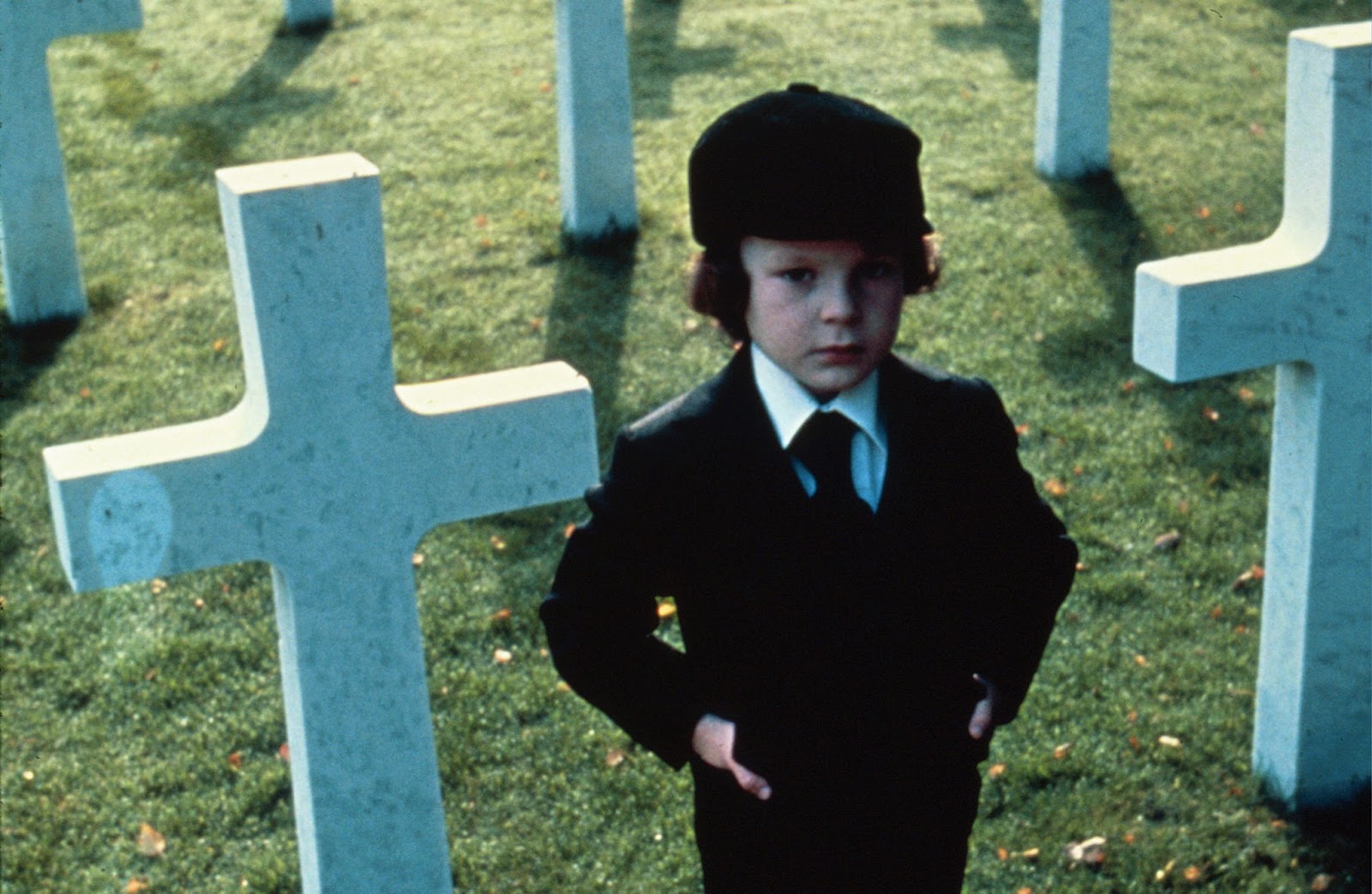
Growing up, I always loved The Omen and the character of Damien Thorn. I found him to be such a different character compared to the other evil children depicted in horror movies. With little dialogue and simple stares, he could capture my attention in a second. And although Damien screams and physically attacks his mother at the sight of a Espicopal church and has tantrums typical of a young boy, he embodies a quiet villainy that is as haunting as it is compelling. Throughout the entirety of The Omen, Damien hardly says any other words besides “mommy” and “daddy”. His mere presence keeps viewers on edge.
In The Exorcist, the character of Regan MacNeil represents a more overt and visceral form of possession. Regan’s transformation from a young girl to a vessel for demonic forces is physically and emotionally intense, with dramatic changes in her appearance, behavior, and language. Similarly, in Children of the Corn the monstrous children of Gatlin are depicted as the primary antagonists. Led by Isaac and his subordinate Malachai, the children capture and brutally murder adults in the town and put them on crosses as human sacrifices. Characters such as Regan and Isaac openly display their monstrous nature and are vocal about their violent intentions.
Source: Turner Classic Movies
In one scene in The Omen, Katherine decides to take Damien on a visit to the zoo. As the mother-son duo strolls and drives through the park, they encounter an array of different kinds of animals. However, with just a mere gaze at the giraffes, Damien sends all of them running away with fright. The unsettling power of Damien becomes even more apparent when he looks at a large group of baboons only to have them become increasingly agitated. The baboons storm the Thorn’s car while screeching and pounding at the windows.
In another scene, Katherine is tending to one of her ceiling plants by standing on an uneven table a little too close to the railing. The scene repeatedly cuts back between shots of Katherine, her son Damien riding a tricycle around his bedroom, and the malevolent facial expressions of Mrs. Baylock, Damien’s nanny. Mrs. Baylock opens the door to Damien’s room, enabling him to ride straight down the hallway towards Katherine. Damien rides his tricycle directly into Katherine, pushing her over the railing. Damien purposely attempts to kill his mother. Yet, he never says a word. As he rides his tricycle, the film masterfully plays on the concept of the “demonic child,” subverting traditional perceptions of childhood innocence. He casts only a gaze at his mother as she hangs from the indoor balcony.
Coming after the successes of The Exorcist and Rosemary’s Baby, as well as being one of the first representations of a demonic child in the horror genre, the character of Damien Thorn captivated audiences with his chilling portrayal of evil incarnate. His sinister presence and subtle actions left an indelible mark on viewers, cementing his status as an iconic figure in a genre that loves its creepy children.
How far would you go for love? For those who currently have someone they’re enamored with, it may be easy for them to say that they’ll go to great lengths. However, how far would you go for someone you know very little about? Love is a complicated emotion and it can make people do crazy things. Alfred Hitchcock’s 1963 horror film, The Birds explores these complexities of love by drawing parallels between the brash behavior of birds and the impulsivity of human relationships. The visual symbolism, carefully crafted dialogue, and natural sound tell a story of the chaos that ensued amidst an avian attack in the 1960s, in a manner that resonates with modern audiences.
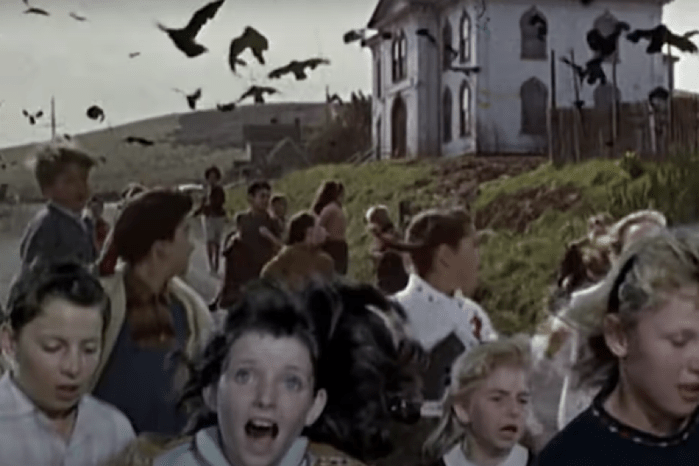
The film opens in San Francisco, where gulls are flying around as audiences are introduced to Melanie Daniels, who is scurrying into a bird shop. Her plan is to get a myna bird but things go awry when she meets Mitch Brenner, who recalls her involvement in a court case, and he decides to play a prank on her. Melanie is initially irked by his quick judgment of her, but she is quickly smitten and plans a trip to Bodega Bay to secretly deliver a pair of lovebirds that he wanted for his sister Cathy. The lovebirds become such a pivotal motif throughout the film as they become a symbol of resistance because they stick together amidst all the calamity that unfolds. Melanie is caught in the act of delivering the birds as a gull begins pecking at her when she travels away from Mitch’s home. Interestingly, this isn’t the first time Melanie will be jabbed at, as the town folks are naturally curious about her visit to Mitch and begin to flock over her sudden appearance in their town. Drawing these parallels between the instinctive habits of birds and the curiosity of humans in the affairs of love really sets up the story of what happens when both worlds collide.
source: Universal Pictures
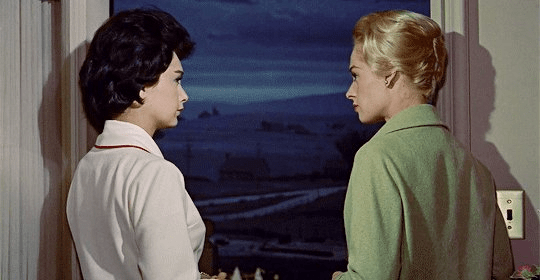
As the story continues, Melanie encounters an array of different characters and the conversions that she has with them gives further insight to their bird-like qualities. For instance, she meets Annie Hayworth, a school teacher who is living a life on her own after a romantic relationship with Mitch ended abruptly because his mother, Lydia Brenner disapproved. Annie tells Melanie that ironically, she and Mitch’s mother became friends now that she “is no longer a threat” to her son. This further explores the bird-like behavior in the affairs of love as the teacher is viewed as a predator, whom Lydia believed would disrupt the stability of her nest. When Melanie finally meets Mitch’s mother, the parallels to avian activity continue as they have a heart to heart. Lydia explains that her family is a “very good reason for getting out of bed”, which emphasizes her devotion to it, much like a mother bird cares for her chicks. The dialogue that the characters exchange with Melanie reinforce the connection between the all consuming nature of human relationships and the predatory and protective habits of birds.
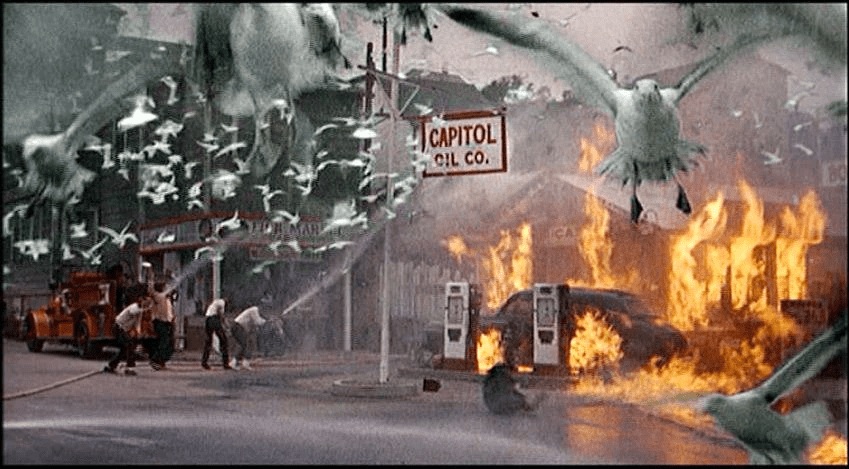
Another intriguing aspect of the film is that it lacks a score and relies on ambient sound to explore the similarities between the aggression of birds and the complexities of humans in the affairs of love. In one key moment, Melanie and Mitch take refuge in a Bodega Bay diner when birds begin to swarm the area. The sounds of the wings flapping and screeching fills the scene and makes those hiding in the diner feel cornered and violated. Interestingly, this is similar to the events that unfold inside the diner where the town’s people verbally target Melanie and blame her for the attack. The bird’s screeches fill the ambience much like the insults envelope Melanie and Mitch. During perhaps the tensest moment of the film, Melanie, Mitch and his family try to escape their home that is surrounded by birds. As the avians’ chirping creates an eerie mood, Cathay’s lovebirds remain silent, drawing perhaps the biggest parallel to human nature. It provides commentary on the fact that much like the birds, humans are invasive in other’s romantic affairs, making them, not the lovers, the loudest disruptors of the peace.
source: Universal Pictures
The Birds is a unique film that succeeds in exploring the horrors of an avian attack and comparing it to people’s intricate behavior when dealing with matters of love. With its strong symbolism, Hitchcock highlights how the various types of birds represent aspects of human nature such as attraction and curiosity. The dialogue also gives insight to the people’s bird-like qualities when it comes to defending loved one’s because it uses the conversations to shed light on the characters’ protective nature over their flock. The film’s lack of a score solidifies the comparison because just as the twittering of the birds casts an unsettling feeling amongst the town, unsolicited opinions of outsiders may taint the tranquility between a couple.
Despite being released over 60 years ago, The Birds remains relevant because humans are still affected by the convoluted affairs of love, and much like nettlesome birds, it is not something that one day will spontaneously fly away.
Are you here because you’ve seen Saw? Or because you’re curious to learn more? Whether you’ve witnessed the interwoven narrative of this 2004 American horror film or merely heard about it, you likely know about Saw and its association with violence, gore, and “torture porn.” This term, “torture porn”, refers to films that prioritize brutal and gratuitous images of people getting tortured or killed on screen. Various critics frequently utilize this term to discredit horror films, labeling them as lacking substance and reducing them to nothing more than sadistic narratives.
In a 2007 New York Times article, Jeannette Catsoulis called the first Saw film an “unexpected success” and described the whole franchise as “distasteful” due to its visceral and intense sequences. While not every film caters to everyone’s taste, particularly when it comes to horror, I believe some individuals dismiss and disregard films like Saw due to intense content. These discourses not only discourage viewers from actually watching the movie but also from critically analyzing and engaging with the film’s content.
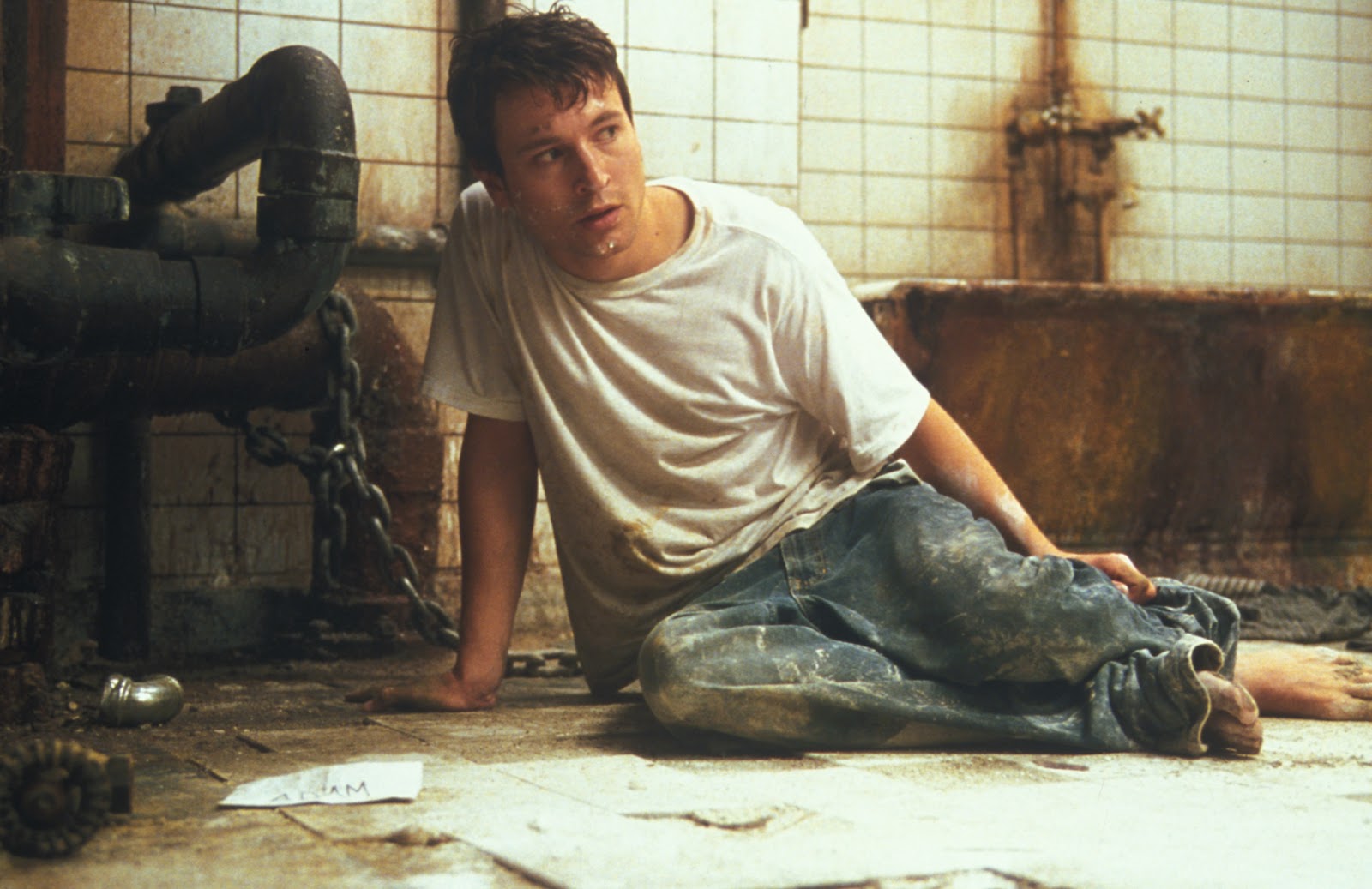
The film, directed by James Wan, begins when two strangers Adam Stanheight (Leigh Whannell) and Lawrence Gordon (Cary Elwes) find themselves chained to the pipes at opposite ends of a dirty and blood-stained bathroom. As the two men attempt to piece together their final moments before being trapped in the bathroom and attempting to seek an escape, the film cleverly weaves in flashbacks delving into the lives of Adam, Lawrence, and past victims. Simultaneously, it intertwines these events with the current investigation into the notorious Jigsaw killer.
source: Lionsgate
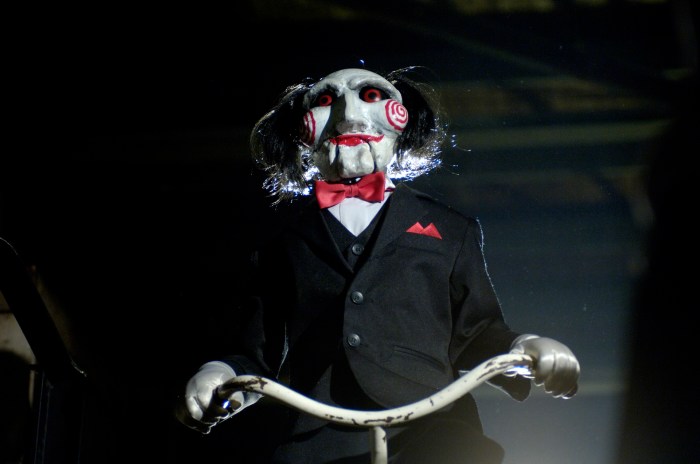
Central to the film’s brilliance is the character of Jigsaw, also known as John Kramer (Tobin Bell). Jigsaw isn’t a conventional villain driven by malice or the desire to kill. He operates on a twisted moral compass to make individuals appreciate life’s value. His traps and games aren’t just sadistic displays of power; they’re an attempt to confront his victims with their flaws and make them rethink the harm they have caused in the past. Although Jigsaw has minimal screen time, his absence only adds to his presence. Viewers, along with investigators, must piece together the clues to discover Jigsaw’s identity and motives.
While the term “torture porn” looms in media discussions, Saw defies this one-dimensional categorization. Although Saw includes scenes of violence and blood and many of the later films within the franchise include more gore with the introduction of intricate Jigsaw traps, the first film is not consumed by graphic images. Instead, it intricately balances tension with its exploration of moral ambiguity and the psychological depth that sets it apart from mere shock value.
source: Lionsgate
Among fans, Saw is also known for its intertwining narratives and surprising plot twists. In the final moments of the film, the seemingly lifeless corpse that has lay in the middle of the bathroom for the entirety of the runtime slowly comes to life. It is revealed that the body is John Kramer, the real Jigsaw Killer, who “likes to book himself front-row seats to his own sick little games.” The impact of this twist extends far beyond the immediate shock and elevates Saw beyond just a violent and torture-filled flick. It makes viewers rethink everything they just watched, wondering what clues they either caught or missed. It is a moment that remains in viewers’ minds long after the credits roll.
The Saw franchise stands as a milestone in the horror genre, as it is one of the highest-grossing horror series of all time. Saw X, the 10th installment in the franchise, was also released in September of 2023. With these accolades, it is safe to say that many people love the first Saw film and the whole series. If there’s hesitation about watching Saw, give it a chance. It might defy your expectations and leave you contemplating its twists, memorable characters, moral situations, and iconic theme song.
The great storytelling advantage of horror as a genre is the inherent feeling of inevitability. Even the most banal scenes are presented in a context of dread. Something horrible must occur to somebody at some point, or else “horror” would not properly describe the events of the story. Most horror films draw attention to this inevitability through cheap tricks, such as not-so-vague foreshadowing dialogue or creepy music laid over useless scenes. Predominately, these tricks are used to tide over the bloodthirsty audience and fill up the first and second acts, eventually arriving at the exciting finale we all showed up to see. Building a story in such a way can feel quite perfunctory.
It was this very critique that led me away from horror in the last few years. The patterns of the genre had become too obvious, and their variations had lost charm. My rather simplistic perspective would be shattered after viewing George Sluizer’s The Vanishing (1988), a film about a young woman named Saskia who goes missing and her husband who would do anything to find her. The film is particularly famous for its ending, but I would like to look at its opening scenes as I feel they present the genre’s necessary sense of inevitability in a new and haunting way.
source: MGS Film
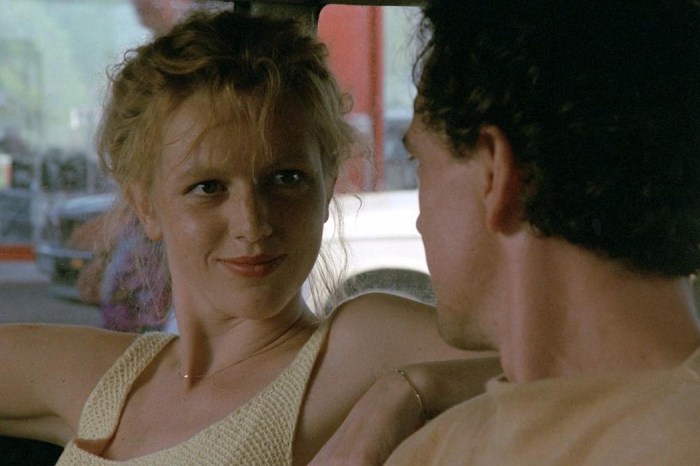
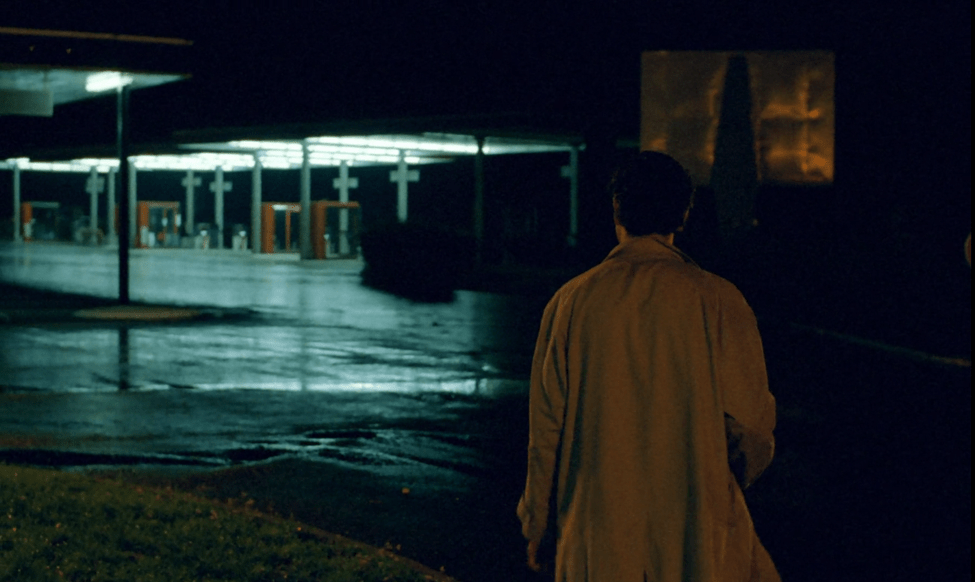
The Vanishing follows a young couple, Rex and Saskia, as they travel cross country on vacation. While passing through a long and dark tunnel, their car runs out of gas. Rex rushes off with a canister to a nearby gas station and leaves Saskia all alone. It seemed obvious that Rex would return to discover his wife had been abducted. Indeed, when he comes back with the gas, Saskia is gone. He fills the car up, drives forward, and… finds her waiting for him outside the tunnel. She is perfectly fine.
source: MGS Film
My intuition had been wrong. I had initially felt relief at seeing her safe, but a moment later, I was terrified. The relief I felt only emphasized the horrific fate that awaited this young, beautiful, and innocent woman. Before, I looked at her disappearance as a function of the plot. Now, every second with Saskia from this point on felt like being with a ghost.
Also, this subversion of expectations prevented me from retreating into the safety of my recognition of storytelling patterns. Sluizer does not subvert expectations with a bold swing, but rather, he does so in an off-the-nose way which causes me to feel a true sense of helplessness. I saw no way to stop Saskia’s abduction because there was no way to know when, why, or even if it took place. It is much harder to identify, and therefore prevent, danger when the situation feels so intangible.
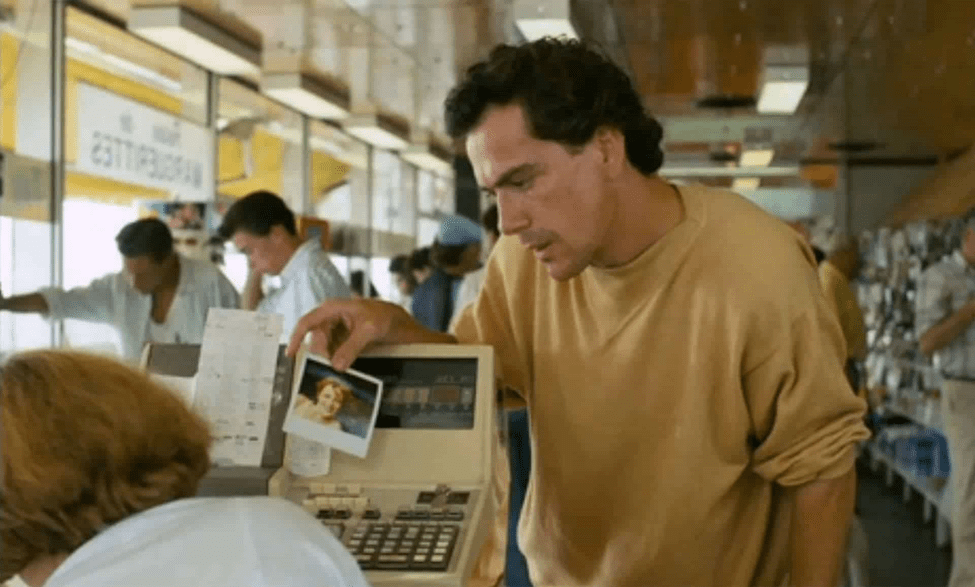
Sluizer does the same trick a second time. After the couple arrives at a rest stop, Saskia goes to use the restroom. A strange-looking man wearing a cast seems to follow her into the building, and we are forced to wait with Rex for his wife’s return. Saskia does return, further teasing her eventual abduction.
As Rex and Saskia prepare to continue their road trip, she goes back into the rest stop one last time. She is never seen again.
source: MGS Film
The structure of this opening made me highly empathetic to Rex. Horror protagonists tend to have a bad reputation for being unintelligent. We all get frustrated when Laurie Strode throws the knife to the side after incapacitating Michael in Halloween. I always shout, “He’s just going to get right back up.” It is a comfortable thing to do. I can escape my fear by believing that I would act more rationally than the characters, and therefore survive a similar event. In The Vanishing, Rex did not take action to stop the abduction because he was unaware of any threat, and I was not able to create a theoretical course of action to stop the abduction because I could not tell when a threat was present or not. He and I may have been on opposite sides of the spectrum, but we were both too distracted to prevent tragedy.
The Vanishing certainly delivers on the essential feeling of inevitability that all great horror films have, but it is its combination with unpredictability that makes me defenseless as a viewer. Inevitability and unpredictability seem contradictory, but it is the careful balancing of both that makes this film one of the most psychologically unnerving ever made.
If a film is ultimately defined by how it makes us feel, then the numb void left in the wake of a Hereditary viewing makes for quite the interesting evaluation. The product of a downright surgical effort to drain, depress, and disturb the audience rather than just simply bringing the scares, Ari Aster’s remarkable but heavy debut feature boasts an especially bleak atmosphere from start to finish. Completely shaken by the time the more traditional jump scares roll around, it’s tough to bear the weight of the horrors Hereditary has to offer, and there are plenty.
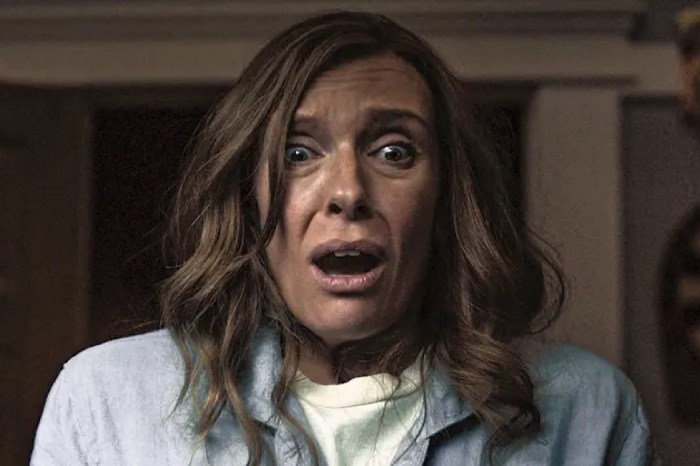
When life returns to the body, we can then fully appreciate what we just saw. The film follows the breakdown of a family at the hands of psychological and supernatural forces, touching on weighty subjects such as familial trauma and mental illness in unique ways. Above all else, we get a sophisticated horror – deliberately shot, artfully designed, and superbly acted. It’s a film with such intentional storytelling, so rich in occultist lore, that you could rewatch it several times and still be decoding new symbolism and foreshadowing upon each viewing. Yet we also get a film that, if you did happen to miss all of the heavily shrouded iconography, at the very least elevates a familiar sub-genre of horror that knocks on the door of residential homes and infiltrates the family unit in an all too intimate way. It delivers plenty of viral moments, and was A24s highest grossing film upon release. Serious and meticulous piece of art, or elevated mainstream horror experience that scares the living shit out of you? It’s fair to say that Hereditary somehow does both and does both well – a victory for the wide range of horror fans that the film will appeal to.
source: A24
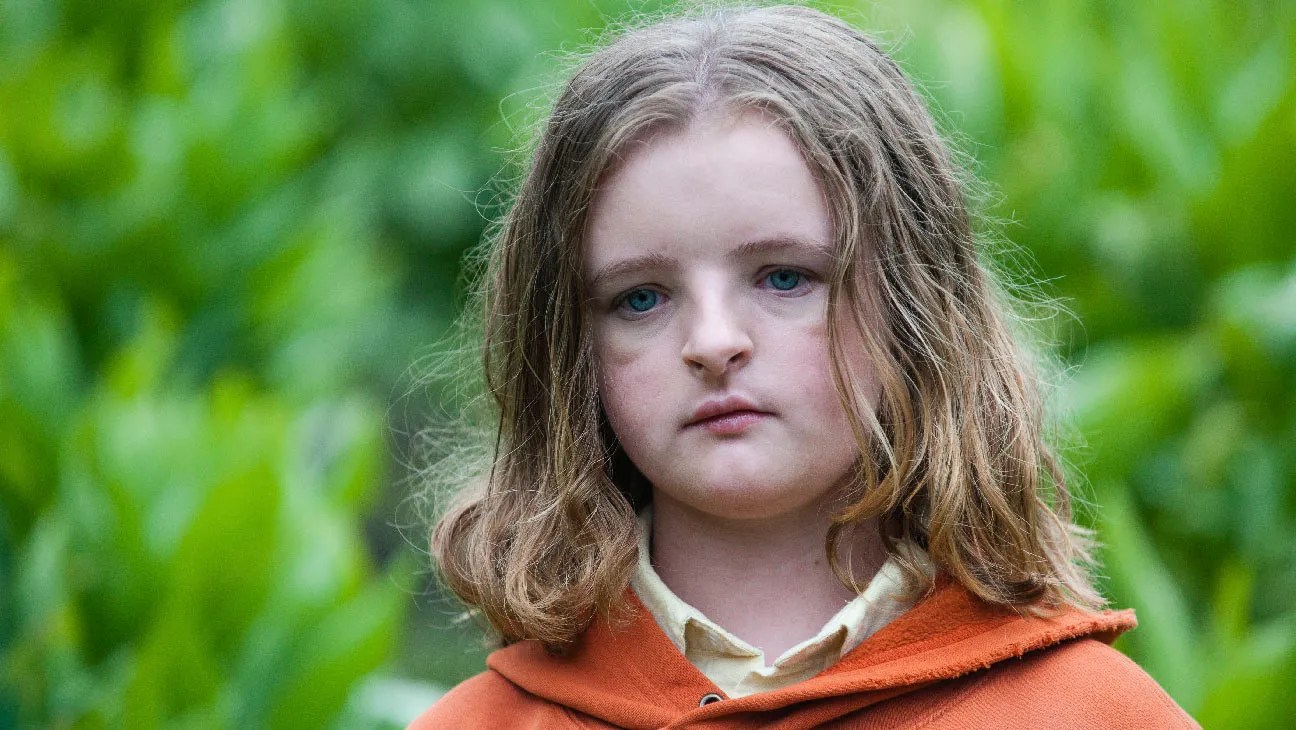
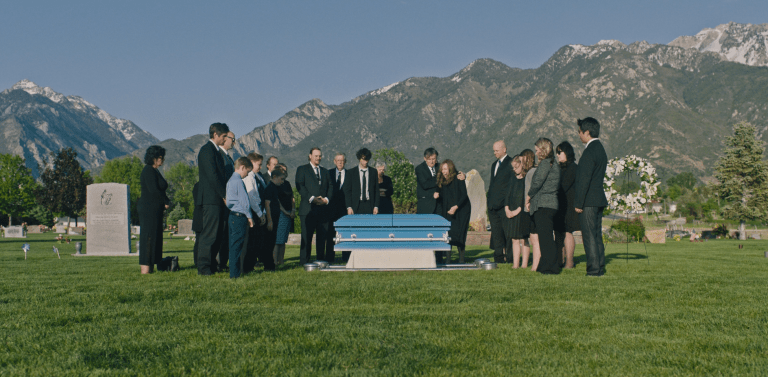
Ellen Taper Leigh is dead at the age of 78. Collecting themselves to attend the funeral of the family matriarch are Ellen’s daughter, Annie (Toni Collette, in a performance worthy of its own review), Annie’s husband, Dr. Steven Graham (Garbriel Byrne), their son, Peter (Alex Wolff), and their daughter, Charlie (Milly Shapiro). The film wastes no time trying to put up a “one big happy family” ruse, as it is clear we’re meeting a family harboring negative sentiments towards themselves, the world, and each other.
Annie shoulders some absolutely wicked trauma and anxieties from her own upbringing, the tragic details overshared to her grief counseling group in an excellently rampant monologue by Collette – as dry and unhinged as ever. Annie is attempting to be a good mother, though will never be able to transcend her own neglect as a child and become one. Past events such as a sleepwalking incident in which she nearly burned her two children alive have prevented her from exactly winning the mother-of-the-year award.
Peter projects as your average teenager, but is severely detached from his family members and dissociates frequently due to some childhood trauma of his own (the sleepwalking incident, perhaps?). Then there’s Charlie, who is, to put it lightly, off. While Peter crushes on the girl sitting in front of him in class and smokes weed behind the bleachers, Charlie spends her free time cutting the heads off of dead birds and staring blankly into the distance making clucking sounds with her tongue (a particular note that will haunt us long after the film is over). Charlie seems to have only had a meaningful relationship with her late grandmother, as she asks her own mother in a very frank and uncomfortable scene, “who is going to take care of me now that she is gone?”.
A foil to his troubled wife and kids, Steve is the cool, calm, and collected type- though the frequency in which he needs to pour himself a glass of whiskey increases as the story unfolds. Despite being a patient and caring psychiatrist, he ironically never seems to understand his loved ones and their more deranged associations towards the world around them.
source: A24
Already facing the death of their mother/grandmother, things begin to really unravel for the Grahams when another incident occurs. In the annals of all of horror there is an abundance of unique, memorable, and iconic death scenes- imagery that sticks with audiences long after the closing credits. Charlie’s death in Hereditary, involving anaphylactic shock and decapitation from a telephone pole, is as harrowing and horrific as they come. It’s probably the first scene that comes to mind in the film’s impressive stable of shockers, and leaves us with our mouths gaping as wide as Toni Collette’s in other iconic moments of the film. Hereditary knows how to leave room for some slow burn character development but also detonate a total jaw-dropper when it needs to. Side note, as someone with a nut allergy, the scene did what Jaws did for swimming in the ocean to the idea of me ever trying a nut…
From this point on its a fever dream. The film’s intense and dissonant score fires loudly, and the camera slowly pans over the terrain. We are drifting scene to scene just like our characters are sleepwalking through life – in a complete daze.
The family begins to break down and turn on each other. History is repeating itself for Annie, and what unfolds from here is an examination of grief, mental illness, and generational family trauma – three hot button themes in contemporary cinema, but themes we see increasingly dealt with using a positive spin, full of heart, hope, and even a bit of humor. Aster allows these aspects to rear their ugly heads, becoming monsters of their own within the film and manifesting themselves in a way that is only negative and all-consuming. The psychological responses need to make their way through the Graham family like a virus. In a weird way, it’s a bit of a refreshing take on the subject.
source: A24
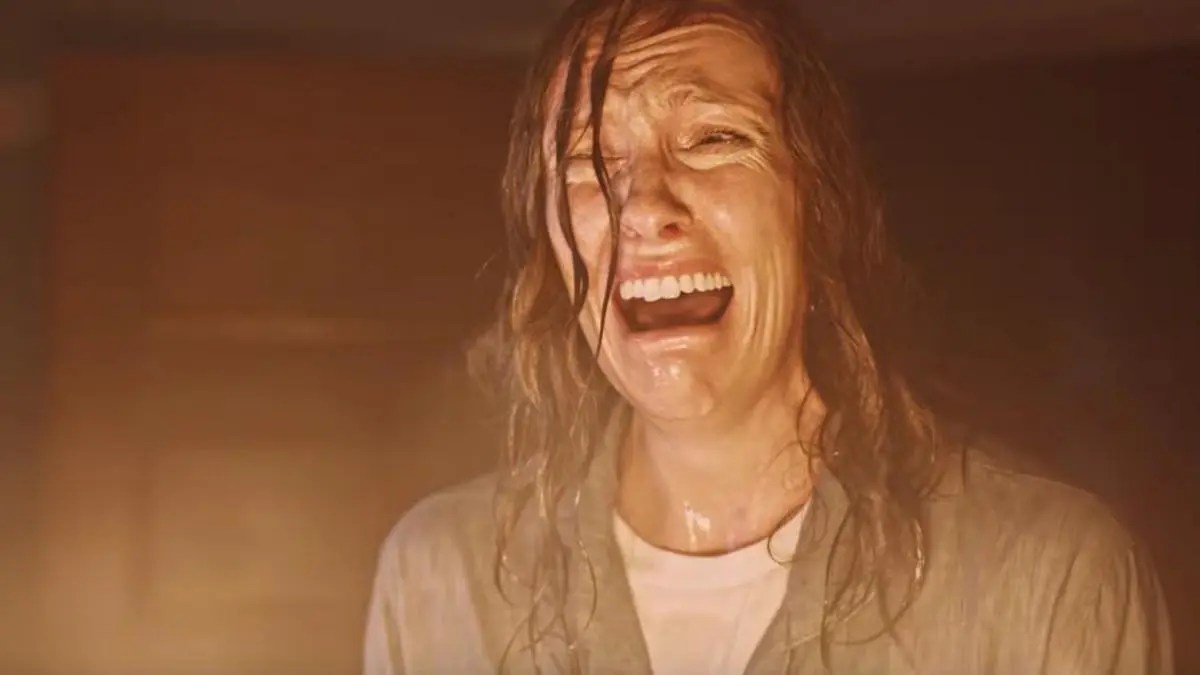
With the psychological horror already firing on all cylinders, the film seamlessly ties in a promised but yet to be realized supernatural element. The family finds themselves entangled in something much larger than they could ever imagine. There’s a heavy emphasis on the human body used as a mere vessel or sacrifice for a demonic being, so vulnerable and out of one’s control. Aster takes plenty of moments to offer his take on what possession can do to the human body, and they make for some incredibly disturbing scenes. We see Peter smash his own head against his desk at school. Annie lets out a blood curdling scream for help. She later will saw at her own neck with wire. Yet, in perhaps the most uncomfortable moment of all, it is Annie, similarly out of control, but not possessed, rather overcome by grief in the wake of her daughter’s death, writhing, screaming, wanting out of her body, that reigns as the film’s most powerful scene. The moment demonstrates the films expertise at blurring the line between the psychological and the supernatural. Hereditary is by no means the first to use the two as subtext for each other, but it’s done as successfully and poignantly as ever. A robust paranormal plotline is used as a powerful look into the human inability to outrun the trauma within our own bloodlines.
The scene also serves as a lock for an appearance on any Toni Collette acting highlights compilation, and perhaps the compilations of greatest performances for years to come. This film would not be the same without Collette’s career best performance, her impact in such a challenging role cannot be overstated.Hereditary is such a force not only because of the fear and anguish generated within us an audience, but because of the believable pain, madness, and desperation that can be felt in the characters – all credit to the cast, namely Collette and Wolff, who put together alarmingly expressive performances. If it was Aster’s job to create this sense of terror within us, it was their job to ensure that the characters matched the energy, creating a believably bleak and harrowing nightmare that we are all trapped in together.
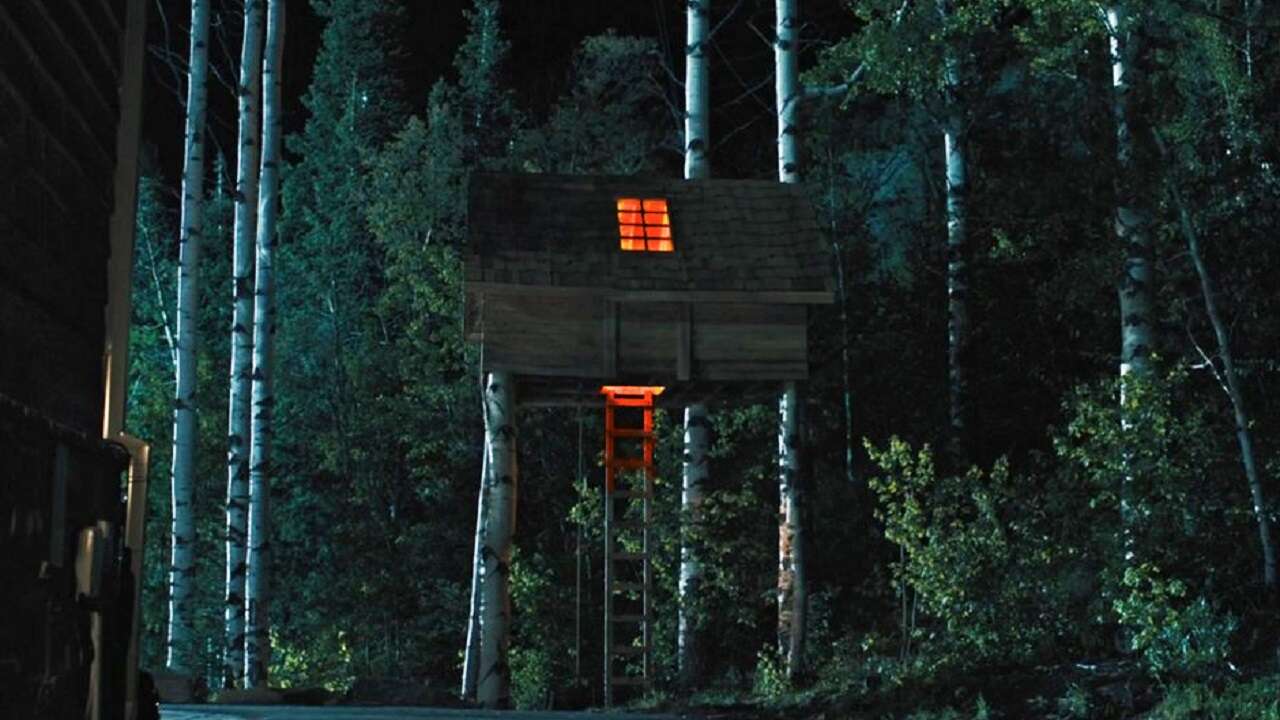
In the third act, the horror lies in the hopelessness. There is no one or nothing left to root for. With our family members either picked off or puppets for a demonic entity, we slowly come to realize we are simply here to watch the inevitable unfold. The Grahams were merely sacrifices for supernatural forces and were always going deteriorate. Sub-textually, generational trauma and anxieties were always going to repeat themselves. It makes the experience feel all the more scary and out of control. The film never relents, and the pacing stays sharp until the bitter end. Everything culminates in a memorable and intensely freaky scene rife with naked cult members, satanic worship, and lots of severed heads. It’s an ending that few will see coming upon first watch, but an ending fit for a king nonetheless. Hail Paimon!
With these words, two lovers let down their guard and solidify their devotion to one another. However Lee and Maren aren’t an ordinary couple. They’re runaways and living on the outskirts of society. Above all, they’re cannibals. Luca Guadagnino’s Bones and All (2022) adapts Camille DeAngelis’ young adult novel into a film that is a perfect mixture of horror and romance to tell the story of a love that was doomed from the start.
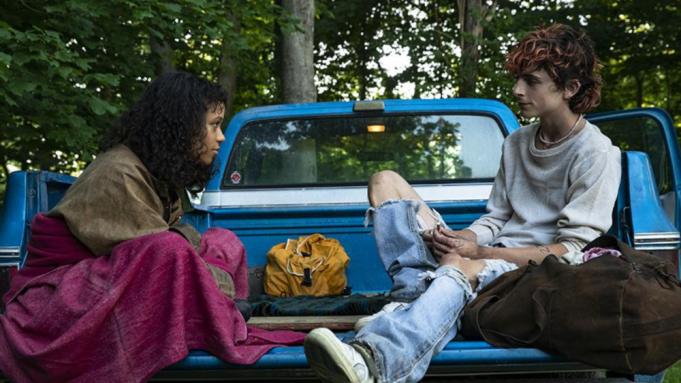
The film, which is set in the Midwest in 1988, opens with a wide shot of Maren, played by Taylor Russell, sitting by herself in a high school auditorium. Maren is always alone, not by choice but because her life circumstances make it difficult for her to make friends. When she is invited to a slumber party, she jumps at the opportunity for a taste of a normal life. However, Maren doesn’t just hunger for human connection; she desires human flesh. It isn’t long until her cravings take over at the expense of the party’s host, and she’s forced to flee to escape judgment. Abandoned by her father, she ventures out on her own to try and find her estranged mother, whom she inherited her unconventional habits from. Maren’s escapade leads her to meet Lee, played by Timothée Chalamet, a fellow “eater” who, like her, is learning to navigate the terrifying and inevitable practice of eating his own kind.
Bones and All is a stylistically beautiful film. While many horror films focus on a dark and somber aesthetic, Guadagnino embraces softer tones even in the characters’ darkest moments. When Lee and Maren share their first conversation, the director uses extreme wide shots to capture the blue and pink hues of the setting sun behind them. Although the conversation is uncomfortable as Maren catches Lee in the aftermath of preying on an insolent man, the framing of the shot brings tenderness to the scene as two lost souls connect for the first time. The visual imagery continues through the consistent use of jump cuts, zoom-ins and shifts in focus as the characters are haunted by the sudden flashbacks of their loved ones who abandoned them. Maren’s father left her to fend for herself, and Lee’s father was abusive, which are memories that continue to plague them, even as they attempt to move forward. Guadagnino’s incorporation of these cinematographic techniques provides a glimpse into the young adults’ traumatic pasts without interrupting the flow of the narrative.
source: MGM
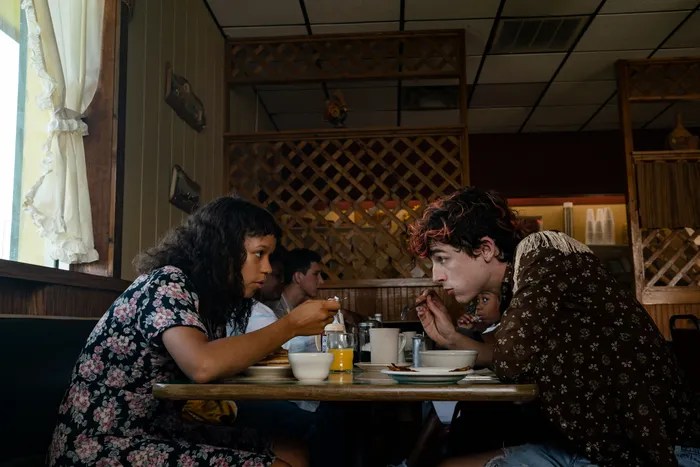
Lee and Maren are complex characters and wardrobe and props also play a large role in giving insight to the intricacies of their personalities. Maren is on a journey to find her mother and wants to remain hidden, so her wardrobe consists of coats and clothes in various shades of somber colors. Until she meets Lee, her only plan is to find out about her mother and not draw attention to herself. Lee on the other hand has somewhat come to terms with being an outcast and embraces it through a both masculine and feminine style consisting of ripped jeans, patterned shirts, and vibrant, red curls. A perfect example of the contrast between Lee and Maren is when they share their first normal meal together at a café. She orders buttermilk pancakes, while much to the surprise of their waitress, he indulges in a bowl of Lucky Charms with a side of bacon and a cup of coffee. Even through these minor details, it is evident Maren wishes to live cautiously while in the public eye while Lee knows he’s different and chooses to embrace it to a certain extent.
Sound is another crucial element which explores the romance that blossoms between these two young people amidst the environment of the 1980’s. Unlike the eerie scores that horror films tend to implement, Bones and All relies on a light guitar composition along with diegetic sound to deliver Lee and Maren’s story. In one instance, Lee’s rocks out to “Lick It Up”by KISS as they sing “life’s a treat so it’s time you taste it”. Ironically, while the lyrics allude to his unconventional habits, they also serve as a reminder that Lee, like many young adults, finds solace in music. As Maren learns how to drive, George Strait’s “Amarillo by Morning” comes on the radio and Lee sings along to the lyric, “everything that I’ve got is just what I’ve got on” as if to tell her that they’ve got nothing to lose. However, music isn’t the only sound guiding the story as dialogue from televisions and radios demonstrate that society is still revolving outside of the couple’s secluded world. For instance, Maren is moved by a religious sermon on the radio urging listeners to “forgive one another” even when it is difficult, but as Lee reminds her, there is unfortunately no hope for them. After this heavy remark, they sit quietly, proving that silence is equally as powerful in communicating the isolation that Lee and Maren feel in the open landscapes of an unknown world.
source: MGM
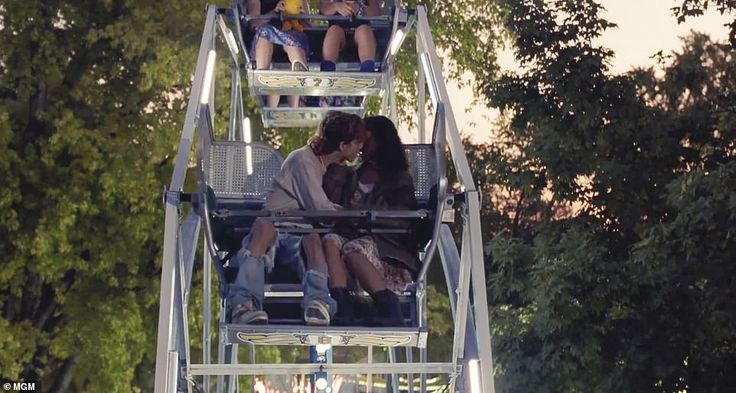
Perhaps the most intriguing aspect of Bones and All is its usage of metaphors. Guadagnino made a name for himself by directing the LGBT film, Call Me By Your Name (2017),his first collaboration with Chalamet, which earned them both critical acclaim. It is interesting to see him approach DeAngelis’ novel from a new lens by using cannibalism to symbolize queer love. Lee and Maren are outcasts, but not by choice. Their unorthodox desires are part of their nature, and must hide them in order to get by in the world, a feeling that many in the LGBT community can resonate with. When Maren eventually finds her mother, she learns that she is in a mental asylum, another nod to the idea that society is afraid of outsiders, so it locks them away. As for Lee, while at one point he seduces a male carnival employee with the goal of luring him in as a meal for Maren, it is never explicitly stated that he is queer. While the implications are there, like many of his unconventional habits, it is not something to be advertising in a midwestern town in the 1980’s.
Bones and All is a story about love and the frightening journey of coming to terms with one’s true self. Through his carefully crafted mise-scene, Gudagnino draws audiences into the complexities of Lee and Maren’s story. While it doesn’t excuse the pair’s actions, the imagery evokes empathy for two characters who are learning to navigate with their inescapable habits. Sound conveys the emotions that words can not, and it humanizes Lee and Maren’s experiences by reminding viewers that despite the couple’s circumstances, they are still enveloped in the noisy world of the 1980’s. The film incorporates clever undertones in order to draw parallels between the ostracizing tendency of eating one’s own kind and the stigma associated with being queer, which is still relevant in the modern day. The real horror of this film doesn’t come from the characters’ cannibalistic habits, rather from the fact that the couple desires to commence a new and normal life together. but society has ways of interfering and ensuring that their newfound comfort is only temporary.
As Lee says, “You want to be people? Let’s be people.”
Knowing it is only a matter of time before the world crashes upon the glimmer of hope they’ve found in one another, Maren responds, “Yeah. Let’s be them for a while.”
Horror movies weren’t exactly my family’s cup of tea growing up, but I always loved a good scary story. Since I was old enough to read, I gravitated towards books like Scary Stories to Tell in the Dark, and every Halloween I’d rush to my vovó’s house to watch Cartoon Network’s Goosebumps marathon alone in my room on a fussy old TV that looked like something straight out of Leave it to Beaver.
My godfather was the manager of our local Blockbuster (a fact that pretty much made him the coolest guy in town in my eyes), so whenever my tia babysat me on weeknights, we’d always stop by on our way to her house. At age six, I wasn’t allowed to visit the horror section itself, so I skirted the margins, looking for something I could sneak under the radar. We watched classics like Ghostbusters (“Too scary!” my tia would cry in her thick Portuguese accent), or even documentaries about bones or ancient Egyptian mummies (also “too scary!”), but my favorites were always Scooby Doo.
One blustery autumn afternoon, as the light was beginning to fade from the parking lot, I emerged from the Blockbuster with a KitKat in my coat pocket and a tape I’d never watched before in one mittened hand: Scooby Doo on Zombie Island.
source: Warner Home Video
Sitting in her carpeted basement with a tall glass of strawberry milk, I watched my tia pop in the tape and leave the room to start a load of laundry. That evening, for the first (and only) time, I was the one crying “too scary!” I was completely astonished to find that Scooby Doo on Zombie Island features real, actual, no-bullshit zombies. I was betrayed! The film had flagrantly broken the number one rule of Scooby-Doo: In the end, the monsters are always bad guys (usually evil capitalists) in masks. The thing that really terrified me about Zombie Island was this uncanny subversion of my expectations.
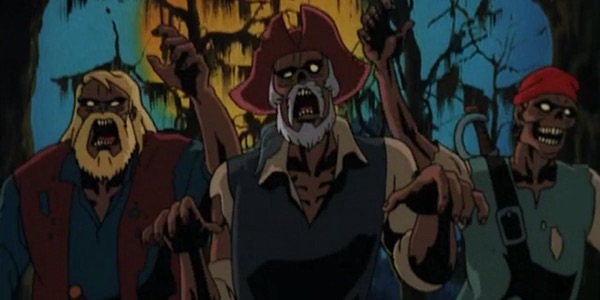
One minute, Scooby and Shaggy are plunging their faces in a lake to gulp mouthfuls of water (too many hot peppers), the next, they’re watching, petrified, as the emaciated corpses of tattered pirates, Confederate soldiers, and Hawaiian-shirted tourists emerge from the watery depths below. As I watched Velma call to the gang for help, surrounded by hordes of zombies with no clear way out, I had to turn the TV off. I thought about it on the short drive home. I had nightmares about it that night. What was going on? What happened to the rules?? Did the world even make sense anymore???
The film, which I wouldn’t watch in full until my twenties, stuck with me all the same. Not one to be cowed, I watched more Scooby Doo films that blustery fall in 2004, quickly learning that the rules of the films aren’t the same as the ones on the show. Most of the direct-to-video entries from the ’90s and early 2000s featured real monsters, as did the ’80s television films that preceded them. Armed with this new set of rules, I quickly embraced this other side of Mystery Inc. (Scooby Doo and the Witch’s Ghost immediately became a household staple). But the initial terror I felt watching Zombie Island gave me a taste of something new: It was the first movie to actually, truly scare me, yes, but it was also the first movie that really got me to think about film analytically.
It filled me with questions, made me think about my expectations, notice when they weren’t met, and, in the process, understand I had them in the first place. Ironically, though I was too young to realize it, Scooby Doo on Zombie Island is itself a roadmap for this process of narrative investigation, a playful exploration of horror conventions and their uses, and it’s worth exploring on those terms.
After a cold open of a typical mystery coming to a close (a green, goblin-like monster is revealed to be a real estate agent caught printing “millions in counterfeit dollars”), the film begins with Daphne being interviewed on a daytime talk show about a new series she hosts called Haunted America.
source: Warner Home Video
The gang has disbanded because, as Daphne puts it, “the monsters always turned out to be bad guys in a mask.” “It got a little boring, eh?” the host laughs. “No kidding!” Daphne dryly replies. In this new show, she wants to show viewers “some real haunted houses.” Once Fred gets the gang back together as a surprise for Daphne’s birthday, Mystery Inc. heads to New Orleans in search of the supernatural.
The film, released in September 1998 after reruns of the show on Cartoon Network renewed interest in the franchise, lightly parodies the conventions of paranormal investigation shows like Haunted Lives: True Ghost Stories (1991-1995, much of which was directed by Texas Chainsaw‘s Tobe Hooper) and Sightings (1991–1997), in so doing, inadvertently reflecting many of the same tropes that would explode into the mainstream the next year with The Blair Witch Project (a film Scooby Doo would itself parody in The Scooby Doo Project that Halloween).
The gang unmasks bad guys all over the city through the shaky lens of a boxy camcorder, REC. flashing in the corner of the frame. With her list of haunted places almost exhausted and no ghosts to be found, Daphne is dismayed that her show won’t have a “new” angle, only the “boring” tropes fans of Scooby Doo are already so familiar with–– until a mysterious young woman, Lena, invites the gang to her employer’s mansion on Moonscar Island.
From here, the film depicts this new haunting through the typical mystery formula while progressively building tension around the characters’ skepticism, adding postmodern depth and unfamiliarity to its material almost five years before James Gunn modernized the franchise with his would-be-R-rated screenplay for the live action Scooby Doo (2002). The gang splits up and explores the mansion, checks out clues and assumes one of the residents is hiding a monetary ulterior motive and, by extension, a rational explanation. Fred and Velma make guesses about which characters are the most suspicious, explaining various red herrings like they’ve unmasked the bad guy already.
source: Warner Home Video
Yet, these assumptions are systematically undercut by the unexplainable–– Velma begins to levitate and a ghost appears over Daphne’s shoulder in their footage, and no amount of familiarity with the tricks of television’s paranormal trade can explain it. As Shaggy and Scooby soon discover, and the gang has begun to expect, the zombies are real this time. This twist, that scared me so thoroughly as a kid, is only the first however. Where this supernatural reveal initially clears Moonscar Island’s mysterious occupants of all suspicion, the gang eventually discovers a set of voodoo dolls that look just like them. As it turns out, Lena and her boss, Simone, are two-hundred-year-old witches, Pagan cat worshippers whose home on the
island was invaded by the same pirates whose carcasses chased Scooby and Shaggy out of the bayou. These two women, then, are the villains, seeking to “drain the lifeforce” out of Mystery Inc. to preserve their immortality. The zombies are only trying to warn them before it’s too late.
The film’s willingness to “poke fun” at its own canon as well as its switchback structure and subverted expectations garnered it critical praise in outlets like The Hollywood Reporter, while its financial success spurred the creation of the sequels I grew to love, beginning with Scooby Doo and the Witch’s Ghost. Watching the film again for this essay, I began unpacking it in a new way. Its “former plantation” setting fascinated and troubled me–– particularly since Shaggy is canonically descended from Confederate soldiers according to Scooby Doo Meets the Boo Brothers (1987)–– a Confederate ghost, confoundingly described in passing as one of the “good guys,” thanks the gang at Zombie Island’s conclusion.
The “evil” backstory for these witches is also complex: We see in flashback that rather than run the plantation, these two women attack the Confederates who erect it (though the filmmakers are careful to elide slavery by showing these white southerners picking their own peppers), and only cast their immortality curse while defending themselves from pirates who invade their home and slaughter their families. It’s a strangely anti-colonial, if G-ratedly whitewashed, narrative–– who these women took the land from in the first place is of course not mentioned. In this light, are these “bad guy” witches really so bad? Is their virulent hatred of tourists really so illogical when even Scooby and the gang treat their home like a quaint scenic backwater to use for their own entertainment and profit?
Strangely enough, this film, and the curiosity I first felt watching it at age six, helped me learn how to think critically, to ask the kinds of questions I’m asking at age twenty five, setting the groundwork for my love of film history, analysis, and criticism. When considering the prompt “how I fell in love with horror,” I chose Zombie Island to highlight over other, better-respected films from my childhood (horror films like Paranormal Activity, say, or even scarier children’s films like Harry Potter and the Chamber of Secrets) because all sorts of pop culture, no matter how ephemeral, can be inspiring, can spark our curiosity. This straight-to-VHS childrens film taught me how to start worrying–– and love horror in the process. Jinkies!
As the month sadly begins to near its end and we have but 11 days left of the giveaway, I thought it the right time to dive into Wonderfully Weird’s next project.
Currently it’s named Horror: A Journey Through the Decades (but it is possible to change in the coming days). It’s sort of a love letter to the genre going all the way back to its roots. It has come a long way and there is so much to reflect on that I can’t imagine doing it alone.
Since inquiring about how you all fell in love with horror, it made me think about how we all have our stories and our own experiences with the movies that shaped us. Those deserve to be heard!
This is an opportunity to gush about a film you adore or maybe, just respect. Regardless, you have the urge to write about it and so here we are. This will be published individually on the site as well as an eventual publishing in book form. This is unpaid unfortunately, but I will send you a copy of the book when it is released!
I am also open to feature ideas!
Horror is one of the best communities and it truly feels like a family. I’m excited to begin this new journey and create something truly unique with all of you!







 Wonderfully Weird & Horrifying