How far would you go for love? For those who currently have someone they’re enamored with, it may be easy for them to say that they’ll go to great lengths. However, how far would you go for someone you know very little about? Love is a complicated emotion and it can make people do crazy things. Alfred Hitchcock’s 1963 horror film, The Birds explores these complexities of love by drawing parallels between the brash behavior of birds and the impulsivity of human relationships. The visual symbolism, carefully crafted dialogue, and natural sound tell a story of the chaos that ensued amidst an avian attack in the 1960s, in a manner that resonates with modern audiences.
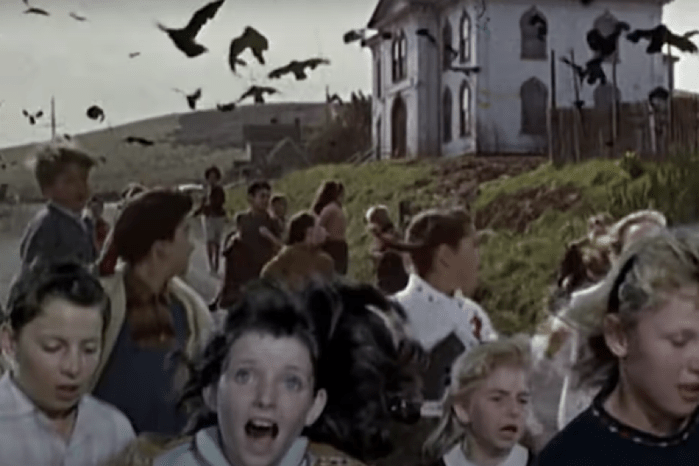
The film opens in San Francisco, where gulls are flying around as audiences are introduced to Melanie Daniels, who is scurrying into a bird shop. Her plan is to get a myna bird but things go awry when she meets Mitch Brenner, who recalls her involvement in a court case, and he decides to play a prank on her. Melanie is initially irked by his quick judgment of her, but she is quickly smitten and plans a trip to Bodega Bay to secretly deliver a pair of lovebirds that he wanted for his sister Cathy. The lovebirds become such a pivotal motif throughout the film as they become a symbol of resistance because they stick together amidst all the calamity that unfolds. Melanie is caught in the act of delivering the birds as a gull begins pecking at her when she travels away from Mitch’s home. Interestingly, this isn’t the first time Melanie will be jabbed at, as the town folks are naturally curious about her visit to Mitch and begin to flock over her sudden appearance in their town. Drawing these parallels between the instinctive habits of birds and the curiosity of humans in the affairs of love really sets up the story of what happens when both worlds collide.
source: Universal Pictures
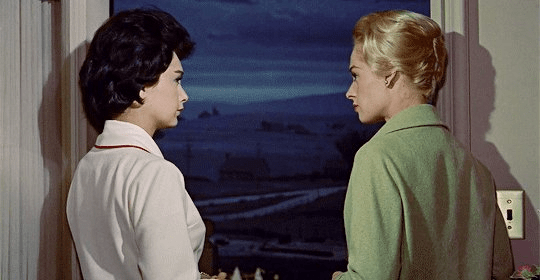
As the story continues, Melanie encounters an array of different characters and the conversions that she has with them gives further insight to their bird-like qualities. For instance, she meets Annie Hayworth, a school teacher who is living a life on her own after a romantic relationship with Mitch ended abruptly because his mother, Lydia Brenner disapproved. Annie tells Melanie that ironically, she and Mitch’s mother became friends now that she “is no longer a threat” to her son. This further explores the bird-like behavior in the affairs of love as the teacher is viewed as a predator, whom Lydia believed would disrupt the stability of her nest. When Melanie finally meets Mitch’s mother, the parallels to avian activity continue as they have a heart to heart. Lydia explains that her family is a “very good reason for getting out of bed”, which emphasizes her devotion to it, much like a mother bird cares for her chicks. The dialogue that the characters exchange with Melanie reinforce the connection between the all consuming nature of human relationships and the predatory and protective habits of birds.
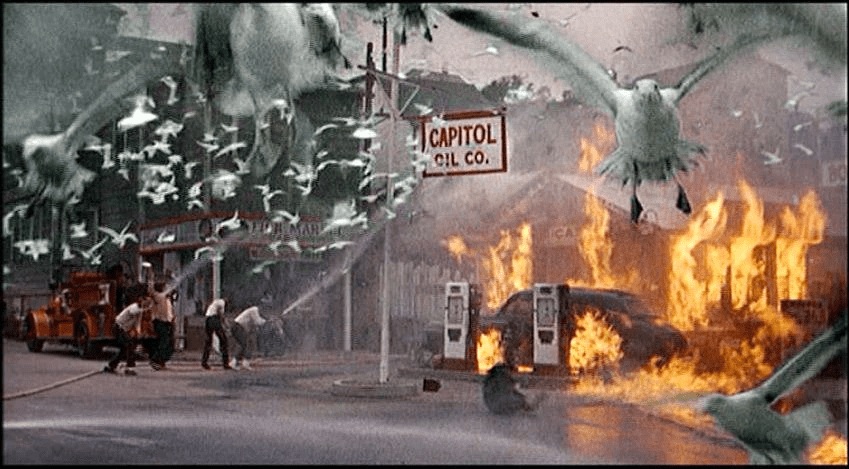
Another intriguing aspect of the film is that it lacks a score and relies on ambient sound to explore the similarities between the aggression of birds and the complexities of humans in the affairs of love. In one key moment, Melanie and Mitch take refuge in a Bodega Bay diner when birds begin to swarm the area. The sounds of the wings flapping and screeching fills the scene and makes those hiding in the diner feel cornered and violated. Interestingly, this is similar to the events that unfold inside the diner where the town’s people verbally target Melanie and blame her for the attack. The bird’s screeches fill the ambience much like the insults envelope Melanie and Mitch. During perhaps the tensest moment of the film, Melanie, Mitch and his family try to escape their home that is surrounded by birds. As the avians’ chirping creates an eerie mood, Cathay’s lovebirds remain silent, drawing perhaps the biggest parallel to human nature. It provides commentary on the fact that much like the birds, humans are invasive in other’s romantic affairs, making them, not the lovers, the loudest disruptors of the peace.
source: Universal Pictures
The Birds is a unique film that succeeds in exploring the horrors of an avian attack and comparing it to people’s intricate behavior when dealing with matters of love. With its strong symbolism, Hitchcock highlights how the various types of birds represent aspects of human nature such as attraction and curiosity. The dialogue also gives insight to the people’s bird-like qualities when it comes to defending loved one’s because it uses the conversations to shed light on the characters’ protective nature over their flock. The film’s lack of a score solidifies the comparison because just as the twittering of the birds casts an unsettling feeling amongst the town, unsolicited opinions of outsiders may taint the tranquility between a couple.
Despite being released over 60 years ago, The Birds remains relevant because humans are still affected by the convoluted affairs of love, and much like nettlesome birds, it is not something that one day will spontaneously fly away.
Are you here because you’ve seen Saw? Or because you’re curious to learn more? Whether you’ve witnessed the interwoven narrative of this 2004 American horror film or merely heard about it, you likely know about Saw and its association with violence, gore, and “torture porn.” This term, “torture porn”, refers to films that prioritize brutal and gratuitous images of people getting tortured or killed on screen. Various critics frequently utilize this term to discredit horror films, labeling them as lacking substance and reducing them to nothing more than sadistic narratives.
In a 2007 New York Times article, Jeannette Catsoulis called the first Saw film an “unexpected success” and described the whole franchise as “distasteful” due to its visceral and intense sequences. While not every film caters to everyone’s taste, particularly when it comes to horror, I believe some individuals dismiss and disregard films like Saw due to intense content. These discourses not only discourage viewers from actually watching the movie but also from critically analyzing and engaging with the film’s content.
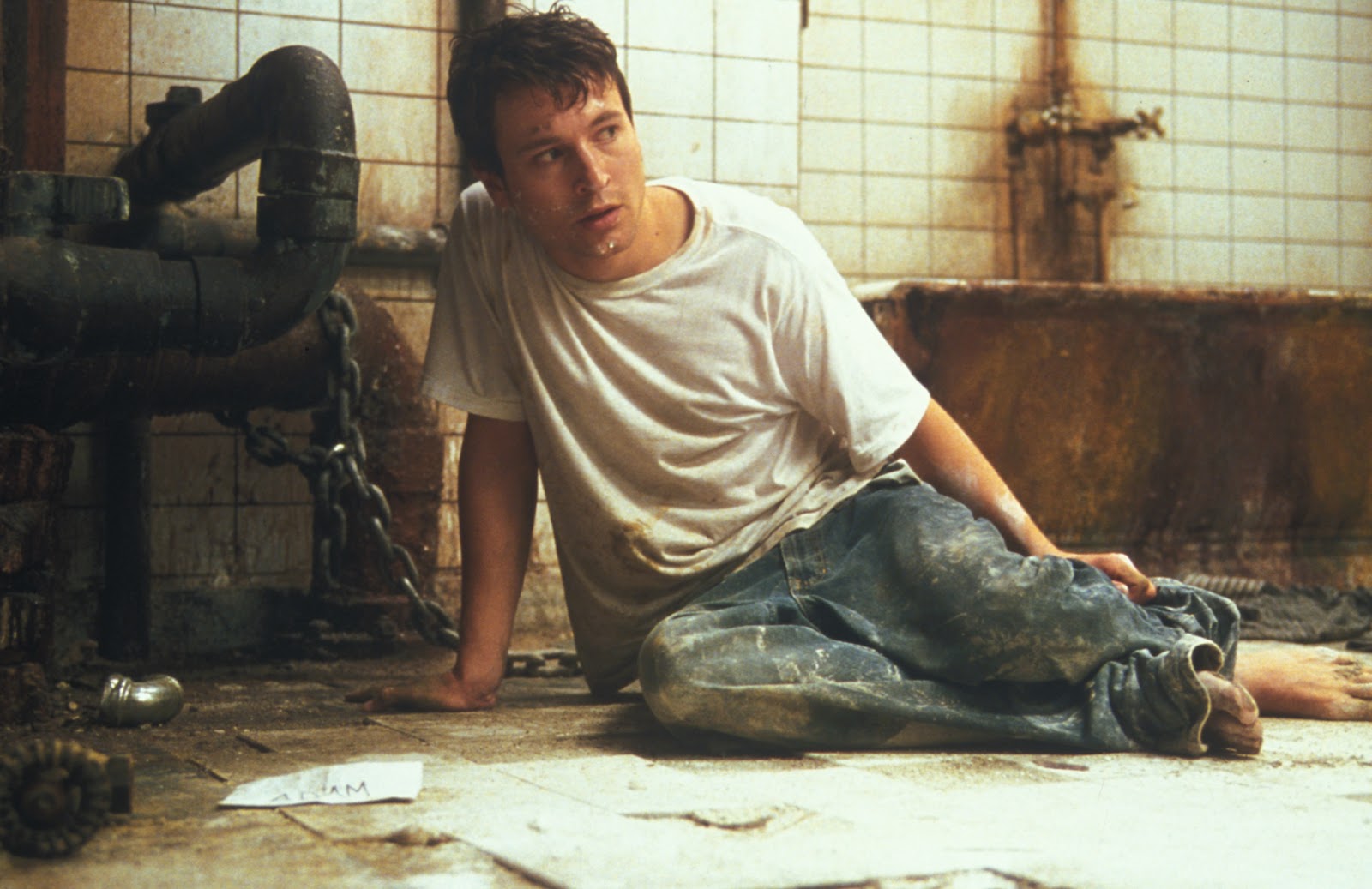
The film, directed by James Wan, begins when two strangers Adam Stanheight (Leigh Whannell) and Lawrence Gordon (Cary Elwes) find themselves chained to the pipes at opposite ends of a dirty and blood-stained bathroom. As the two men attempt to piece together their final moments before being trapped in the bathroom and attempting to seek an escape, the film cleverly weaves in flashbacks delving into the lives of Adam, Lawrence, and past victims. Simultaneously, it intertwines these events with the current investigation into the notorious Jigsaw killer.
source: Lionsgate
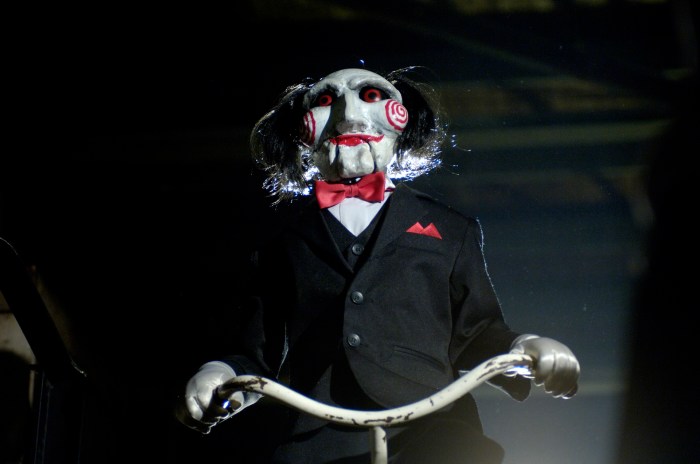
Central to the film’s brilliance is the character of Jigsaw, also known as John Kramer (Tobin Bell). Jigsaw isn’t a conventional villain driven by malice or the desire to kill. He operates on a twisted moral compass to make individuals appreciate life’s value. His traps and games aren’t just sadistic displays of power; they’re an attempt to confront his victims with their flaws and make them rethink the harm they have caused in the past. Although Jigsaw has minimal screen time, his absence only adds to his presence. Viewers, along with investigators, must piece together the clues to discover Jigsaw’s identity and motives.
While the term “torture porn” looms in media discussions, Saw defies this one-dimensional categorization. Although Saw includes scenes of violence and blood and many of the later films within the franchise include more gore with the introduction of intricate Jigsaw traps, the first film is not consumed by graphic images. Instead, it intricately balances tension with its exploration of moral ambiguity and the psychological depth that sets it apart from mere shock value.
source: Lionsgate
Among fans, Saw is also known for its intertwining narratives and surprising plot twists. In the final moments of the film, the seemingly lifeless corpse that has lay in the middle of the bathroom for the entirety of the runtime slowly comes to life. It is revealed that the body is John Kramer, the real Jigsaw Killer, who “likes to book himself front-row seats to his own sick little games.” The impact of this twist extends far beyond the immediate shock and elevates Saw beyond just a violent and torture-filled flick. It makes viewers rethink everything they just watched, wondering what clues they either caught or missed. It is a moment that remains in viewers’ minds long after the credits roll.
The Saw franchise stands as a milestone in the horror genre, as it is one of the highest-grossing horror series of all time. Saw X, the 10th installment in the franchise, was also released in September of 2023. With these accolades, it is safe to say that many people love the first Saw film and the whole series. If there’s hesitation about watching Saw, give it a chance. It might defy your expectations and leave you contemplating its twists, memorable characters, moral situations, and iconic theme song.
The great storytelling advantage of horror as a genre is the inherent feeling of inevitability. Even the most banal scenes are presented in a context of dread. Something horrible must occur to somebody at some point, or else “horror” would not properly describe the events of the story. Most horror films draw attention to this inevitability through cheap tricks, such as not-so-vague foreshadowing dialogue or creepy music laid over useless scenes. Predominately, these tricks are used to tide over the bloodthirsty audience and fill up the first and second acts, eventually arriving at the exciting finale we all showed up to see. Building a story in such a way can feel quite perfunctory.
It was this very critique that led me away from horror in the last few years. The patterns of the genre had become too obvious, and their variations had lost charm. My rather simplistic perspective would be shattered after viewing George Sluizer’s The Vanishing (1988), a film about a young woman named Saskia who goes missing and her husband who would do anything to find her. The film is particularly famous for its ending, but I would like to look at its opening scenes as I feel they present the genre’s necessary sense of inevitability in a new and haunting way.
source: MGS Film
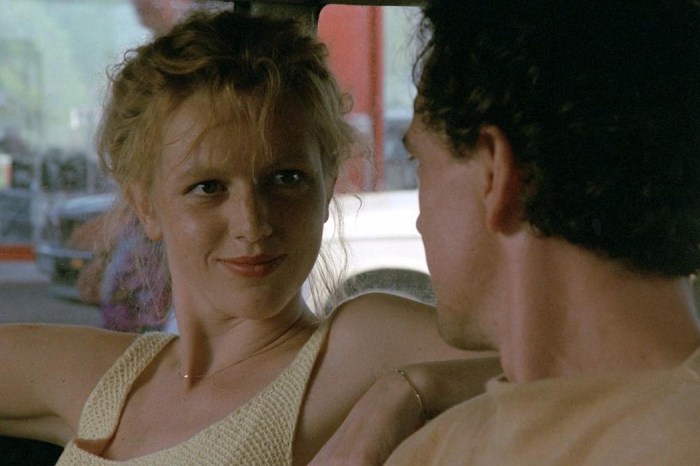
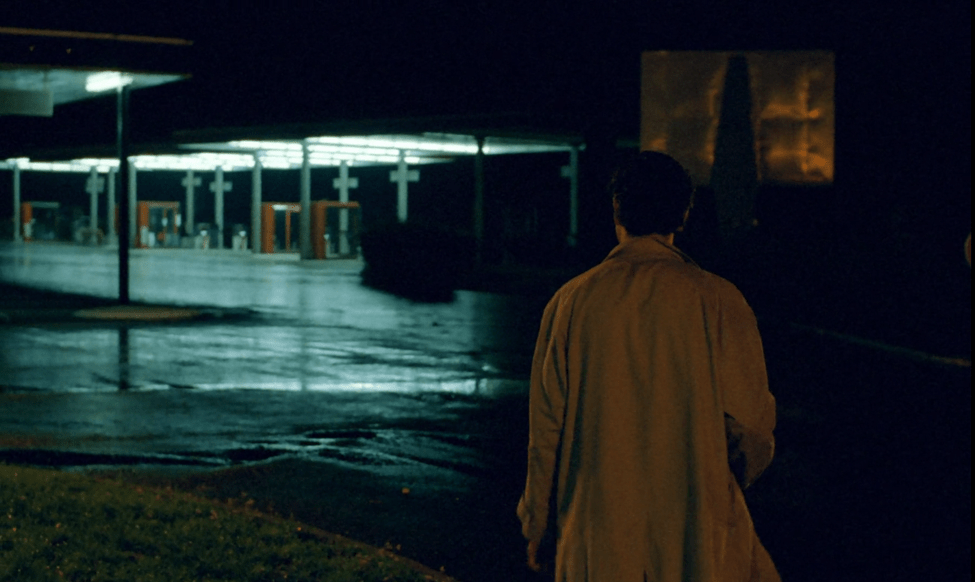
The Vanishing follows a young couple, Rex and Saskia, as they travel cross country on vacation. While passing through a long and dark tunnel, their car runs out of gas. Rex rushes off with a canister to a nearby gas station and leaves Saskia all alone. It seemed obvious that Rex would return to discover his wife had been abducted. Indeed, when he comes back with the gas, Saskia is gone. He fills the car up, drives forward, and… finds her waiting for him outside the tunnel. She is perfectly fine.
source: MGS Film
My intuition had been wrong. I had initially felt relief at seeing her safe, but a moment later, I was terrified. The relief I felt only emphasized the horrific fate that awaited this young, beautiful, and innocent woman. Before, I looked at her disappearance as a function of the plot. Now, every second with Saskia from this point on felt like being with a ghost.
Also, this subversion of expectations prevented me from retreating into the safety of my recognition of storytelling patterns. Sluizer does not subvert expectations with a bold swing, but rather, he does so in an off-the-nose way which causes me to feel a true sense of helplessness. I saw no way to stop Saskia’s abduction because there was no way to know when, why, or even if it took place. It is much harder to identify, and therefore prevent, danger when the situation feels so intangible.
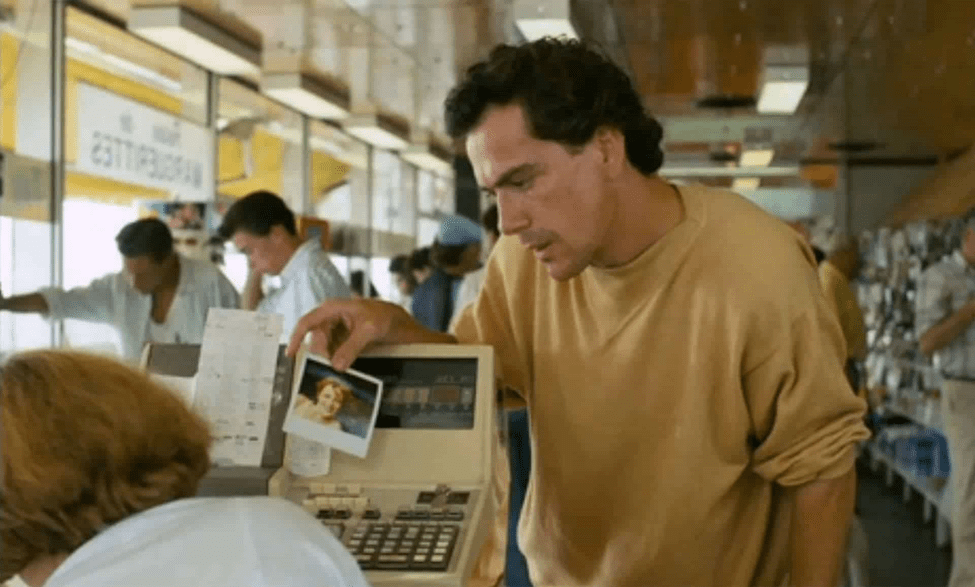
Sluizer does the same trick a second time. After the couple arrives at a rest stop, Saskia goes to use the restroom. A strange-looking man wearing a cast seems to follow her into the building, and we are forced to wait with Rex for his wife’s return. Saskia does return, further teasing her eventual abduction.
As Rex and Saskia prepare to continue their road trip, she goes back into the rest stop one last time. She is never seen again.
source: MGS Film
The structure of this opening made me highly empathetic to Rex. Horror protagonists tend to have a bad reputation for being unintelligent. We all get frustrated when Laurie Strode throws the knife to the side after incapacitating Michael in Halloween. I always shout, “He’s just going to get right back up.” It is a comfortable thing to do. I can escape my fear by believing that I would act more rationally than the characters, and therefore survive a similar event. In The Vanishing, Rex did not take action to stop the abduction because he was unaware of any threat, and I was not able to create a theoretical course of action to stop the abduction because I could not tell when a threat was present or not. He and I may have been on opposite sides of the spectrum, but we were both too distracted to prevent tragedy.
The Vanishing certainly delivers on the essential feeling of inevitability that all great horror films have, but it is its combination with unpredictability that makes me defenseless as a viewer. Inevitability and unpredictability seem contradictory, but it is the careful balancing of both that makes this film one of the most psychologically unnerving ever made.
If a film is ultimately defined by how it makes us feel, then the numb void left in the wake of a Hereditary viewing makes for quite the interesting evaluation. The product of a downright surgical effort to drain, depress, and disturb the audience rather than just simply bringing the scares, Ari Aster’s remarkable but heavy debut feature boasts an especially bleak atmosphere from start to finish. Completely shaken by the time the more traditional jump scares roll around, it’s tough to bear the weight of the horrors Hereditary has to offer, and there are plenty.
When life returns to the body, we can then fully appreciate what we just saw. The film follows the breakdown of a family at the hands of psychological and supernatural forces, touching on weighty subjects such as familial trauma and mental illness in unique ways. Above all else, we get a sophisticated horror – deliberately shot, artfully designed, and superbly acted. It’s a film with such intentional storytelling, so rich in occultist lore, that you could rewatch it several times and still be decoding new symbolism and foreshadowing upon each viewing. Yet we also get a film that, if you did happen to miss all of the heavily shrouded iconography, at the very least elevates a familiar sub-genre of horror that knocks on the door of residential homes and infiltrates the family unit in an all too intimate way. It delivers plenty of viral moments, and was A24s highest grossing film upon release. Serious and meticulous piece of art, or elevated mainstream horror experience that scares the living shit out of you? It’s fair to say that Hereditary somehow does both and does both well – a victory for the wide range of horror fans that the film will appeal to.
source: A24
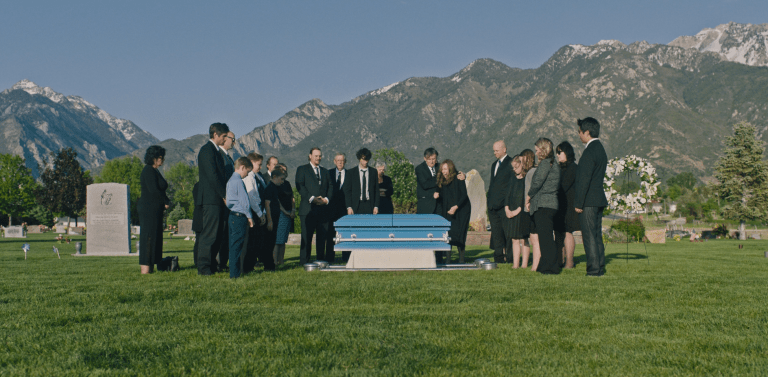
Ellen Taper Leigh is dead at the age of 78. Collecting themselves to attend the funeral of the family matriarch are Ellen’s daughter, Annie (Toni Collette, in a performance worthy of its own review), Annie’s husband, Dr. Steven Graham (Garbriel Byrne), their son, Peter (Alex Wolff), and their daughter, Charlie (Milly Shapiro). The film wastes no time trying to put up a “one big happy family” ruse, as it is clear we’re meeting a family harboring negative sentiments towards themselves, the world, and each other.
Annie shoulders some absolutely wicked trauma and anxieties from her own upbringing, the tragic details overshared to her grief counseling group in an excellently rampant monologue by Collette – as dry and unhinged as ever. Annie is attempting to be a good mother, though will never be able to transcend her own neglect as a child and become one. Past events such as a sleepwalking incident in which she nearly burned her two children alive have prevented her from exactly winning the mother-of-the-year award.
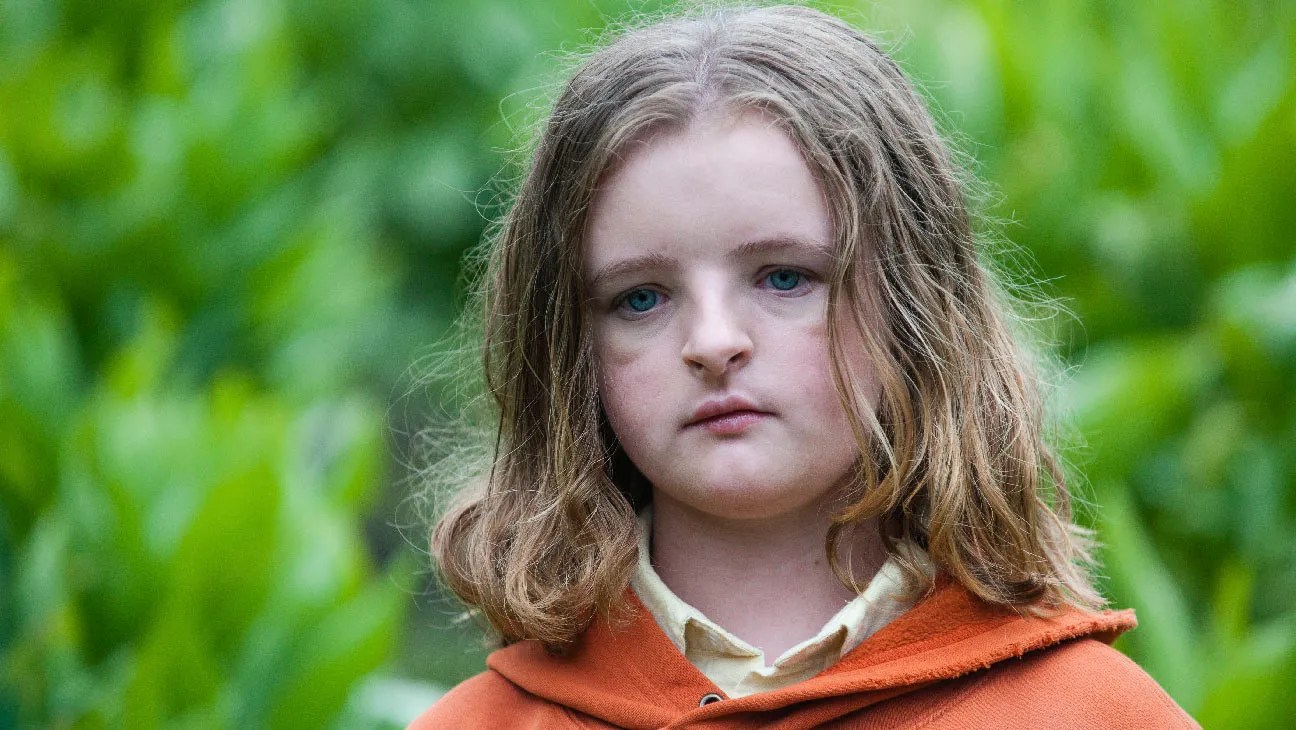
Peter projects as your average teenager, but is severely detached from his family members and dissociates frequently due to some childhood trauma of his own (the sleepwalking incident, perhaps?). Then there’s Charlie, who is, to put it lightly, off. While Peter crushes on the girl sitting in front of him in class and smokes weed behind the bleachers, Charlie spends her free time cutting the heads off of dead birds and staring blankly into the distance making clucking sounds with her tongue (a particular note that will haunt us long after the film is over). Charlie seems to have only had a meaningful relationship with her late grandmother, as she asks her own mother in a very frank and uncomfortable scene, “who is going to take care of me now that she is gone?”.
A foil to his troubled wife and kids, Steve is the cool, calm, and collected type- though the frequency in which he needs to pour himself a glass of whiskey increases as the story unfolds. Despite being a patient and caring psychiatrist, he ironically never seems to understand his loved ones and their more deranged associations towards the world around them.
source: A24
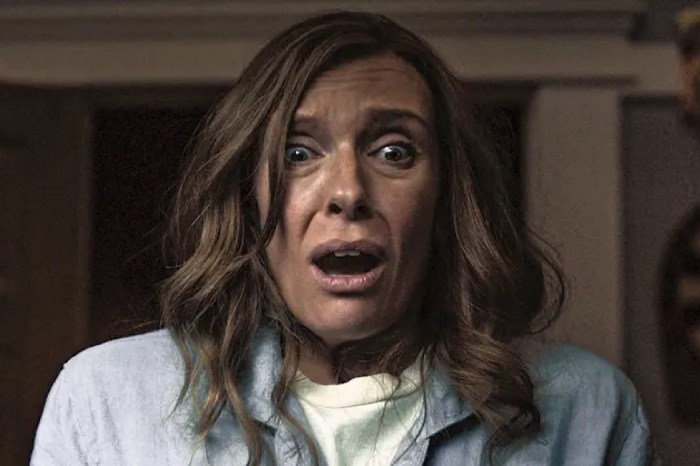
Already facing the death of their mother/grandmother, things begin to really unravel for the Grahams when another incident occurs. In the annals of all of horror there is an abundance of unique, memorable, and iconic death scenes- imagery that sticks with audiences long after the closing credits. Charlie’s death in Hereditary, involving anaphylactic shock and decapitation from a telephone pole, is as harrowing and horrific as they come. It’s probably the first scene that comes to mind in the film’s impressive stable of shockers, and leaves us with our mouths gaping as wide as Toni Collette’s in other iconic moments of the film. Hereditary knows how to leave room for some slow burn character development but also detonate a total jaw-dropper when it needs to. Side note, as someone with a nut allergy, the scene did what Jaws did for swimming in the ocean to the idea of me ever trying a nut…
From this point on its a fever dream. The film’s intense and dissonant score fires loudly, and the camera slowly pans over the terrain. We are drifting scene to scene just like our characters are sleepwalking through life – in a complete daze.
The family begins to break down and turn on each other. History is repeating itself for Annie, and what unfolds from here is an examination of grief, mental illness, and generational family trauma – three hot button themes in contemporary cinema, but themes we see increasingly dealt with using a positive spin, full of heart, hope, and even a bit of humor. Aster allows these aspects to rear their ugly heads, becoming monsters of their own within the film and manifesting themselves in a way that is only negative and all-consuming. The psychological responses need to make their way through the Graham family like a virus. In a weird way, it’s a bit of a refreshing take on the subject.
source: A24
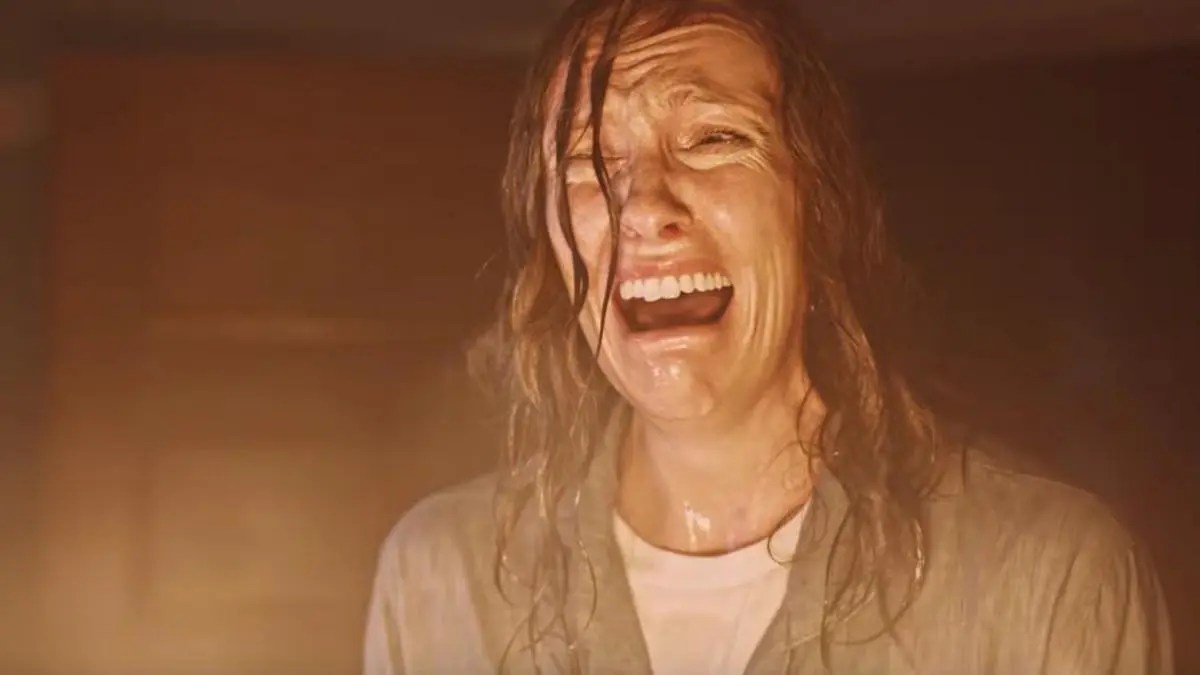
With the psychological horror already firing on all cylinders, the film seamlessly ties in a promised but yet to be realized supernatural element. The family finds themselves entangled in something much larger than they could ever imagine. There’s a heavy emphasis on the human body used as a mere vessel or sacrifice for a demonic being, so vulnerable and out of one’s control. Aster takes plenty of moments to offer his take on what possession can do to the human body, and they make for some incredibly disturbing scenes. We see Peter smash his own head against his desk at school. Annie lets out a blood curdling scream for help. She later will saw at her own neck with wire. Yet, in perhaps the most uncomfortable moment of all, it is Annie, similarly out of control, but not possessed, rather overcome by grief in the wake of her daughter’s death, writhing, screaming, wanting out of her body, that reigns as the film’s most powerful scene. The moment demonstrates the films expertise at blurring the line between the psychological and the supernatural. Hereditary is by no means the first to use the two as subtext for each other, but it’s done as successfully and poignantly as ever. A robust paranormal plotline is used as a powerful look into the human inability to outrun the trauma within our own bloodlines.
The scene also serves as a lock for an appearance on any Toni Collette acting highlights compilation, and perhaps the compilations of greatest performances for years to come. This film would not be the same without Collette’s career best performance, her impact in such a challenging role cannot be overstated.Hereditary is such a force not only because of the fear and anguish generated within us an audience, but because of the believable pain, madness, and desperation that can be felt in the characters – all credit to the cast, namely Collette and Wolff, who put together alarmingly expressive performances. If it was Aster’s job to create this sense of terror within us, it was their job to ensure that the characters matched the energy, creating a believably bleak and harrowing nightmare that we are all trapped in together.
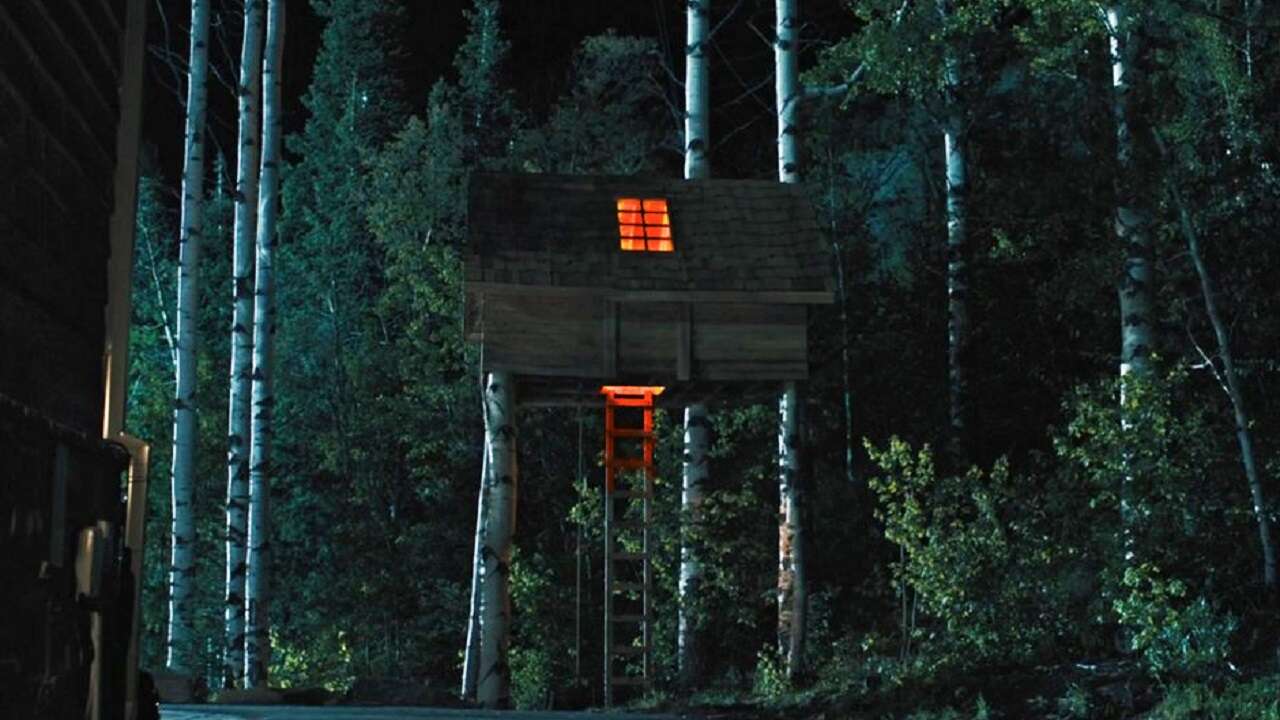
In the third act, the horror lies in the hopelessness. There is no one or nothing left to root for. With our family members either picked off or puppets for a demonic entity, we slowly come to realize we are simply here to watch the inevitable unfold. The Grahams were merely sacrifices for supernatural forces and were always going deteriorate. Sub-textually, generational trauma and anxieties were always going to repeat themselves. It makes the experience feel all the more scary and out of control. The film never relents, and the pacing stays sharp until the bitter end. Everything culminates in a memorable and intensely freaky scene rife with naked cult members, satanic worship, and lots of severed heads. It’s an ending that few will see coming upon first watch, but an ending fit for a king nonetheless. Hail Paimon!
With these words, two lovers let down their guard and solidify their devotion to one another. However Lee and Maren aren’t an ordinary couple. They’re runaways and living on the outskirts of society. Above all, they’re cannibals. Luca Guadagnino’s Bones and All (2022) adapts Camille DeAngelis’ young adult novel into a film that is a perfect mixture of horror and romance to tell the story of a love that was doomed from the start.
The film, which is set in the Midwest in 1988, opens with a wide shot of Maren, played by Taylor Russell, sitting by herself in a high school auditorium. Maren is always alone, not by choice but because her life circumstances make it difficult for her to make friends. When she is invited to a slumber party, she jumps at the opportunity for a taste of a normal life. However, Maren doesn’t just hunger for human connection; she desires human flesh. It isn’t long until her cravings take over at the expense of the party’s host, and she’s forced to flee to escape judgment. Abandoned by her father, she ventures out on her own to try and find her estranged mother, whom she inherited her unconventional habits from. Maren’s escapade leads her to meet Lee, played by Timothée Chalamet, a fellow “eater” who, like her, is learning to navigate the terrifying and inevitable practice of eating his own kind.
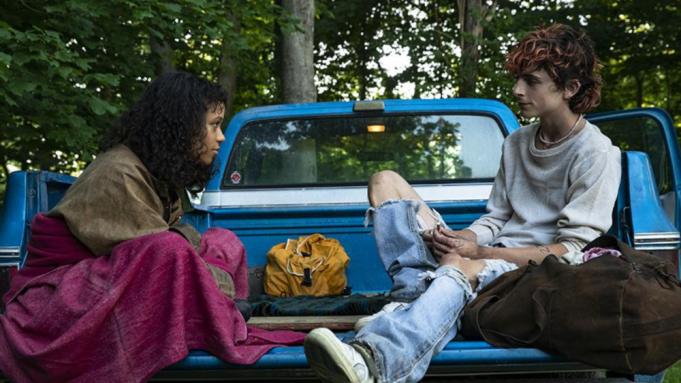
Bones and All is a stylistically beautiful film. While many horror films focus on a dark and somber aesthetic, Guadagnino embraces softer tones even in the characters’ darkest moments. When Lee and Maren share their first conversation, the director uses extreme wide shots to capture the blue and pink hues of the setting sun behind them. Although the conversation is uncomfortable as Maren catches Lee in the aftermath of preying on an insolent man, the framing of the shot brings tenderness to the scene as two lost souls connect for the first time. The visual imagery continues through the consistent use of jump cuts, zoom-ins and shifts in focus as the characters are haunted by the sudden flashbacks of their loved ones who abandoned them. Maren’s father left her to fend for herself, and Lee’s father was abusive, which are memories that continue to plague them, even as they attempt to move forward. Guadagnino’s incorporation of these cinematographic techniques provides a glimpse into the young adults’ traumatic pasts without interrupting the flow of the narrative.
source: MGM
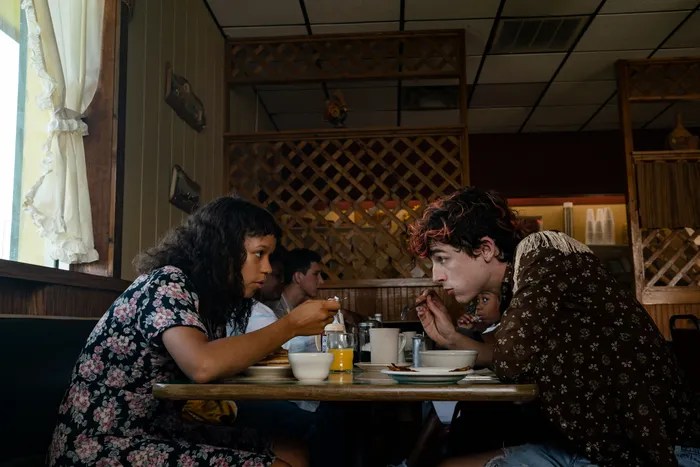
Lee and Maren are complex characters and wardrobe and props also play a large role in giving insight to the intricacies of their personalities. Maren is on a journey to find her mother and wants to remain hidden, so her wardrobe consists of coats and clothes in various shades of somber colors. Until she meets Lee, her only plan is to find out about her mother and not draw attention to herself. Lee on the other hand has somewhat come to terms with being an outcast and embraces it through a both masculine and feminine style consisting of ripped jeans, patterned shirts, and vibrant, red curls. A perfect example of the contrast between Lee and Maren is when they share their first normal meal together at a café. She orders buttermilk pancakes, while much to the surprise of their waitress, he indulges in a bowl of Lucky Charms with a side of bacon and a cup of coffee. Even through these minor details, it is evident Maren wishes to live cautiously while in the public eye while Lee knows he’s different and chooses to embrace it to a certain extent.
Sound is another crucial element which explores the romance that blossoms between these two young people amidst the environment of the 1980’s. Unlike the eerie scores that horror films tend to implement, Bones and All relies on a light guitar composition along with diegetic sound to deliver Lee and Maren’s story. In one instance, Lee’s rocks out to “Lick It Up”by KISS as they sing “life’s a treat so it’s time you taste it”. Ironically, while the lyrics allude to his unconventional habits, they also serve as a reminder that Lee, like many young adults, finds solace in music. As Maren learns how to drive, George Strait’s “Amarillo by Morning” comes on the radio and Lee sings along to the lyric, “everything that I’ve got is just what I’ve got on” as if to tell her that they’ve got nothing to lose. However, music isn’t the only sound guiding the story as dialogue from televisions and radios demonstrate that society is still revolving outside of the couple’s secluded world. For instance, Maren is moved by a religious sermon on the radio urging listeners to “forgive one another” even when it is difficult, but as Lee reminds her, there is unfortunately no hope for them. After this heavy remark, they sit quietly, proving that silence is equally as powerful in communicating the isolation that Lee and Maren feel in the open landscapes of an unknown world.
source: MGM
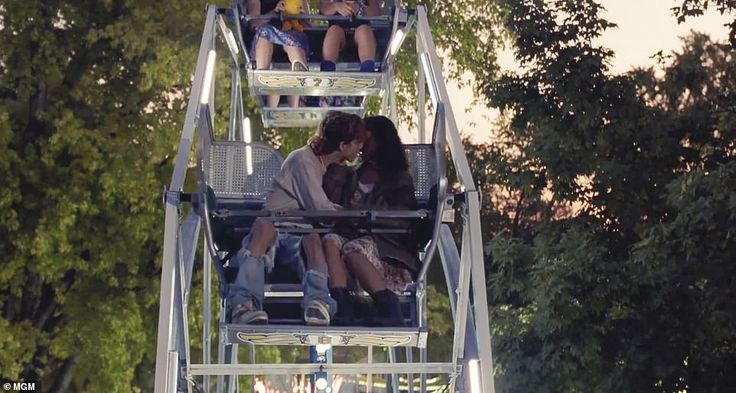
Perhaps the most intriguing aspect of Bones and All is its usage of metaphors. Guadagnino made a name for himself by directing the LGBT film, Call Me By Your Name (2017),his first collaboration with Chalamet, which earned them both critical acclaim. It is interesting to see him approach DeAngelis’ novel from a new lens by using cannibalism to symbolize queer love. Lee and Maren are outcasts, but not by choice. Their unorthodox desires are part of their nature, and must hide them in order to get by in the world, a feeling that many in the LGBT community can resonate with. When Maren eventually finds her mother, she learns that she is in a mental asylum, another nod to the idea that society is afraid of outsiders, so it locks them away. As for Lee, while at one point he seduces a male carnival employee with the goal of luring him in as a meal for Maren, it is never explicitly stated that he is queer. While the implications are there, like many of his unconventional habits, it is not something to be advertising in a midwestern town in the 1980’s.
Bones and All is a story about love and the frightening journey of coming to terms with one’s true self. Through his carefully crafted mise-scene, Gudagnino draws audiences into the complexities of Lee and Maren’s story. While it doesn’t excuse the pair’s actions, the imagery evokes empathy for two characters who are learning to navigate with their inescapable habits. Sound conveys the emotions that words can not, and it humanizes Lee and Maren’s experiences by reminding viewers that despite the couple’s circumstances, they are still enveloped in the noisy world of the 1980’s. The film incorporates clever undertones in order to draw parallels between the ostracizing tendency of eating one’s own kind and the stigma associated with being queer, which is still relevant in the modern day. The real horror of this film doesn’t come from the characters’ cannibalistic habits, rather from the fact that the couple desires to commence a new and normal life together. but society has ways of interfering and ensuring that their newfound comfort is only temporary.
As Lee says, “You want to be people? Let’s be people.”
Knowing it is only a matter of time before the world crashes upon the glimmer of hope they’ve found in one another, Maren responds, “Yeah. Let’s be them for a while.”
What a year for horror. From the paranormal to the scientific, werewolves and end times, 2023 shows it had a great deal of horror hidden up its sleeves.
It’s time to celebrate some of the best that this last year had to offer! From features, TV, shorts to comics… there’s a lot horrific to love.
Let’s start with our top ten films:
1.) When Evil Lurks
source: IFC Films
This was an intriguingly twisted little indulgence. In the most unsettling way, it had me captivated, unable to tear my eyes away from the screen while wearing a visible grimace. Once When Evil Lurks establishes its rhythm, there’s no turning back; it devours characters without a hint of mercy, all in a brilliantly strange (and chillingly morbid) manner.
This film has the potential to be profoundly terrifying. Its tension is established early and its palpable ferocity never wanes. It’s unlike any other movie I saw this year and it was brutally bold.
2.) Raging Grace
source: Brainstorm Media
It favors its horrifying mood rather than a reliance on special effects. A decision that makes this vary from others of the genre and the thrilling countdown to the finale is realized in excellently crafted strides.
That’s what makes this film a standout for me, it felt like it resides in its own space, and that expanse…gets creepy. Raging Grace is a pearl of a horror; inventive and compelling. — originally published on Film Inquiry.
3.) Birth/Rebirth
source: Shudder
It’s gory, it’s shocking, but it’s never dull or unrelenting.
Laura Moss‘s debut boasts some stellar female performances from Marin Ireland and Judy Reyes. It’s an intriguing rumination on grief and motherhood through a new horror lens with lovely flourishes of clever humor throughout. A must-see!!— originally published on Film Inquiry.
4.) Infinity Pool
source: NEON
Brandon Cronenberg’s newest is a disturbing, electric, sex, and crime-filled odyssey. A chaotic dive into depravity cementing Mia Goth as our newest horror queen. This is a visceral, surreal take that may not strike a chord with all, but it’ll leave most slack-jawed. For me, it was dangerously innovative. The way I like it. —originally published on Film Inquiry.
5.) Sleep
source: Lotte Entertainment
The meticulously crafted screenplay, combined with the exceptional acting performances and the masterfully set mood, elevates Sleep as one of the best horror films of the year.
Seek this uniquely unsettling film out.
6.) Talk to Me
source: A24
What works in Talk to Me is the vibrancy, the effects, and the creepiness that doesn’t rely on too many jump scares to make its mark. The script written by Danny Philippouand Bill Hinzman provides the energy for the young cast to feed off of. This feature debut may feel simplistic, but it’s bound to make the audience wriggle with an apt amount of style and spark. I can’t wait to see what comes next from these two.
This supernatural showing takes a new spin on an old concept making it both creative and creepy when needed.
7.) My Animal
source: Paramount
The film occasionally threatened to waver, but my attention did not. With a haunting moody feel and an innovative premise, My Animal keeps the bloody werewolf genre fresh and alive.
A coming-of-age queer werewolf story? I’m here for it.
8.) Attachment
source: Shudder
In his feature debut, writer-director Gabriel Bier Gislason craftsatruly compelling narrative that makes for an experience that caters to the paranormal audience but also expands it to something original. Terrific performances, an atmospheric vibe, and intriguing concepts make Attachment a must-see. Don’t sleep on this one. Well, you probably won’t sleep much after, anyway. —- originally published on Film Inquiry.
9.) Huesera: The Bone Woman
source: Cinepolis Distribution
Huesera is a powerful, complex creation that leaves behind a torrent of emotions. It is a stellar debut from a new and bold voice in horror. —- originally published on Film Inquiry.
10.) Knock on the Cabin
source: Universal Studios
M. Night Shyamalan‘s latest, the bleak but enthralling, Knock at the Cabin, is a subtly mysterious sort of horror. The kind that I believe Shyamalan excels at best. It features a stellar performance from Dave Batista and a slow building dread that wraps itself around you and doesn’t let go.
Honorable Mentions: Where the Devil Roams, Suitable Flesh, Enys Men, Cobweb, Evil Dead Rise
Best Horror Short film: Kalimba
source: RPX Media Productions
Kalimba is a tightly wound wonder, enigmatic and enticing. There’s a lot to love here, and I look forward to seeing what comes next from this talented group. — originally published on Film Inquiry.
Best New Voice in Horror: Glue Trap
source: HorrorFest International Film Festival
This doesn’t feel like a debut, it’s skillfully done with just the right pacing to make you feel the potential for survival, as it slips away.
It is also a lot of fun, what you’d want and hope for when it comes to a horror/comedy. There’s an entertaining feel heightened by a wicked third act turn.
Glue Trap is a masterful debut feature, showcasing a new and talented voice in horror.
Best Horror TV show: The Fall of the House of Usher
source: Netflix
Chillingly constructed, each element is meticulously placed with deliberate intent. At first, there is a flickering ember, but it gradually engulfs everything.
The Fall of the House of Usher further solidifies Flanagan‘s mastery of his craft and serves as a testament to the talent he surrounds himself with. A superb horror treat. In the end, they are their own undoing. —originally published on Film Inquiry.
Two new awards this year: The Badass Beasties! These are made for the bold films that are female led!
Badass Beastie For Filmmaking: Where the Devil Roams
source: Wonder Wheel Productions
This grim and gothic narrative serves as further evidence that the Adams Family is one of the most impressive forces in the indie filmmaking community. The film incorporates unique elements of dark comedy and features plenty of their signature music. Where The Devil Roams is a beautiful and grotesque rock and roll anthem that slays. —-originally published on Film Inquiry.
Badass Beastie For Performances: Suitable Flesh
source: RLJE Films
Suitable Flesh is full-on camp, revving the film up to a ten early on and never letting go. There are some gnarly sequences and an erotic thriller somewhere in there, making it feel like it’s suffering from a personality disorder itself. And I’m all for it.
It’s wild. It’s weird. Joe Lynch has crafted one hell of a Lovecraftian thrill ride. —-originally published on Film Inquiry.
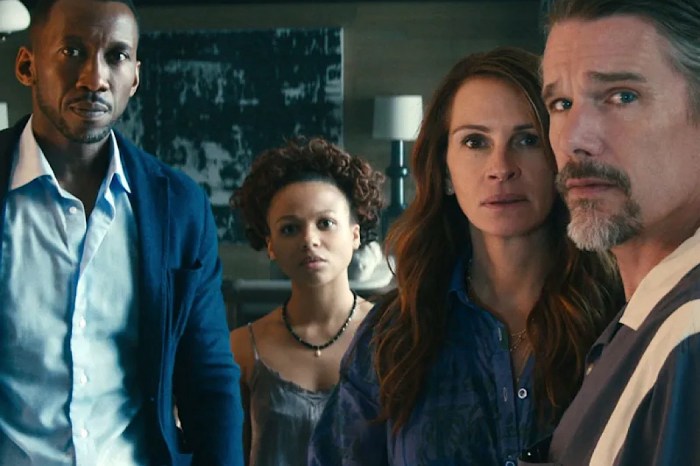
Crafting a haunting thriller that ruthlessly intertwines shock and despair is an art, and Leave the World Behind revels in this with admirable finesse. The film plunges into the abyss of universal fears, weaving them seamlessly into the fabric of a real-world cataclysm. The stellar ensemble, led by Julia Roberts, Ethan Hawke, and Mahershala Ali, adds a layer of brilliance to a narrative that’s both mesmerizing and emotionally scorching.
Initially draped in the guise of simplicity and innocence—a family seeking solace on a Long Island getaway—the narrative swiftly morphs into a heart-rending suspense tale. Trapped and entangled in the dangerous forces at play, the characters grapple with an unforgiving reality.
At first, it’s a blackout, but what starts as something explainable turns into something much worse.
In the chaos, the seemingly content couple, Amanda (Julia Roberts) and Clay (Ethan Hawke), navigate the labyrinth of uncertainty with their children, Rosie (Farrah Mackenzie) and Archie (Charlie Evans). The looming specter of a cyberattack injects an additional layer of complexity, entangling everyone in a web of confusion where answers elude and questions suffocate. Unwanted guests, George (Mahershala Ali) and his daughter, Ruth (Myha’la Herrold) add to a dilemma: trust or escape? Intentions and assumptions are meticulously considered, exposing the raw nerve of human desperation.
Director Sam Esmail masterfully captures the raw agony of in-the-moment hysteria, plunging the audience into a tumultuous sea of emotions. The performances of Roberts, Hawke, and Ali not only mirror the gravity of the situation but catapult it to thrilling heights. The screenplay, rife with grim possibilities, keeps us teetering on the edge, questioning the unfolding events with a sense of impending doom.
The best aspect of the film truly emanates from the interplay of characters. The script by Rumaan Alam and Sam Esmail allows our lead performances to cut deep, their scenes together a manifestation of intriguing depth, an alliance born out of necessity amid the suffocating circumstances. Kevin Bacon also has a key scene in a vital supporting role.
This film perches itself on a throne of despair, thrills, and biting satire, existing in multiple corners of darkness. Sam Esmail is known for his meticulous approach to visual storytelling, and he employs a range of techniques to immerse the audience in the unsettling atmosphere of the film.
The dynamic is woven with understanding, and eventually trust, providing a fleeting semblance of sincerity in the relentless insanity of circumstances that continue to present themselves: strange animal behavior, misbehaving Teslas, and endangering noises: oh my.
Long takes and other movements infuse fluidity into the storytelling, immersing the audience in the characters’ experiences. The cinematography, a potent storyteller, vividly conveys the raw emotions on screen.
The lighting is key too, as it shapes the film’s vibe, mirroring the journey from blissful ignorance to harsh reality. The interplay of shadows during the family’s getaway and eerie artificial lighting in the face of the unknown heightens the overall sense of disquiet.
source: Netflix
The framing is both intimate and purposeful, revealing subtle emotional shifts, while wide shots emphasize characters’ isolation and vulnerability amidst an inexplicable threat.
The icky factor shouldn’t be overlooked either, as some genuinely disturbing, discomforting moments won’t soon leave you as the credits roll. This one has a built-in effect as time has continued on, convincing me it’s a movie that needed to be experienced more than just described. I loved seeing these talented actors take on this intriguing task of a film, which made it even more enjoyable.
Within the film’s editing is a tension-building masterclass, seamlessly bouncing between calm and chaos. Leave the World Behind not only shocks and awes but also leaves an indelible mark with its storytelling, performances that haunt, and the lingering uncertainty that outlasts the rolling credits. It’s visually arresting, nostalgically tuned, and manipulates our emotions as if we’re drowning in our own despair.
Yet, it feels off-kilter, refusing to pay a particular homage to its characters amidst the face of the impossible—an intentional choice that leaves a bitter taste. It doesn’t detach from the effect, as the pacing ensures that eyes are continually glued to the screen.
The film does boast one of my favorite final shots of the year, ending in a way that offers a flicker of hope when the darkness seems insurmountable. The power of Leave the World Behind doesn’t dissipate; it lingers, a haunting echo that refuses to fade away.
“I’ll be there for you.”
Sometimes, we just need some friends.
Leave the World Behind is now streaming on Netflix.
While horror movie watching is a year-round event, this is that time of year when all of us can flourish, embracing the weird.
So, come one, come all, beasties unite! It’s Haunt-Tober time!
On the submission form for the giveaway (that is sadly coming to a close) I asked the question “What made you fall in love with horror?”
It’s a personal question, and I loved each and every response! I wanted to share with everyone what some of those were and also invite you all to our discord. Here’s the invitation. Join the horror community, it’s really such a wonderful one!
From specific movies, creators, familial connections and general experiences, here’s this year’s Haunt-Tober’s answers for:
What made you fall in love with horror?
What I appreciate about horror is the lengths that it can take you in such different ways. There are films with gore, no gore, all in the dark, in the light, and so many other avenues that it can take you. The mind is such an imaginative and creative place, and i feel like horror is the perfect example of that at its best.
I enjoy horror because while it is scary, most films have a moral attached to them call that call to mind issues larger than the monsters themselves. The creatures or scary themes in the film are usually symbolic of more realistic aspects of people’s lives that terrify them. For instance, many Stephen King adaptations like Children of the Corn or The Shining call to mind issues like mob mentality and complex family dynamics. I love how horror scores are so iconic because when inserted into the right eerie environment, they can drive the fearful and tense mood of the scene. For instance, The Exorcist theme on its own is a unique rock piece, but when used in the context of a possessed girl, it gives audiences chills.
I’m a bit of an adrenaline junkie, so I have always loved horror because it gives an eerie, thrilling experience. One of the first movies that drew me in was Child’s Play.
I think growing up with things that scared me. I used to hate things like Goosebumps and Spider-Man 3 that made me terrified to sleep in my own bed. But with that fear came obsession. I started to enjoy the feeling of being scared, and especially the craft of it. I also appreciate that women are often central characters of horror films who are often more fleshed out than in other films. This is what drew me to become a horror filmmaker.
To put it simply, good old fashion Scooby Doo! I adored the 60s cartoon as a kid and it just went from there.
Coraline was actually the first movie I ever saw when I was younger that scared the lights out of me. When I got a bit older, I realized horror as a genre was incredibly fascinating and getting to read, watch and hear different stories made me want to become a writer! For me, the balance of fear and moving plot is the recipe for success (no hate to anyone that loves jump scares, I just love the story portion too!).
Seeing all sorts of horror films growing up was a major factor into me loving this genre. Since 2017, I love to watch horror films during October! I had seen some prior but that year was when I started taking this seriously. Since then, it’s been a tradition
One of my earliest memories of watching a horror movie was when my older cousins showed me The Babadook when I was a kid. I couldn’t tell you very much of what happens in the final act of the film because I was so scared that I covered my eyes for pretty much the entire climax. Later that night I remember having nightmares and asking if I could sleep in the same bed as my cousin because I was afraid the Babadook would “get me.”
Over time I have learned to respect and admire these kinds of visceral effects horror movies can give me. When I was much older, around 16, I was starting to take film more seriously and write about it for fun on an old Instagram account. One of my earliest “”reviews”” was for Stanley Kubrick’s The Shining, and I knew after watching it for the first time that it was the best movie I had ever seen. At that point, no movie had made me think more about how it was put together and how it achieves its oppressively frightening atmosphere like The Shining did. Not only did this film make me love horror, it essentially rewired how I view cinema as an art form and what it is capable of.”
When I was in second grade, I was incessantly reading horror under my desk. All of the Scary Stories to Tell in the Dark, a book on horror stories from around the world (some that have stuck with me to this day), anything I could get my hands on and inevitably get in trouble for. In third grade, I switched schools and when I went to the library I discovered novelizations of Universal monster movies, particularly Dr. Jekyll and Mr. Hyde. Since then, I never looked back, always reading horror stories or comics, watching films new and old, playing games where we pretended to be vampires. Of course, the Goosebumps and Fear Street books were ravenously devoured, as well as everything Haunted Mansion at Disneyland. From there, I became interested in the real-world macabre, learning about serial killers and wanting to study sociology and behavioral science, even briefly becoming a funeral arranger. Now, I tend to keep my horror to fiction, but am currently fascinated with the history of Paris’ infamous Grand Guignol theater.
Always been fascinated with scaring people, the chills that it would give me watching movies, the creepiness etc. Still trying to find that one thing that tops it all.
I grew up really loving post-apocalyptic books and movies, so by way of the zombie genre kind of found my way to post apocalyptic horror then horror from there. Also horror is the best genre to watch with your friends, so many good memories watching good (and bad, which is arguably better) horror movies together.
When I was growing up my sister and I would stay at my aunts on the weekends and she was big into horror films. So she would put them on at night and we would sit in the living room and eat cookies and cream ice cream and watch them together. The first horror movie I remember was Salem’s lot. It forever scarred me from looking out any window at night, because I would be afraid to see the dead boy floating at my window scratching on it for me to let him in. Also, “It” was another one that scared me to the point that I woke up one night and I thought I saw him on my sisters bed. I still remember screaming my head off and yelling for my mom!
I fell in love with horror when I was about 5 years old the movie that hooked me was Poltergeist and my love for all things horror sprang from there. As a teenager I did a lot of reading and found Stephen King. A really awesome thing I like to tell people is that I grew up in Harmony Maine and I remember when Graveyard Shift by Stephen King was filmed here in town. In about 2018 I actually became employed at the mill where Graveyard Shift was filmed. I feel like after all these years of watching horror movies a lot does not surprise me anymore though lol. Halloween is absolutely hands down my favorite holiday I get so excited when all the spooky dark decor comes in the store (some of the items do stay up in my home all year) Another horror show that I really enjoy is American Horror Story anything that has to do with witches, hauntings and mysteries I get right into them
I am not a daring person so I like reading/watching others who are scared. I live vicariously through them.
In 8th grade my English Teacher wanted us to do a free write and try and write a short horror story. We did one or two of these and I fell in love with telling scary stories. I then started watching lots of horror films. I started with the cult classics like Halloween and Friday the 13th. Then throughout the years I watched more and more horror films. I loved the stories and then I started falling in love with the devices used to tell the stories. Makeup and special effects are some of the first things that will catch my eye when watching a horror film.
The horror stories I like the most are ones that touch on morality and the consequences of forgoing/renouncing principles. For me, these stories (and the horror stories I want to create) serve as cathartic cautionary tales on how not to handle situations in life. For me, the film “Ginger Snaps” epitomizes this by showcasing how one girl, Ginger Fitzgerald, uses lycanthropy as an unhealthy outlet to express her anger and rage with her peers, only to destroy herself, her peers, and her relationship with her sister, Brigitte.
My go-to genre is always comedy, and people often overlook the similarities between horror and comedy. Both genres involve subverting an audience’s expectations and trying to catch them off-guard. I’ve always been fascinated by things that scare me, but Hereditary was the movie that made me fall in love with horror. I had never seen grief explored through horror, and it inspired me to make my own horror short film.
I fell in love with the Scream movies, and soon thereafter a whole bunch of slashers and crazy 80s B-movies. It made me realize that horror is a genre that is able to explore the dark side of us that we can’t explore in real life — either our trauma or our dark impulses. I also love how much it stays true to itself as a genre; that there are people who are only famous within horror groups and certain tropes that only exist in horror movies. I love how simultaneously schlocky and deep it can be, and I feel like it’s peak genre cinema.
Growing up I always loved the Halloween decorations during October. While all the kids would flock to each house and quickly grab the best candy, I’d stand behind to oogle at the spooky ghosts and skeletons. Soon I became obsessed with Scooby Doo which also managed to the scaring the living daylight out of me. For awhile horror would truly terrorize me, but something kept pulling me back. Eventually, I conquered my fears and exposed myself to the classic horror films ranging from American Werewolf in London to The Lost Boys. My passion only got stronger and stronger the older I got.
Watching Candyman when I was way too young to see such a movie. Wrecked me for weeks.
Watching Bob Wilkins Creature Features on channel 2 (Oakland/San Francisco area) when I was 5 years old! 🙂 It kick-started my love of the genre!
I used to be absolutely terrified of the horror genre until I started reading Stephen King books which led me to fall in love with a lot of his movie adaptations IT, Gerald’s Game, and Carrie. Being obsessed with these movies really opened me up to horror as a whole and it is now my favorite genre!
I really liked Scooby doo as a kid and that just kept growing
Scary but fun!
As a kid it was a way for me and my mom to connect to each other.
The thing that made fall in love with horror was the inventiveness of the rules and the variety of what you can do in a horror film. For example, Gremlins for the first third is a Spielbergian coming of age story about a biy and his pet. Then, the rest of the movie turns into a monster fest with the titular characters, complete with one of them getting microwaved to death.
Best way to access buried emotions, and get a fun thrill doing it
I love campy horror the most because it’s just so fun during the fall, which is my favorite season. It started with Stranger Things when it first came out, and I loved the nostalgic feeling and the 80s setting so I started watching things like the Scream movies. My favorite more modern horror movie is Hereditary.
I’ve been in love with horror since the best era of horror occurred 1980’s. I grew up watching them all thanks to my awesome late mother for turning me into the biggest horror fan ever.
I’ve always loved horror! I saw The Ring at age seven and a movie had never affected me so much. I was scared for aged! I thought it was incredible that media could have that effect, and I quickly fell in love with all things horror.
The feeling of being scared.
Watching horror movies from the age of 5 (Sometimes between fingers).
My Father was big horror fan so growing I played with Jason, Freddy Krueger, and Michael Myers action figures.
While part of me enjoys being scared and looking for something to top that fear, horror movies are like warm blankets. Nothing beats settling into a warm house at night while images of abject terror fill your television screen.
Growing up in a haunted house in New England I always gravitated to horror! Reading spooky stories always made me feel better.
I think for me, my connection to the horror genre was its celebration of those who didn’t fit in within our society. My favorite horror films are mostly from the 30s as it celebrated outcasts. We fear Frankenstein’s monster just as much as my sympathize with him. Count Dracula is both extremely charming and very creepy. These films showed audiences the complexities of life, while also scaring them at the same time. What we can take away from them is a crucial but important fact: darkness exists everywhere, but so does light. Horror is a way for us to address that darkness that exists around us and even within all of us, for better and worse. FRAKENSTEIN/DRACULA
I grew up with horror, my mom is the biggest fan. So I was born with it in my guts. Fear is such a strong emotion. One of the hardest to ignore and overcome, Having a good scare reminds you you are alive.
My dad would take us to movies when he was in town and not working, so we would go and enjoy all types of films but we dug the horror movies the best.
The beauty and thrill of being scared especially with films that used lighting, sound, etc to ratchet up tension and didn’t reveal too much. Knowing that what mine can conjure up is far scarier than what can be put on screen!
Watching Scream with my family.
The old folklore and myths connected to my families Eastern-European history.
Horror is one of THE BEST moviegoing experiences. Add to that it’s one of the best shared experiences. One can have in a darkened room, filled with strangers, the visceral thrill of it all in an audience, screaming together, jumping together, and covering their eyes together, and when it’s all said and done, you’re able to get up and go home unlike many of the characters in the movie and a good horror movie will stay with you for me it’s horror, movies, such as Halloween, The Exorcist, John Carpenter’s The Thing, Alien just to name a few! They’re movies that evolve as I evolve aka get older! Thats why I LOVE horror movies! Demetri Panos
Creating an actual sense of horror is so hard, and people don’t appreciate it enough! There’s so much craft to it, and when done well, is amazing cinema.
My favorite kind of horror is psychological/ cultish horror. Those films really give me thrills!
I remember the first time I saw a horror film with an audience — all prior viewings consisted of a laptop, a dark room, and no company. It was a screening of Texas Chain Saw Massacre on my university campus. The sound and image were terrible, but the film was thrilling. Many had already seen the movie, though there still many hushes, audible gasps, and more than one chuckle at the expense of the delightfully ignorant protagonists. More than any other genre, horror has the ability to unite an audience because it creates a shared experience; the viewers must endure the story together. That night when the lights came on and everyone breathed a sigh of relief, we all sat there with meek smiles because we survived as a group. As contradictory as the idea seems, horror builds communities.
I think horror can explore societal and psychological issues in a very visceral and unique way.
When I was a wee lad, I was terrified of horror. If other kids were dressed up as GhostFace for Trick-or-Treating, I refused to go out. Even if it were a horror commercial, I’d be on the verge of tears. That all changed when I was 12 years old and decided to watch Jeepers Creepers because it was on the TV in some random Florida hotel. (even though the director is a dirtbag) Something about the movie struck a chord with me, and suddenly, I wasn’t afraid of horror movies anymore. All through my teens, I watched movie after movie, franchise after franchise, and really began to appreciate horror as an art form. I started branching out to international horror, I went to visit horror landmarks, and it just became a staple of my life. I’m so happy to talk about horror at any time, and I’m always down for a good scare
Watching Evil Dead 2 at a friend’s house on VHS as a teenager.
Getting a rec list from this random person named Kristy.
The natural rush of being jumped!
It’s terrifying lol.
My aunt used to watch tons of horror movies when i was a kid. So i would watch all the vhs tapes she recorded with my cousins.
Stephen King.
My brother. He took me to movie theaters in Bangor where horror movies often played in the 50s. I was 10 or 11and when the movie was over we would walk to our nearby home. Sometimes he would run ahead of me and when he was far enough away he would stop and turn around, where I would be running as fast as my short legs could go and he would call out, in a scary voice, “”Run faster! It’s going to get you!!”” Tho I was scared to death, the next time a horror movie would be showing, I couldn’t say ‘no’ to his invitation!! I think he was too scared to go alone!!!
My older brother influenced me.
Stephen King books
I think I always was in love with horror, my mother constantly renting the Disney “horror” films like watcher in the woods and various made for TV horrors. I also loved the macbre, Beetlejuice, Addams Family etc soft launches early on. Poltergeist was the first film that truly made me terrified – that and X-Files. But as scared as I was, I always came back for more diving deeper into the genre with each watch. I think the final and biggest push was Scream. I wasn’t allowed to see the film, but all my classmates some how did (it was fourth/ fifth grade). Listening to them describe the body slit from groan to navel, guts spilling out and hung from a tree – I was fascinated. My poor mother was forced to start watching so many horrors after this, telling me the fast forward was to hide the violence, when in truth it was because she was so scared herself.
To be scared and knowing it’s a movie. The thrill!
The campy/cheesiness of some of them the 90s!
The Devil AKA Satan or Lucifer, bringer of light
I used to be terrified of Ghostface and Pennywise from the original It TV series as a child but somehow always loved Halloween. It fueled my love and appreciation for horror movies and that’s why Scream is my favorite horror franchise.
Watching Dawn of the Dead(original) for the first time when I was a kid.
Since watching Alien in middle school, I’ve learned that Horror doesn’t have to be straight slasher gore that it’s advertised as on TV. I’ve gradually watched more and found my way to the Thing, The Babadook, and various other horror films.
The scares!
I’m slowly diving into the world of horror 😅 but I love the suspense and monsters/creatures!
I didn’t like horror until extremely recently, for so long I held myself back from horror because I was scared to sit through that discomfort. However, I found Scream which mixed horror, comedy, and self-awareness of the genre. It’s the essential horror film for me and the perfect gateway to the genre.
The idea of telling a story about a worst and almost impossible case scenario is very intriguing to me.
The villains. Knowing that they were meant to represent something more than just a killer – often reflecting society back at itself – makes me appreciate how horror is more than a physically terrifying experience.
I’m always looking for strong emotions within cinema and art more broadly. Horror most often elicits the strongest reaction from me, whether it’s horror or humor:
I love how it can explore the limits of human madness and creativity.
Ever since I was young I always loved spooky things. Halloween was my favorite holiday, I had a little devil baby from Spirit Halloween that I took care of as an actual doll instead of a cute one, I always wanted to watch spooky movies. I loved everything that was creepy. I remember when I was really young I caught a glimpse of the 1989 Batman and became obsessed with not only the spooky Tim Burton aesthetic but also Jack Nicholson. While not a horror movie, Batman made child me obsessed with Jack Nicholson to the point where I was in preschool carrying around a Jack picture with me everywhere I went. When I was in elementary school, I was determined to watch The Shining because it was one of Jack’s most famous roles. My parents, a little apprehensive, agreed to watch it with me. Instead of being scared, I fell in love with the film and the genre of horror and have never looked back.
The Shining now remains my favorite film and I have been consuming horror content ever since. I loved that I was never scared of horror like my friends and family members were, I was only intrigued. I have come to love the way horror takes our social anxieties and represents them in strange ways like The Ring or creates innovative traps like Saw.
I am now a senior in college, majoring in film and gender studies and am currently writing a senior thesis on the role of sacrificial motherhood in horror films because there are not enough horror classes taught and I crave them! I love horror and talking about and watching it and love that I have found this website and community of fellow horror lovers. <3″
I love the creation of the SFX and VFX of horror. The creation of the characters and villains, whether it be virtual or special effects made me love getting into watch horror movies. Horror is a unique medium to create things that don’t exist, a major thing about visual effects that I love and what made me interested in VFX. Seeing all the new ways this is in horror movies made me fall in love with horror.
Not a big fan!🙈
I fell in love with horror because of my dad. We used to sit and watch a horror movie every night once my mom went to bed — scaring ourselves to sleep. We speak in horror language, asking each other about what the other has seen recently or about spooky encounters we’ve had in the past. When my parents divorced, I found that my dad and I were able to connect through these films despite our distance. Doctor Strange is one that we keep going back to! It’s a comfort genre for me; one that I have passed on to my friends and watch in my dark living room when only my dad and I remain awake.
The scary jumps, gore, and the cinematics.
The thrill of the unexpected.
Stephen King movies growing up, such as Pet Sematary.
Halloween.
My mom is a huge horror fan specific Stephen King though so I have grown up on horror.
While horror movie watching is a year-round event, this is that time of year when all of us can flourish, embracing the weird.
So, come one, come all, beasties unite! It’s Haunt-Tober time!
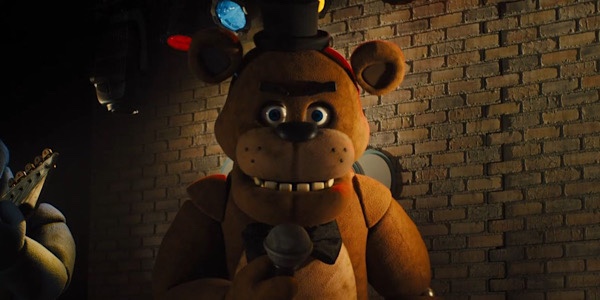
The new horror release, a much awaited film for me, Five Nights at Freddy’s, unfortunately suffers from a lack of cohesion and clarity. It doesn’t capitalize on the opportunity for some animatronic fun, but instead lingers too much on the story it is trying to tell but can’t quite say.
source: Universal Pictures
Mike (Josh Hutcherson), dealing with his own struggles and potential custody of his sister, begins work as a security guard Freddy Fazbear’s Pizza.
While there he notices strange occurrences, that matched with his own nightmares from a past trauma, and a new acquaintance Vanessa (Elizabeth Lail) that seems to be keeping secrets, he begins to realize that something is off.
The film unrolls its premise in strangely portioned parts. It doesn’t quite rise to the heights I feel that it could have.
The acting truly isn’t the problem. I don’t mind the casting and I feel like everyone is trying. For me, it was the script, (written by Scott Cawthon, Emma Tammi, and Seth Cuddeback) that felt disjointed. The role of Vanessa (how she’s introduced and her story unveiled) is also a big head-scratcher and the pace is glacially done.
I so wanted to love this film, but it just wasn’t as fun as I had hoped. This adaptation wasn’t as creative or clever as one would want, and feels more like a drama than a horror. That latter aspect isn’t entirely a negative as this is an emotional genre, but it doesn’t know which lane to choose.
As an opening tester for horror interested kids I can see this film working, but I fear they’ll be uncertain of the more heady elements it’s attempting to go with.
Fight Nights at Freddy’s is just not effective enough as a horror and has a slowly plodding pace that can’t be saved by its talent.
While horror movie watching is a year-round event, this is that time of year when all of us can flourish, embracing the weird.
So, come one, come all, beasties unite! It’s Haunt-Tober time!
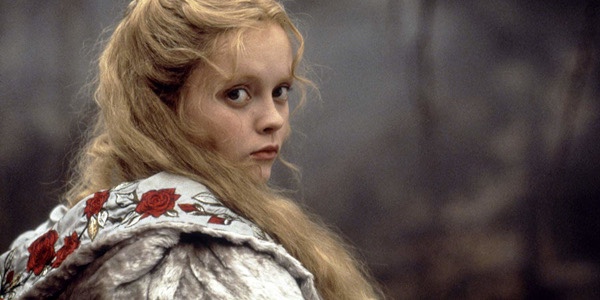
A gray blanket of fog enveloping the frame. The starkness of a cheekbone, or the black collar of a shirt. Porcelain skin against a blue tinted forest.
When it comes to Tim Burton, there is more than a transformation. There’s a transportation. We live in his world. Each may seem similar, and there are unmistakable elements in common no doubt, but with each film he carves out his own unique place. A new world.
With Sleepy Hollow it feels as if it’s on the fringes of reality, between dream and nightmare.
source: Paramount Pictures
As a detective story, Burton excels, in the sense of bringing this fictional tale to light, he glows. I think the reason that this doesn’t quite hit the heights of some of his others is mere circumstance. This isn’t his creation, wholly, but it’s a extension of him none the less.
Constable Ichabod Crane (Johnny Depp) is brought to Sleepy Hollow to investigate a series of beheadings. The townspeople, including Katrina Anne Van Tassel (Christina Ricci) have their own theories, yet he’s interested in the facts.
But, give it some time.
As more information comes to light and Ichabod grows closer to the townspeople, the mystery of the headless horseman (played wickedly by Christopher Walken) is unveiled.
The costume and production design is stellar and the performances are aptly fit into the gothic aesthetic.
This isn’t Burton’s best but it’s far from his worst, and there is an innately charming chilliness to the picture that encompasses every scene. Depp brings humor and the silly yet seemingly serious antics he’s often up to with measurable charm and Ricci is delightfully enigmatic.
A supernatural splendor, gorgeously morose, Sleepy Hollow is a dark horse amid Burton’sfilmography.



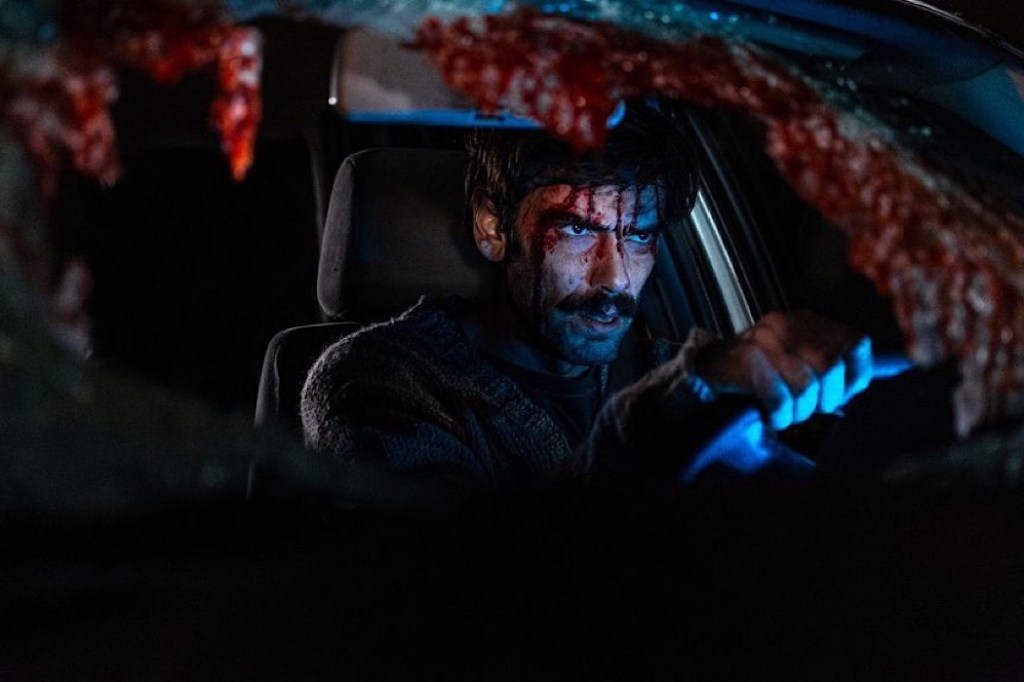


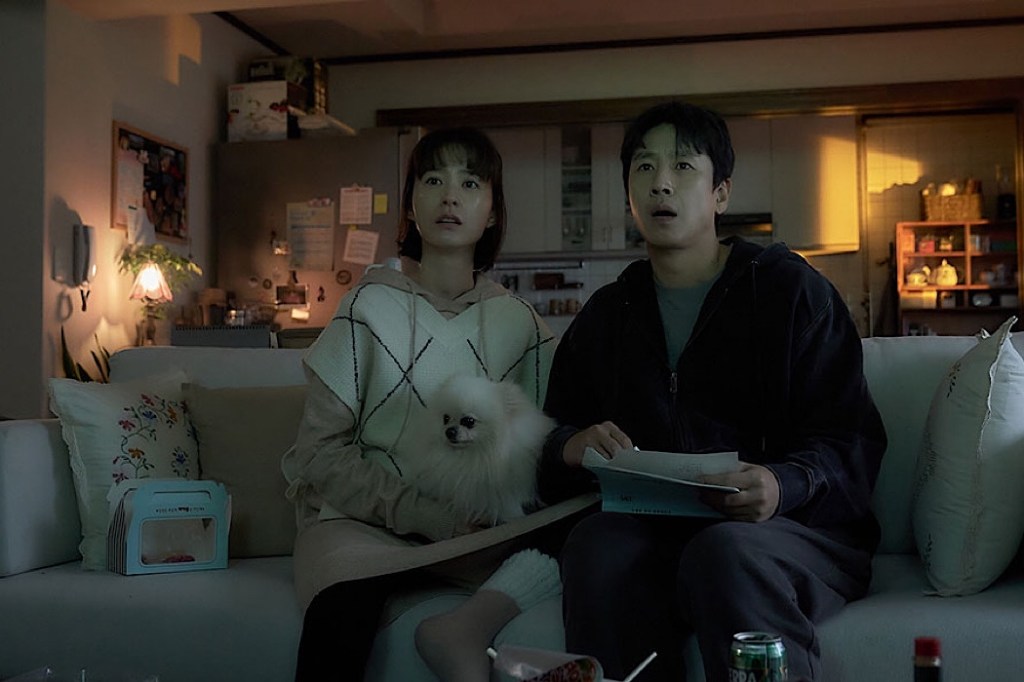







 Wonderfully Weird & Horrifying