Silent Night, Deadly Night Novel Review

A monster in the garb of holiday merriment, Billy Chapman (Robert Brian Wilson) slashes his way through 1984’s Silent Night, Deadly Night.

This cult classic among horror fans was as controversial as it was gory and gratuitous. Naturally, this gift seemed destined to be opened when considering a novelization.

And now, your Christmas wishes have come to fruition because the Board gaming experts at Stop the Killer bring the holiday slasher back to life with bloody details from author Armando Muñoz. How much deeper can this holiday horror go? Open the pages to find a new look at the classic film. It’s grisly goodness is the book you didn’t know you needed.

But you do.

Christmas

We begin with Christmas Joy, the Utah town that Billy grows up in. A place brimming with Yuletide wishes year-round. The novel helps to incur discomfort right away, showing the layered web of experiences that caused this madman to be born and shaped and how his *naughty* intentions were nurtured.

While the movie was a sampling of a holiday massacre, this is a full-course meal. It comes with all of the disturbing fixings and plenty of new recipes based on and inspired by the classic film.

Armando Muñoz wields his weapons well, utilizing the violent narrative littered with the evil we know while introducing us to the ones we don’t.

It feels like the film, including the specificity of exact scenes and dialogue. Yet, there’s more violence, more sexual material, and it’s dressed in a decidedly darker shade of red.

source: Tristar Pictures

All of the additions feel at home here. He has done extensive research and taken careful consideration when penning this version of his Santa.

Has arrived

We get further examination of characters, allowing us darker looks that only a novel representation could allow, including Mother Superior. She’s a villain herself, and the book provides ample opportunity for us to learn and be disgusted by the character.

Many plot points are fleshed out, and some of the less coherent script problems are ironed into a much smoother trajectory. And, of course, this includes even more murder!

It’s as if this novelization is the film we wanted but didn’t get. An evenly-paced, aptly salacious story that doesn’t feel rushed. Its depravity is unmatched, and it drives the reader to discover how unhinged Billy and company can become.

Tonally, Armando Muñoz gives a retelling that matches the movie. Through twisted invention, the book succeeds in becoming its own sort of nightmare. One that fans of Silent Night, Deadly Night, will proudly embrace. Those who are unaware of the film but love some deviance with their cheer will also be pleasantly pleased. This is a horror book you can devour regardless of your previous fandom.

Bolder and bloodier: Silent Night, Deadly Night the novel is a Christmas gift you’ll be too afraid to return.

And you wouldn’t want to; it’s a fantastically wicked read.

The eBook will be released on March 1st. For more information on this and the other offerings from Stop the Killer click here.
Horror: Journey Through the Decades- 2020’s (2022) – Bones and All

MGM

source: MGM

By: Chayliel Quintanilla Flores

“You don’t think that I’m a bad person? “

“All I think is that I love you.”

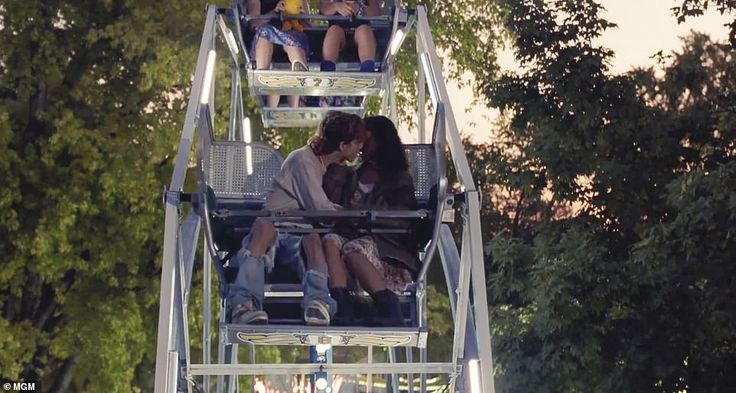
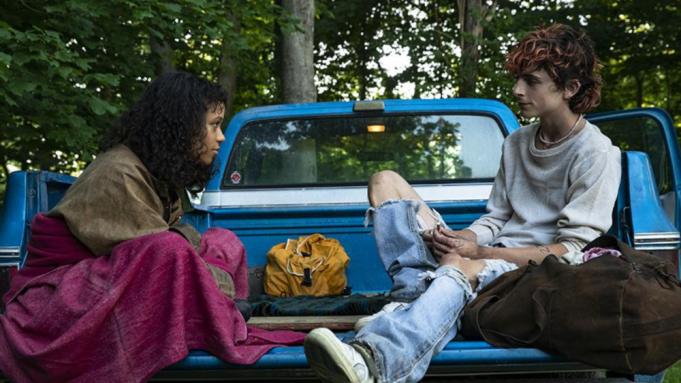
With these words, two lovers let down their guard and solidify their devotion to one another. However Lee and Maren aren’t an ordinary couple. They’re runaways and living on the outskirts of society. Above all, they’re cannibals. Luca Guadagnino’s Bones and All (2022) adapts Camille DeAngelis’ young adult novel into a film that is a perfect mixture of horror and romance to tell the story of a love that was doomed from the start.

The film, which is set in the Midwest in 1988, opens with a wide shot of Maren, played by Taylor Russell, sitting by herself in a high school auditorium. Maren is always alone, not by choice but because her life circumstances make it difficult for her to make friends. When she is invited to a slumber party, she jumps at the opportunity for a taste of a normal life. However, Maren doesn’t just hunger for human connection; she desires human flesh. It isn’t long until her cravings take over at the expense of the party’s host, and she’s forced to flee to escape judgment. Abandoned by her father, she ventures out on her own to try and find her estranged mother, whom she inherited her unconventional habits from. Maren’s escapade leads her to meet Lee, played by Timothée Chalamet, a fellow “eater” who, like her, is learning to navigate the terrifying and inevitable practice of eating his own kind.

Bones and All is a stylistically beautiful film. While many horror films focus on a dark and somber aesthetic, Guadagnino embraces softer tones even in the characters’ darkest moments. When Lee and Maren share their first conversation, the director uses extreme wide shots to capture the blue and pink hues of the setting sun behind them. Although the conversation is uncomfortable as Maren catches Lee in the aftermath of preying on an insolent man, the framing of the shot brings tenderness to the scene as two lost souls connect for the first time. The visual imagery continues through the consistent use of jump cuts, zoom-ins and shifts in focus as the characters are haunted by the sudden flashbacks of their loved ones who abandoned them. Maren’s father left her to fend for herself, and Lee’s father was abusive, which are memories that continue to plague them, even as they attempt to move forward. Guadagnino’s incorporation of these cinematographic techniques provides a glimpse into the young adults’ traumatic pasts without interrupting the flow of the narrative.

source: MGM

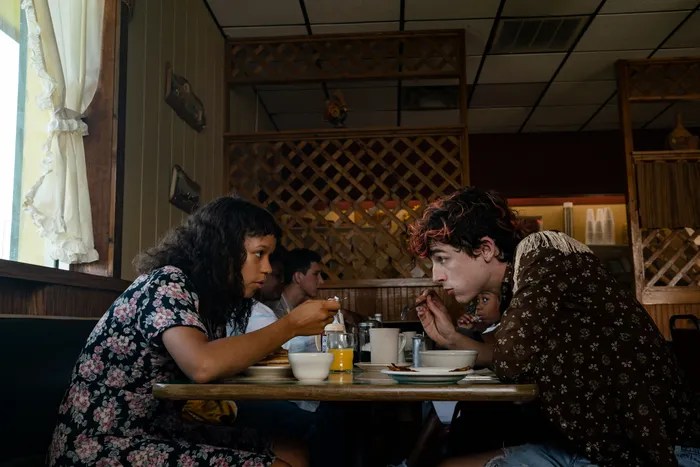
Lee and Maren are complex characters and wardrobe and props also play a large role in giving insight to the intricacies of their personalities. Maren is on a journey to find her mother and wants to remain hidden, so her wardrobe consists of coats and clothes in various shades of somber colors. Until she meets Lee, her only plan is to find out about her mother and not draw attention to herself. Lee on the other hand has somewhat come to terms with being an outcast and embraces it through a both masculine and feminine style consisting of ripped jeans, patterned shirts, and vibrant, red curls. A perfect example of the contrast between Lee and Maren is when they share their first normal meal together at a café. She orders buttermilk pancakes, while much to the surprise of their waitress, he indulges in a bowl of Lucky Charms with a side of bacon and a cup of coffee. Even through these minor details, it is evident Maren wishes to live cautiously while in the public eye while Lee knows he’s different and chooses to embrace it to a certain extent. 

Sound is another crucial element which explores the romance that blossoms between these two young people amidst the environment of the 1980’s. Unlike the eerie scores that horror films tend to implement, Bones and All relies on a light guitar composition along with diegetic sound to deliver Lee and Maren’s story. In one instance, Lee’s rocks out to “Lick It Up” by KISS as they sing “life’s a treat so it’s time you taste it”. Ironically, while the lyrics allude to his unconventional habits, they also serve as a reminder that Lee, like many young adults, finds solace in music. As Maren learns how to drive, George Strait’s “Amarillo by Morning” comes on the radio and Lee sings along to the lyric, “everything that I’ve got is just what I’ve got on” as if to tell her that they’ve got nothing to lose. However, music isn’t the only sound guiding the story as dialogue from televisions and radios demonstrate that society is still revolving outside of the couple’s secluded world. For instance, Maren is moved by a religious sermon on the radio urging listeners to “forgive one another” even when it is difficult, but as Lee reminds her, there is unfortunately no hope for them. After this heavy remark, they sit quietly, proving that silence is equally as powerful in communicating the isolation that Lee and Maren feel in the open landscapes of an unknown world. 

source: MGM

Perhaps the most intriguing aspect of Bones and All is its usage of metaphors. Guadagnino made a name for himself by directing the LGBT film, Call Me By Your Name (2017), his first collaboration with Chalamet, which earned them both critical acclaim. It is interesting to see him approach DeAngelis’ novel from a new lens by using cannibalism to symbolize queer love. Lee and Maren are outcasts, but not by choice. Their unorthodox desires are part of their nature, and must hide them in order to get by in the world, a feeling that many in the LGBT community can resonate with. When Maren eventually finds her mother, she learns that she is in a mental asylum, another nod to the idea that society is afraid of outsiders, so it locks them away. As for Lee, while at one point he seduces a male carnival employee with the goal of luring him in as a meal for Maren, it is never explicitly stated that he is queer. While the implications are there, like many of his unconventional habits, it is not something to be advertising in a midwestern town in the 1980’s.

Bones and All is a story about love and the frightening journey of coming to terms with one’s true self. Through his carefully crafted mise-scene, Gudagnino draws audiences into the complexities of Lee and Maren’s story. While it doesn’t excuse the pair’s actions, the imagery evokes empathy for two characters who are learning to navigate with their inescapable habits. Sound conveys the emotions that words can not, and it humanizes Lee and Maren’s experiences by reminding viewers that despite the couple’s circumstances, they are still enveloped in the noisy world of the 1980’s. The film incorporates clever undertones in order to draw parallels between the ostracizing tendency of eating one’s own kind and the stigma associated with being queer, which is still relevant in the modern day. The real horror of this film doesn’t come from the characters’ cannibalistic habits, rather from the fact that the couple desires to commence a new and normal life together. but society has ways of interfering and ensuring that their newfound comfort is only temporary.

As Lee says, “You want to be people? Let’s be people.”

Knowing it is only a matter of time before the world crashes upon the glimmer of hope they’ve found in one another, Maren responds, “Yeah. Let’s be them for a while.”

Leave the World Behind: A Riveting, Head-Spinning Thriller

Crafting a haunting thriller that ruthlessly intertwines shock and despair is an art, and Leave the World Behind revels in this with admirable finesse. The film plunges into the abyss of universal fears, weaving them seamlessly into the fabric of a real-world cataclysm. The stellar ensemble, led by Julia Roberts, Ethan Hawke, and Mahershala Ali, adds a layer of brilliance to a narrative that’s both mesmerizing and emotionally scorching.

Initially draped in the guise of simplicity and innocence—a family seeking solace on a Long Island getaway—the narrative swiftly morphs into a heart-rending suspense tale. Trapped and entangled in the dangerous forces at play, the characters grapple with an unforgiving reality.

At first, it’s a blackout, but what starts as something explainable turns into something much worse. 

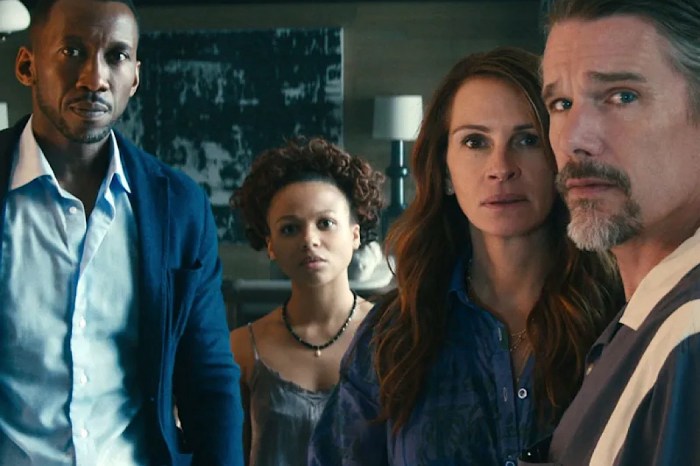
In the chaos, the seemingly content couple, Amanda (Julia Roberts) and Clay (Ethan Hawke), navigate the labyrinth of uncertainty with their children, Rosie (Farrah Mackenzie) and Archie (Charlie Evans). The looming specter of a cyberattack injects an additional layer of complexity, entangling everyone in a web of confusion where answers elude and questions suffocate. Unwanted guests, George (Mahershala Ali) and his daughter, Ruth (Myha’la Herrold) add to a dilemma: trust or escape? Intentions and assumptions are meticulously considered, exposing the raw nerve of human desperation.

Director Sam Esmail masterfully captures the raw agony of in-the-moment hysteria, plunging the audience into a tumultuous sea of emotions. The performances of Roberts, Hawke, and Ali not only mirror the gravity of the situation but catapult it to thrilling heights. The screenplay, rife with grim possibilities, keeps us teetering on the edge, questioning the unfolding events with a sense of impending doom.

The best aspect of the film truly emanates from the interplay of characters. The script by Rumaan Alam and Sam Esmail allows our lead performances to cut deep, their scenes together a manifestation of intriguing depth, an alliance born out of necessity amid the suffocating circumstances. Kevin Bacon also has a key scene in a vital supporting role.

This film perches itself on a throne of despair, thrills, and biting satire, existing in multiple corners of darkness. Sam Esmail is known for his meticulous approach to visual storytelling, and he employs a range of techniques to immerse the audience in the unsettling atmosphere of the film.

The dynamic is woven with understanding, and eventually trust, providing a fleeting semblance of sincerity in the relentless insanity of circumstances that continue to present themselves: strange animal behavior, misbehaving Teslas, and endangering noises: oh my. 

Long takes and other movements infuse fluidity into the storytelling, immersing the audience in the characters’ experiences. The cinematography, a potent storyteller, vividly conveys the raw emotions on screen.

The lighting is key too, as it shapes the film’s vibe, mirroring the journey from blissful ignorance to harsh reality. The interplay of shadows during the family’s getaway and eerie artificial lighting in the face of the unknown heightens the overall sense of disquiet.

source: Netflix

The framing is both intimate and purposeful, revealing subtle emotional shifts, while wide shots emphasize characters’ isolation and vulnerability amidst an inexplicable threat.

The icky factor shouldn’t be overlooked either, as some genuinely disturbing, discomforting moments won’t soon leave you as the credits roll. This one has a built-in effect as time has continued on, convincing me it’s a movie that needed to be experienced more than just described. I loved seeing these talented actors take on this intriguing task of a film, which made it even more enjoyable.

Within the film’s editing is a tension-building masterclass, seamlessly bouncing between calm and chaos. Leave the World Behind not only shocks and awes but also leaves an indelible mark with its storytelling, performances that haunt, and the lingering uncertainty that outlasts the rolling credits. It’s visually arresting, nostalgically tuned, and manipulates our emotions as if we’re drowning in our own despair.

Yet, it feels off-kilter, refusing to pay a particular homage to its characters amidst the face of the impossible—an intentional choice that leaves a bitter taste. It doesn’t detach from the effect, as the pacing ensures that eyes are continually glued to the screen.

The film does boast one of my favorite final shots of the year, ending in a way that offers a flicker of hope when the darkness seems insurmountable. The power of Leave the World Behind doesn’t dissipate; it lingers, a haunting echo that refuses to fade away.

“I’ll be there for you.”

Sometimes, we just need some friends.

Leave the World Behind is now streaming on Netflix.

Like our content? Buy us a slice!

https://www.buymeacoffee.com/wonderfullyweird

Bloodsucker City Book Review

For my first book review on the site, it was only fitting that it ended up being a horror novella with clear influences by my favorite author: Stephen King. Remarked as a “Shawshank Redemption with vampires” (mainly in my mind as Salem’s Lot) it is sufficiently coined.

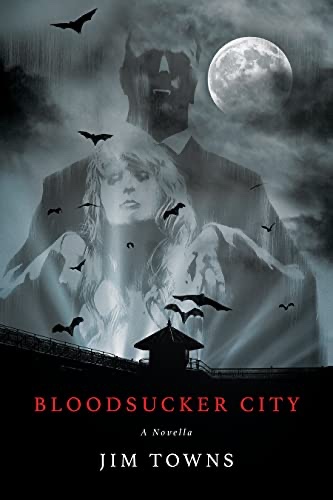
Bloodsucker City by Jim Towns is an easily digestible thrill of a story, with enough bloody bits and creative turns to keep you hooked.

After Lena returns home to find her son brutally killed (yet appearing to be drained of blood) she’s swiftly wrongly arrested for his murder and brought to the terrifying and secluded prison: Steelgate. The building is old, a fortress of secrets and darkness, containing some of the worst female criminals and controlled by a group of eerily mysterious wardens.

Her welcome is anything but warm, mistreated by guards and sneered at by her fellow inmates. The only true kindness comes from her cellmate, Yvonne, a woman who knows the lay of the land and warns of the consequences of the night that remain for Lena to see.

She also finds some kinship with the prison doctor, Doctor Mears, who, much like many here, is terrified of those who rule over her. The prison is haunted by a danger that hangs thick in the air, taunting the trapped souls with the worst kind of punishment.

Some women also exude the power over others, mainly led by Greta who instantly takes a dislike to Lena.

When she is forced to spend time in the hole, she soon discovers that the evil is embedded deep and that within the shadows exists a horrible and menacing faction of bloodsucking vampires. The lore isn’t intimately explored, but it’s clear that this has been a longtime setup, that has provided frequent feedings without garnering attention from the world outside. It also takes place in the 1930s, an intelligent choice as it takes technology and other trickier concepts out of the picture. It also creates an atmosphere that feels desolate, carrying with it a sort of ancient vampiric flair.

Once Lena recognizes what’s going on, she knows that her survival hinges on one thing: escape.

The novella moves at a pace that makes it hard to put down, keeping the action and emotion closely intertwined. It is also a tale screaming for a film adaptation, something I hope occurs. As I was reading there was a visual element that made the gore vivid and the horror sinister. 

Amid the occasional typo, the amount of names/characters can feel a little confusing. Mostly, it makes you take a second to reacclimate. It’s a very breezy 134 pages so some characters get less opportunity for growth and understanding. Overall, though, those crucial to the narrative are captured with colorful and unique prose. Our protagonist, Lena, is a woman to root for, strong and relatable despite the fantastic setting.

Towns is a talented storyteller, one who unites numerous horror elements and brings it to fruition with a feminine edge. Speaking of edge, this novella does not hold its punches (or should I say scalpels) and it’s all the better for it. Much of the story lingers in predictable territory but is displayed with flourishes of a darkened intrigue that oozes with creativity. One scene in particular is very bold and wickedly fresh.

Bloodsucker City is a horror novella with bite; it deserves to be devoured. It’s delightfully strange and creepy, with a compelling story by the talented Towns.

Bloodsucker City is currently on sale. More information can be found here.

Blood daughter: The Indie of Indies

When you have a deep love for the novel Dracula by Bram Stroker the obvious thing to do is to make a trilogy of films (started over thirty years ago) dedicated to a modern retelling of the tale. That’s exactly what writer and director Bryan Enk has done, starting with his first two titles from when he was still in college, 1993’s Dracula and 1994’s Dracula Returns. Of course both of these were made on a budget thinner than any thread known to humanity and shot on VHS using camcorders. When you have a love for storytelling, it doesn’t matter.

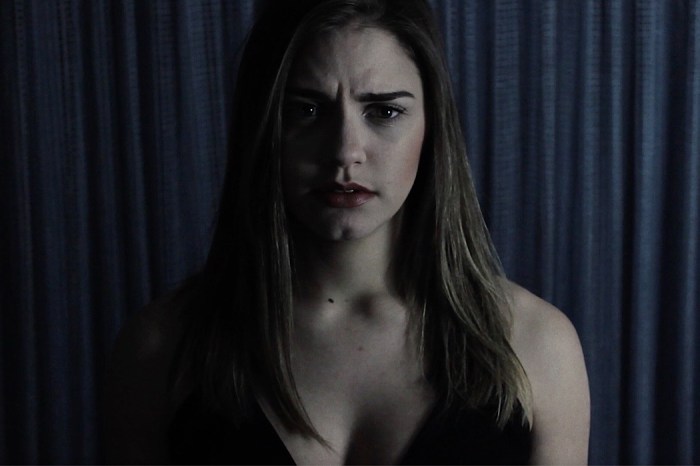
That brings us to this year and the film we are here to talk about, Blood Daughter, in a way a legacy sequel to Enk’s own films from the 90’s. The movie takes a few minutes to get going but once it does we learn that there is a cult that has been routinely recruiting people to be sent to the tower and become food for Dracula and the titular Blood Daughter (played by Alexandria Johnson). That’s just one of the many plots and subplots the film introduces us to, slowly bringing them all together at the end.

I Am All In A Sea Of Wonders

The film takes ideas and themes directly from Bram Stoker’s Dracula in order to inform the narrative of the piece, often taking lines directly off the page. At times the film had a very campy feel for everything that was happening until it hit me what I was watching. If you just let go and allow things to unfold (while reserving judgment) the movie is very much a stage-play. Sure, it’s filmed and the camera moves inform what it is that we are to be paying attention to but at the heart of Blood Daughter, it’s very much a play. An over the top one that didn’t take itself too seriously at times, but a play none the less. In a way, that’s what ended up making it fun for me.

The cast is extensive (all friends or favors that were called in by Enk) and included almost everyone that was involved in the original VHS epics from the 90’s. Returning for the conclusion of the tale were; Aaron Sinclair (Harker), John Klump (Renfield), Chuck Johnson (Van Helsing), and David Jarrell (Lord Henry). Whether you enjoyed the varying levels of acting talent from those involved or not, the one thing that you cannot argue with is, they were having a blast. It was like watching one of the home movies that we all made when we were younger but made by adults who haven’t yet forgotten how to have fun. We should all make at least one of these films if we truly love cinema.

Conclusion

Blood Daughter won’t win any awards, and it certainly won’t change the landscape of Hollywood for better or for worse, but that’s kind of the point. Enk rounded up the people he wanted to work with and went out and made the film that he wanted to make. It was a pure passion project by everyone involved and when you have art like that it doesn’t deserve to be ignored or ran into the ground, it should be seen and enjoyed for what it is. Someone’s hard work, finished and put on screen. It takes a lot to see something through from start to finish so for that alone it’s worth a view.

I will say that despite the fact that I wasn’t completely on board with the acting or the camera moves (or lack of camera moves) or the sound design and effects, the movie did exactly what it set out to do. It made a campy little conclusion to the films Enk made in college and even expanded on the lore a little. It had a definite beginning, middle, and end, and it was entertaining.

I do like stumbling upon movies like this, they’re like little secrets that only a handful of people are in on. In this case I think if you have just under two hours to kill, you should seek Blood Daughter out and give it a watch. Supporting Indie filmmakers is always important and this film can use the word of mouth. They all put in their time, you can give them a little of yours.